
Saturday, June 13, 2009

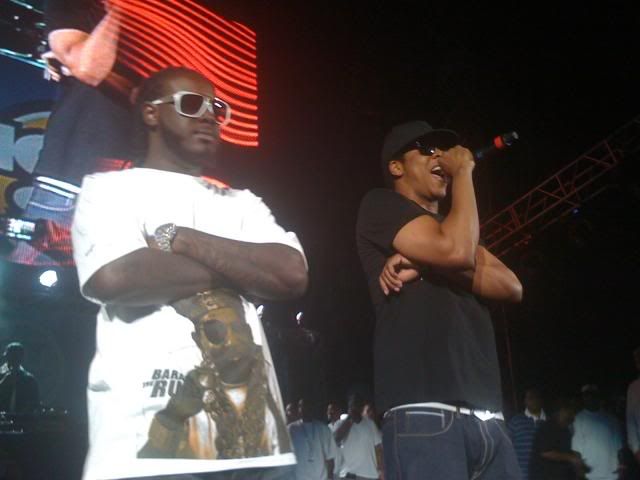
JAY-Z, NO ID, JANKO: THE TAKEDOWN?
posted by O.W.


awkward!


Jay-Z: The Death of Auto-Tune
From Blueprint 3 (Upcoming, 2009)


Now that it's been out there for a couple of weeks, what's the verdict on this new Jay Z song?

Personally, on first listen, the joint is rather fuego, especially as No I.D. hooks up a basher of a beat that has shades of "The Takeover" but instead of the Doors, the Chicago producer digs into his bag of library records:

Janko Nilovic: In the Space
From Psyc' Impressions (Montparnasse, 1970)


Lyrically...I wanted to like this more than what's actually there to like. For one thing, it's about a year late and the timing here is everything - I read how someone called this "a trend song about a trend" and that's exactly on-point. Provided, it's not as out-of-time as some of Eminem's leftover disses from 2004 showing up on Relapse, but in 2009, auto-tune has already become so parodied, even Wendy's is up on it.

It's not a bad song, all said...it just feels like something that screams "mixtape cut" (which, who knows, maybe all it will end up as).

Labels: ,


Friday, May 29, 2009

AIN'T ASHA PECULIAR?
posted by O.W.


Peter Ivers Group feat. Asha Puthli: Ain't That Peculiar
From 7" (Epic, 1971)

Asha Puthli: You've Been Loud Too Long
From She Loves to Hear the Music (CBS, 1974)

Asha Puthli: Space Talk + LP sampler
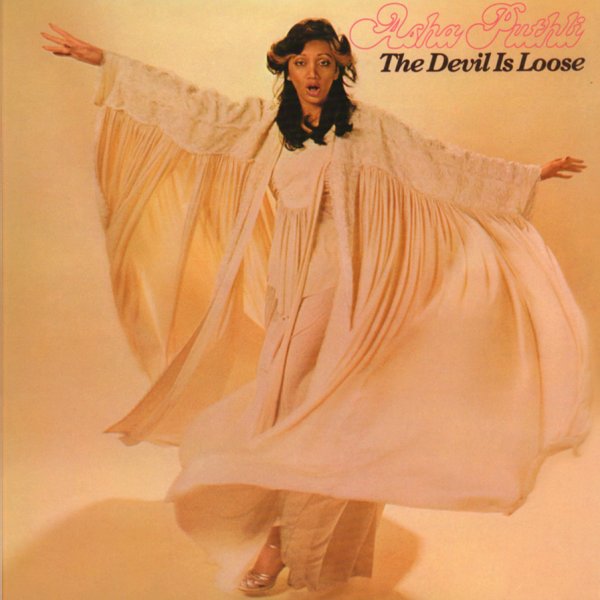
From The Devil Is Loose (CBS Germany, 1976). Also on vinyl LP.


As I mentioned a few weeks back, I had the immense pleasure to meet Asha Puthli and hopefully will be working with her on a future project. That encounter encouraged me to revisit her substantial catalog and that's been such a fun, revelatory experience.

It starts with a song by her I had never heard before but Asha was kind enough to burn a copy for me - her singing with the Peter Ivers Group back in the early 1970s, covering Marvin Gaye's big Motown classic, "Ain't That Peculiar." This wasn't her first recording but it was (I believe) her first US release, recorded for a full album that was meant to be Ivers' follow-up to his well-regarded 1969 LP, Knight of the Blue Communion (I'll have to post up about that LP at some point too). For reasons I'm not clear about, the album feat. Asha, entitled Take It Out On Me was never released by Epic but the single did make its way out. It's definitely not something that will remind people instantly of Gaye's iconic version - Ivers adds a strong funk element to the rhythm section and it's actually quite a sparse song in many ways (despite the surprise harmonica) and Asha's voice - light but distinct - works nicely here, especially as she plays with the arrangement most of know through Marvin. I like this one a lot - it reminds me of Smith's "Baby, It's You" in terms of how a rock band interprets an R&B tune.

Asha's second full-length solo album was She Loves to Hear the Music, released in 1974, with production principally from disco master Teo Macero and Paul Phillips (I'm assuming he of later Hi Tension fame?). I'm not 100% clear who produces "You've Been Loud Too Long," but I've loved this song for years - it's a spunky bit of Southern fried funk that seems to mesh Wardell Quezergue with Van McCoy (who works on this album so for all I know, he produced it!). I played this out at Boogaloo[la] the other week and one of the guys working security asked if it was Minnie Riperton; I hadn't thought of that before but there's definitely an affinity shared between singers like Puthli, Riperton and Linda Lewis.

The one album that was new to me was The Devil Is Loose and I'm not even certain why it took me so long to listen to it but it is good. Very very good. Rush-out-and-get-this-now good. For starters, I think it showcases the possibilities of what disco could bring to pop music that defies all the haters and naysayers - the gloss and glean in the production (all by Dieter Zimmerman) isn't window dressing but an integral part to sonic texture of the album. It's subtly lush, with Zimmerman and Puthli smartly keeping things a bit cool and controlled rather than give into sweeping excess. Moreover, the diversity of styles here are impressive, ranging from the quiet ballad "Let Me In Your Life" (the last song on the sampler) to the slinky funk of "Flying Fish" to the sheer pop charm of "Hello Everyone." The album's best known song (also released on 12") however is "Space Talk," another funky excursion, and arguably, a big influence of the evolution of European disco. If it sounds familiar to some, it may be because the song's been popular sample fodder, including for Biggie.


Labels: , , , ,


Thursday, May 07, 2009

ANDY LOORE: SMOKIN' BEATS
posted by O.W.


Andy Loore (aka Janko Nilovic): Opium Du Diable + Mixed Drums
From Ambiance Rhythmes Vol. 5 (Neuilly, 1970)


Andy Loore is one of the nearly dozen pseudonyms used by French composer Janko Nilovic, arguably that country's finest purveyor of funky library-style recordings in the 1960s and '70s. These two songs come off of one of his more obscure recordings - a 1970 10" (yeah, weird, right?) for the library imprint Neuilly and the entire side B is basically a series of sick drum, bass and organ workouts. As befits a song that translates into "Opium of the Devil," "Opium Du Diable" has a slow, druggy feel to it in the beginning and then gradually switches up into more of a psychedelic, mod-soul tune once the organ winds its way in. (Drugs were apparently big on Nilovic's mind since this same EP also has a song called "Enfer Et Marijuana" on it).

For pure minimalist funk though, it's hard to find too many songs better than "Mixed Drums," a tune most have either heard through the Beatnuts' using it for "It's the Nuts" or else on one of the Dusty Fingers volumes that comped it. As one of my friends like to put it, "this tune is hip-hop before there was a hip-hop." I feel that.

Labels: ,


Friday, May 01, 2009

OHIO PLAYERS: ECSTASY TO ME
posted by O.W.


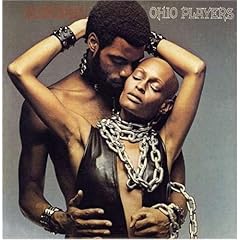
Ohio Players: Ecstasy
From Ecstasy (Westbound, 1973)


It's always a nice surprise to engage a song you've known for years but never really listened to until you happen upon it again and realize: holy sh--, this is awesome."

That happened when I was scrolling through the "Beat Deconstruction" of Reasonable Doubt written by Dan Love and posted to Jef Weiss' blog. I was flipping through the various songs and arrived at the Ohio Players' "Ecstasy," which I've owned for years but I realized, at best, I probably listened to the track at "the middle distance," (i.e. a song you hear in a room someplace, not quite in the background but not in the car or on headphones either).

I'm not sure why, this time, I stuck with the song but by about a minute in, I was convinced this was possibly one of the greatest things ever. I know I avoided going all formalist deconstruction on "Maybe So, Maybe No," but I feel compelled to go all hyper-dissection on "Ecstasy," mostly because I marvel over how this song manages to work so well with its subtle touches.

For one, the main rhythmic/melodic cycle is in five bars, not the conventional four (if I recall, that's why "Brooklyn's Finest" has Jay-Z and Biggie switching off every five bars, which is pretty unusual in a rap song). And I like the call-and-response in the rhythm section between the first three beats in each measure and that heavy emphasis on the "one". That's most obvious during the part of the song where the back-up singers cry out "oh!" but even before that, the squeal of the guitar on the first beat of each bar already sets up that relationship. And do you catch how a tambourine comes in for the first time, midway through the song? It's not that prominent but texturally, it adds another layer of sonic dynamics.

And hell, what can you say about Sugarfoot on the vocals? He's halfway incomprehensible (I suppose, overcome with ecstasy), not to mention inexplicably going from talking to the audience, "let me tell you about my baby," to talking to his lover, "loving you is ecstasy to me", and while it'd be a serious mistake to try to copy his vocals, you find yourself trying to hit those falsetto notes as he screams and hollers his way through the his half of the song. And heck, I haven't even gotten to talk about how great the back-up singers are here or the beauty of the piano melody.

In short, I just love how with every five bars, this song evolves and shifts, with a new set of surprises awaiting. The only part that doesn't work is the sax that comes in at the end - a bit too "cheesy sax" for my taste but then again, the song pretty much ends before it gets too grating so hey, even that one weak point is quickly swept away.


Labels: ,


Sunday, January 04, 2009

MOPHONO: MO' FUNKY
posted by O.W.


Mophono: The Shuffle
From 7" ("Tighten Up") (CB, 2007)

Mophono: The Edge Remix
From 7" (CB, 2008)


Mophono, aka DJ Centipede, is a Bay Area DJ and producer whose put out three very cool 7" projects on CB Records so far. His first was more of a downtempo experiment from 2005, the I Cry EP but his last two have both been remix projects. My favorite has been his reworking of Bob and Earl's 1963 hit, "Harlem Shuffle" which strips down the song's basic parts and reassembles them with a funk (and psych) edge that gives the song a completely new feel - far more raucous and dark than its original inspiration. I liked it even more than the A-side, a remix of Archie Bell's classic "Tighten Up."

On his latest 7", Mophono tackles two hip-hop classic sample sources - including "Groovin" by Allen ToussaintWillie Mitchell which should be familiar to Wu Tang fans the world over. On the A-side, he plays with "The Edge," by David McCallum (but produced by David Axelrod) but first begins with an impressive chop job of Sly Stone's pre-Family Stone single "Rock Dirge" and its glorious drums.


Labels: , , ,


Monday, December 22, 2008

ALICIA KEYS + TEMPREES: A MATTER OF EXTREME IMPORTANCE
posted by O.W.


Alicia Keys: Teenage Love Affair
From As I Am (J Records, 2007)

The Temprees: (Baby) I Love You
From The Lovemen (We Produce, 1972)


If people thought my recent discovery of Lorraine Ellison was surprising, get this: I basically slept on the entire last Alicia Keys' album until, um, now. Provided, being 15 months late (Keys) may not seem much compared 40 years (Ellison) but considering that Keys' album is multiple times platinum and she's not exactly an obscure pop figure, it's understandably strange that I would have missed the boat on this one...especially since I genuinely like Keys. But somehow, I totally missed the release of As I Am back in Sep. of 2007 and with the exception of "No One" (which was inescapable), I hadn't heard anything else off it.

So it's pretty funny that suddenly, "Teenage Love Affair" has been on constant rotation. It's rarely that I dig a new pop song that much...in fact, the last tune to have earned the "repeat 1" button was...Keys' "You Don't Know My Name." You would have thought I would have learned the last time!

So yeah, yeah, I get the late pass. I don't really care though - better late than never to discover one of your favorite songs of the year...a year late. Few thoughts:

1) 'Nuff respect to Jack Splash for hooking up this Temprees song. Ironically, I posted on the very album this song appears on earlier this year but I never really gave "Baby, I Love You" much spin and it took Splash's track to make me better appreciate the O.G. tune (viva sampling!). Dare I say though: he gives the original loop a boost that makes this a rare case where the progeny >>> progenitor. Specifically, the way he makes the guitar even more prominent and milks the keys are what help give Alicia's song such a memorable musical hook. Nice work and it also made me look up Splash's overall credits which, I was pleased to note, included some of my favorite songs off Estelle and Solange Knowle's albums. (Jack - if you ever want to do a summer songs post, holler).

2) Some have accused Keys of going too far towards the "big diva" vocal over-singing and while I can see that applied to "No One," I found her performance here more nuanced. The high point comes with the bridge towards the end where she slips into her "First base, second base" countdown. And while it may be in keeping with the song's "high school love" theme for her to "pump the brakes" on third base, it was refreshing to hear a pop song that wasn't drowning in sexuality. Not that I mind the latter but maybe as a parent now, I find a touch of chasteness to be charmingly chaste.

3) The video for the song is enjoyable on a whole 'nother level. Swoon.


Labels: ,


Tuesday, November 11, 2008

Q-TIP: THE VIBE IS BACK
posted by O.W.


Q-Tip: Won't Trade + Believe (feat. D'Angelo)
From The Renaissance (Motown, 2008)

Ruby Andrews: You Made a Believer Out Of Me
From 7" (Zodiac, 1969). Also on Casanova.

Large Professor: For My People
From The LP (Geffen, unreleased, 1995)


Having sat with Q-Tip's new album for a few...I have to say, this is phenomenal. I know I may be biased - like many rap fans who grew up in the 1990s, Q-Tip and A Tribe Called Quest might very have been to us what the Beatles were to my parents' generation. Especially given that Q-Tip has been incognito now for the last 9 years, since Amplifeid dropped (and Kamaal The Abstract did not), Q-Tip's coming back into the game at a risky time. Young bucks don't necessarily know him and old heads might have too-high expectations after such a long hiatus.

I can't speak to whether The Renaissance is going to intuitively appeal to the same cats bumping T.I. and Young Jeezy (though, in T.I.'s case, maybe they are) but as an old head, The Renaissance not only reminds us why Q-Tip was one of our favorite MCs a decade but he's also - remarkably - improved in that time off. I can't think of too many other rappers who could claim that but Tip's upgraded his flow. It's more rhythmically complex, more in-the-pocket yet can play off the beat when it wants to. Listen to how he just darts effortlessly on "Won't Trade" - this is not the same laconic, breezy flow from the days of "Bonita Applebaum."

Personally, I was also tickled by the fact that Tip uses one of my favorite femme funk singles of all time: Ruby Andrews' "You Made a Believer" out of me. Andrews' original is ferocious - I think that's the Brothers of Soul backing her and they cook up a monster of a funk mover here.

Q-Tip's sample choice actually has some Native Tongues resonance since De La Soul used the same loop all the way back in 1989 for a bonus skit called "Brain Washed Follower."

However, as I just suggested, Q-Tip is still down with the Abstract Poet vibe, recreating some of the magic of the Tribe era with songs that have a rich, emotional resonance thanks to the soul and jazz stylings and accented by Tip's own philosophical meditations. A track like "Believe" (the album's penultimate song) embodies the same qualities that Tip's embodied throughout his career - putting the MIA D'Angelo in the mix only enhances the sweetness.

I was enjoying the track so much, I didn't notice this right away but it dawned on me that it sounded familiar and then it hit me - this version of "Believe" interpolates a very similar beat to what Large Professor cooked up all the way back in 1996 for his doomed solo debut, The LP. In some ways, the two men share more than just musical tastes - both had bitter label experiences resulting from unreleased projects. Though Large Professor's new Main Source hasn't garnered the same attention (or strong reviews), there's a nice serendipity to having the unreleased song from one man's album being remade for the comeback album of the other.

If you want to check out my radio review of this album, voila.
(This post originally written for Side Dishes).


Labels: , , ,


Sunday, September 21, 2008

END OF THE SUMMER OF 08 (O-DUB'S REWIND)
posted by O.W.


Soul II Soul: Back To Life (acapella mix)
From 12" (Virgin, 1989)

Bonnie and Shelia: You Keep Me Hanging On
From 7" (King, 1971). Also on New Orleans Funk Vol. 2.

Patti Drew: Stop and Listen
From Tell Him (Capitol, 1967). Also on Workin' On a Groovy Thing.

Bobby Matos: Nadie Baila Como Yo
From My Latin Soul (Phillips, 1968)

Smokey Robinson and the Miracles: If You Can Want
From Special Occasion (Motown, 1968)

Menahan Street Band: Home Again
From Make the Road By Walking (Dunham/Daptone, forthcoming 10/14/08)

Final Solution: I Don't Care
From Brotherman soundtrack (Numero Group, 2008)

Freeway: Let the Beat Build freestyle
From ? (?, 2008)

Q-Tip: Gettin' Up
From The Renaissance (Motown, forthcoming 2008)

Black Ivory: You and I
From Don't Turn Around (Today, 1972)


It's the end of another summer, alas.

Looking back over the summer songs season, I wanted to do the last post on the songs that ended up forming my personal soundtrack the last few months. To be honest, I thought this list would be a lot longer than it ended up being but I wanted to keep it to songs that I kept returning to over and over rather than something I found merely "good."

Soul II Soul's acapella mix of "Back to Life" came at me three different ways: Murphy's Law dropped it at Boogaloo[la] and reminded me how cotdamn fresh it was, Greg Tate's Summer Songs post made me revisit the Soul II Soul catalog and I finally saw Belly which makes incredible use of the song to open the movie. Personally, I grew impatient to actually get to where the beat drops so I edited my version down to about a 30 second teaser before the "Impeach the President" drums kick in. As ML showed me, it's always a fun cut to play out.

The Bonnie and Sheila, I have to admit, I learned about first through a quirky youtube video[1] and I wondered how the hell I didn't know about this earlier. Great little slice of New Orleans funk produced by the great Wardell Quezergue and released on King (the Cincinnati label most associated with James Brown). Words are insufficient to explain to you how much I love this song.

The Patti Drew I owe to Chairman Mao. When I interviewed him for Asia Pacific Arts, he mentioned "Stop and Listen" as an example of a great soul tune that doesn't cost and arm and a leg yet sounds like a million bucks (not his exact words but you catch the meaning). I couldn't agree more. Don't sleep on the equally excellent ballad, "Tell Him" on the same album.

I had totally forgotten about the Bobby Matos and Combo Conquistadores song, "Nadie Baila Como Yo" (nobody dances like me) off the incredible My Latin Soul album until I heard the Boogaloo Assassins play it at their shows. This may very well elevate itself to my top 10 Latin soul songs given how it changes up chord progressions and tepos not once but twice - it's like getting three songs in one; one of the marks of a superior son montuno. I can't believe I slept on this track all these years.

I found the Smokey Robinson and Miracles song during my search through Motown's catalog to find tracks to play out that wasn't part of their Big Chill/Greatest Hits collection and I never failed to be amazed at the generosity of greatness that Motown provided over the years. For those who think Smokey is all droopy ballads, "If You Can Want" is a loud, proud wake-up call of funky power. How has no one ever done a 12" edit of this?

I already wrote about the Menahan Street Band and Brotherman songs already but they're so nice, I had to list 'em twice.

Freeway's freestyle over "Let the Beat Build" goes well with my official, beginning of the summer post where I nodded at Lil Wayne's original. Free, who had one of the best albums of last year that few seemed to notice, murders over Kanye's beat here. After, uh, a million subpar "A Milli" freestyles, I was happy to hear someone pick a different track to rip.

The last song is one I should have started the summer with. Late pass. Q-Tip's had a rough, um, decade so far in terms of being able to get this music to the masses but I'm hoping "Gettin' Up" does it right for him in preparation for his Renaissance album. This is, by far, the best thing I've heard from 'Tip since this and without getting all misty-eyed for my halcyon teens and 20s, listening to Tribe, this song just f---ing sounds good in the way the best Tribe songs just sounded f---ing good. (No doubt, it helps that the sample source is also f---ng good: "You and I" by Black Ivory. Read more here.).

By the way, if I had to pick my absolute favorite song of the summer...surprisingly, it'd end up being Solange Knowles' "I Decided." Don't ask me why but this has stuck with me the entire time through without ever ceasing to be pleasurable.

And with that...I bid all you adieu until next May but hope you keep the memory of summer in your mind alive until then.[2]

[1] Don't laugh - he dances better than you.

[2] Unless you live in the Southern Hemisphere.


Labels: , , , , , , , ,


Wednesday, September 10, 2008

DEBARGE + AZ: 'CAUSE THEY'RE SPECIAL
posted by O.W.


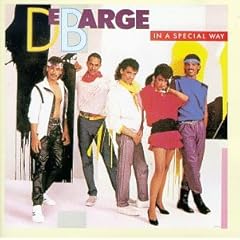
DeBarge: Love Me In a Special Way
From In a Special Way (Gordy, 1983)

AZ: Love Me In a Special Way
From S.O.S.A. (N/A, 2000)


Face it, early '80s R&B was far better then you think you remember it.

AZ knew what's up. (So does MAN).

Labels: , ,


Monday, September 08, 2008

JOE BATAAN GIVEAWAY! (UPDATED)
posted by O.W.


Common feat. Bilal: Play Your Cards Right
From Smokin' Aces soundtrack (Lakeshore, 2007)

Joe Bataan: Under the Street Lamp
Available on Under the Streetlamps: The Joe Bataan Anthology 1967 - 1972 (Fania/Emusica, 2008)


Joe Bataan was just here in Los Angeles the last week or so (and I feel stupid for not posting up links to his performances) and we caught up twice during that time, including one meeting where he broke down the entire history behind "Rap-O, Clap-O". Fascinating stuff and I'll have to try to write that up sometime.

Anyways, the other time we met, he was asking me if I knew anything about this Common song that sampled one of his songs. Joe had gotten a check for the clearance but hadn't heard the actual use of the song yet. Not having really followed the sampling game that closely of late, I couldn't think of anything off the top so we sat down and googled it and sure enough, it was Common's "Play Your Cards Right" from last year's Smokin' Aces soundtrack. And once you hear it, it's plain as day that producer Kareem Riggins had looped up Joe's great "Under the Street Lamp" (from his Singin' Some Soul album originally). (Joe got a kick out of hearing his song sampled).

He was also gracious enough to sign a copy of his anthology that I did the liner notes for and I'm going to give this away to one lucky (and informed) reader.
DETAILS AFTER THE JUMP


To be eligible, send an email to soulsides AT gmail.com with the subject line "Joe Bataan giveaway." You need to answer the following:
    1) What Latin producer of Alegre fame did Joe Bataan record with prior to signing with Fania?

    2) How many original albums (not including compilations or reissued content) did Joe record for Fania (this is a trick question of sorts so think it through carefully)?

    3) Some of Joe's most successful songs have been covers: "Gypsy Woman, "Shaft," "The Bottle." Name the original artists behind these other Joe Bataan songs:
    a. "It's a Good Feeling (Riot)"
    b. "I'm No Stranger"
    c. "Make Me Smile"

    4) What Ismael Miranda boogaloo mash-up/cover of "Tighten Up" does Joe Bataan make a cameo on? Name the song and album.

    5) What pseudonym did Joe take on when he recorded for Bobby Marin's Dynamite label?

    6) Two different songs that Joe recorded earlier in his career ended up re-released on later albums in their intact (i.e. non-rerecorded) form. One was "Ordinary Guy" - the same version appears on both Riot and Singin' Some Soul. What is the other song and which two albums did it appear on?

    7) What classic from Joe's repertoire appears on his Salsoul album, but with a different name?

    8) What's different about the 7" version of "Woman Don't Want to Love Me" compared to the LP version from Afrofilipino (be specific)?

    9) What old school rap duo was supposed to appear on "Rap-O, Clap-O" instead of Joe rapping himself?

    10) What martial art are Joe's children all masters of?
I'll select a winner at random from those with the most correct answers. Deadline: next Monday.

I also have a second (unsigned) copy of the anthology to give away, randomly, to those who buy Deep Covers 2 in the next week. (Physical CD orders only, digital downloads don't apply, sorry).


Labels: , , , , ,


Monday, August 11, 2008

ISAAC HAYES: COVER HIM!
posted by O.W.


Mighty Voices of Wonder: I Thank the Lord
From Good God! A Gospel Funk Hymnal (Numero Group, 2006)

JoAnn Garrett: Walk On By
From Just a Taste (Chess, 1969)

Joe Bataan: Shaft
From Saint Latin's Day Massacre (Fania, 1972)

Lyn Collins: Do Your Thing
From James Brown's Funky People Pt. 2 (Polydor, 1988)

El Michels Affair: Hung Up On My Baby
From Sounding Out the City (Truth and Soul, 2006)


As promised, a few cover songs of Isaac Hayes tunes and compositions in honor of the late master's catalog. To be honest, it's not quite as easy as you'd think. True, there's a gazillion "Shaft" covers but remember that in Hayes' post-Hot Buttered Soul career, most of his groundbreaking songs were reinterpretations of other people's songs rather than original compositions. That said, in the case of JoAnn Garrett's "Walk On By," it's clear that she's working off of Hayes' epic version rather than playing with the Bacharach/Warwick versions.

We start though with a Hayes/Porter composition, a very striking gospel funk cover of Sam and Dave's "I Thank You" renamed into "I Thank the Lord" by the Mighty Voices of Wonder. The gospel group takes a more lo-fi approach which only makes the opening drums that much rougher. Good god, indeed.

I generally am not a huge fan of the "Shaft" theme regardless of who is performing it but hey, if my man Joe Bataan is going to cover it, I might as well let it shine. This was a surprising hit for him, so much so that Fania came out with a second run of his Sweet Soul LP and put it on there and then released it, again, on Joe's last album for Fania, Saint Latin's Day Massacre. Caliente!

Lyn Collins' incredible cover of "Do Your Thing" (probably the best thing to come off the Shaft soundtrack) actually never was released back in the '70s when it was first recorded. Instead, it found exposure finally in 1988 as part of Polydor's hugely successful James Brown's Funky People series. How successful? Enough so that Collins' long-delayed version found instant fans amongst rap producers, including Dr. Dre who hooked it up lovely for Above the Law's "Another Execution" circa 1990.

"Hung Up On My Baby," from the Tough Guys soundtrack was another hip-hop favorite back in the '90s which no doubt influenced Brooklyn's El Michels Affair to cover the song on their excellent, slept-on 2006 debut (they also did a nice job with "Walk On By" as fans of Soul Sides Vol. 2 already know). I like their take on "Hung Up," - it's cooler, a bit chiller in the cut but still has that classic melody that's so haunting.

Feel free to add your own favorite Hayes covers in the comments.

Labels: , ,


Saturday, May 17, 2008

RZA VS. BINK: WHO FLIPPED IT BETTER?
posted by O.W.


Gladys Knight: Try to Remember/The Way We Were
From I Feel a Song (Buddah, 1974). Also on The Essential Collection.

Wu-Tang Clan: Can It Be It Was All So Simple?
From Enter the Wu-Tang (Loud, 1993)

Freeway: When We Remember
From Free At Last (Roc-A-Fella, 2007)


Yeah, I know it's been a minute since the last "Who Flipped It" segment. This one came to mind the other week when I was chatting about this Gladys Knight song with my wife and I thought about both the Wu and Freeway songs that use Knight's vocals so effectively. But before we get there, let me just note that it wasn't until that conversation that I realized: duh, this was the same song as Barbra Streisand's hit. Not only that but Knight manages to combine the song with lyrics from The Fantasticks, making this song an impressive proto-mash-up conceit.

Musically, RZA doesn't really much of Knight's song for "Can It Be So Simple" (look to Labi Siffre for that) but the song also wouldn't be the same without the forlorn sounding snippet of Knight ghosting into the chorus. In contrast to that kind of subtlety, Bink decides to set off a bomb in your face when he takes a different part of the song and uses it power Freeway's explosive "When They Remember" (one of my favorite songs of all 2007...the energy here is so palatable). On hypeness, I'd have to give the nod to Bink's flip.


Labels: , , ,


Thursday, May 01, 2008

THE HAPPY SOUL SUITE
posted by O.W.


Unraveling musical mysteries is part of what motivates me as a music journalist. I don't claim to be very good or thorough at it, but the process alone is a way to appreciate the beauty and complexity of music-making that isn't necessarily transparent through listening alone (or, er, the sonic equivalent of "transparency").

This post is one such example and it begins, for me at least, with a song called "Happy Soul" that appears on an album by The Moon People that I picked up at the Groove Merchant a few years back. (Note: ironically, "Happy Soul" is the one song I did NOT include in the Suite but for reasons that will become clear shortly). "Happy Soul" is very striking, especially for a Latin soul song because 1) it's fast and 2) it's funky. Really funky. Funkier than most Latin soul songs one can think of. I would play it out when I could, especially because it's a great "transition" track between Latin and funk sets. It's not surprisingly then that, in 2006, when the DJ Premier-produced Xtina Aguilera single, "Ain't No Other Man" came out, I recognized the sample immediately.

At least I thought I did.


CONTINUE READING...

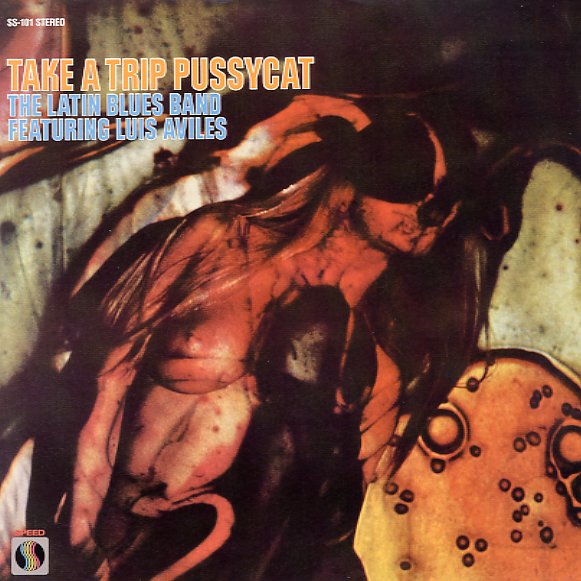
A little while later, I heard "Happy Soul (With a Hook)" by Dave Cortez with the Moon People and it was basically the same instrumental track as "Happy Soul" but with Cortez' trademark organ vamping all over it. Then, last year, I discovered the Latin Blues Band and their album, Take a Trip Pussycat. On there, they have a song called, "I'll Be a Happy Man" and it is basically, the same exact song as "Happy Soul" only with vocals (and without the Cortez organ).

The plot thickened.

The LBB, the Cortez single and the Moon People album are all on Speed, a smaller Latin label of the late '60s that specialized in Latin soul and boogaloo bands, including Frankie Nieves, and one of the rare female Latin groups, Dianne and Carole and the Latin Whatchamacallits. It's one of the great, great Latin boutique labels of that era and the Big Ol' Bag O Boogaloo series comps heavily from their catalog (with some odd omissions but that's for another time). It was on that album that I heard The Moon People's "Hippy Skippy Moon Strut" which sounded like the Cortez' song but minus the organ and with a new piano arrangement.

WTF?

Around the same time I acquired a copy of the LBB album (thanks Rodney!), I also stumbled across this feature on the great Spectropop website (Latin fans should check out their thorough Tico feature). They finally helped me put many of the details together and I'm trying not to duplicate their already great work but, there was one element yet to add here: the testimony of Bobby Marin.

Marin is a composer and producer and he and his brother Richard were major players in the NY Latin scene in the 1960s and '70s. I spoke to Marin while putting together the liner notes for an upcoming Fania anthology on Joe Bataan and wanting to take advantage of being able to speak to such a storied veteran in the scene, I asked him what some of his favorite compositions were and he named "I'll Be a Happy Man." At that point, I didn't own the album yet so I had no idea he, along with Louie Ramirez and other players, were in the Latin Blues Band and I asked him to trace for me the history of the song. Between the Spectropop site and Marin's own information, here's what I was able to pull together (and to be sure, I really should talk to Marin again to fill in blanks):

Morty Craft - who ran Speed and was the main producer for the label - reassembled the Latin Blues Band into The Moon People. I'm not clear why he did this nor why he would have the group essentially record over their own LBB backing tracks with slight changes (but sans vocals) and then release it as its own album. I guess Craft felt like he could sell consumers the same songs twice. "Happy Soul," from what I can tell, is simply "I'll Be a Happy Man" without vocals. Well, almost without vocals...Marin told me that when he was in the studio, editing the Land of Love album, he insisted that they keep something of his original vocals, which ended up being a "whoooo!" somewhere in there. (In any case, I didn't include "Happy Soul" in the suite since it's a subtraction with no additions, unlike the other songs).

Soon thereafter, Craft sold the mechanical rights to that instrumental to Morris Levy at Roulette. At that point, the song transforms into "Happy Soul With a Hook." The original piano is stripped off and replaced with Cortez' organ playing plus some spacey wah-wah guitar. Speed ends up releasing this "new" song as a single. According to Spectropop, "Hippy Skippy Moon Strut" appears just a few months later and it is basically "Happy Soul With a Hook" minus organs, keeping the wah-wah, and throwing on that new piano arrangement I mentioned plus some vocals yelling, "hippy skippy!" and similar phrases. That single appears on Roulette rather than Speed (possibly because the latter had been purchased by Roulette by this point). Then fast forward nearly 40 years and DJ Premier flips "Hippy Dippy" for Xtina and the story ends.

Well, not quite.

My convo with Marin yielded two more tidbits of information. First of all, RCA apparently didn't clear the sample correctly. My guess is that they cleared the mechanical rights but not the songwriter rights and when Fania (who, by now, owned the Speed catalog) figured this out, they got ready to sue. The problem is: they didn't know who the original composer was either and one day, when Marin was visiting, they asked him, "hey, would you happen to know who the composer is?" upon which Marin replied, "yeah...me." So as it turns out, Marin is waiting to see if a settlement happens, and if so, he likely stands to make a nice piece of change off this.

The second piece of info I gleaned from him was around who the hell was the drummer on the song. After all, one reason why the song stands out so much, why it probably got remade three times and then sampled, is because of those drum breaks. They're unusual for a Latin soul song - I can't think of many other songs in that era that featured open breakbeats - so I had to ask Marin about it. His reply, "well, that was Bernard Purdie."

Jaw drop.

That explains quite a bit...and it makes total sense (Purdie did a grip of studio work in NY in that era, plus the drumming sounds like something he'd put together) but it's a detail that, as far as I can tell, no one has ever noted before. And that, my friends, is the kind of discovery that motivates me to get up every morning. With all that, thanks for reading...here's the "Happy Soul Suite" for your edification:

Soul-Sides.com presents...The "Happy Soul Suite"

Created from...

The Latin Blues Band feat. Luis Aviles: (I'll Be A) Happy Man
From Take a Trip Pussycat (Speed, 1968)

Dave Cortez with The Moon People: Happy Soul (With A Hook)
From 7" (Speed, 1968). Also on El Barrio: The Bad Boogaloo.

The Moon People: Hippy, Skippy Moon Strut
From 7" (Roulette, 1969). Also on Big Ol' Bag O' Boogaloo Vol. 1.

Christina Aguilera: Ain't No Other Man
From Back to Basics (RCA, 2006)


Labels: , ,


Friday, February 01, 2008

BACK TO THE BLUE NOTE BREAKS
posted by O.W.

Lou Donaldson: It's Your Thing
From Hot Dog (Blue Note, 1969)

Ronnie Foster: Mystic Brew
From Two-Headed Freap (Blue Note, 1972)

Both on Droppin' Science (Blue Note, 2008)

Back in the mid-1990s, Blue Note Records, astutely noting how popular their catalog was becoming amongst hip-hop producers, began to release a series of anthologies in 1993 called Blue Break Breaks. Each featured about a dozen or so songs that had gotten the sample treatment - the first two or three sets included songs directly from Blue Note but by Vol. 4, they had moved to subsidiary catalogs purchased by Blue Note's parent company.

Almost nine years after the release of the last in the series, Blue Note has resurrected the concept in the form of Droppin' Science: Greatest Samples from the Blue Note Label, and more than ever, they shine the light on how these particular songs have been sampled. (I'm almost certain thanks would have to go out to the-breaks.com for some of that info). 

Here's the tracklisting:
1. Lou Donaldson - "It's Your Thing"
2. Ronnie Foster - "Mystic Brew"
3. Donald Byrd - "Think Twice"
4. David Axelrod/David McCullum - "The Edge"
5. Jack McDuff - "Oblighetto"
6. Joe Williams - "Get Out Of My Life Woman"
7. Grant Green - "Down Here On The Ground"
8. Lonnie Smith - "Spinnin Wheel"
9. Jeremy Steig - "Howling For Judy"
10. Lou Donaldson - "Who's Makin Love (To Your Old Lady)" 
BONUS TRACKS (Digital album and LP version)
11. Ronnie Laws - "Tidal Wave" 
12. Monk Higgins - "Little Green Apples"
13. Donald Byrd - "Wind Parade"

A few thoughts about this...

1) I'm curious as to who the main audience for this ends up being. Most of the songs it features were sampled as early as 20 years ago and the most recent is "The Edge," flipped by Dr. Dre ten years ago. I would think that many people who'd have a relationship to the songs that sampled these originals have been around long enough to have already copped most of these songs on an earlier release. Then again, maybe there's a new wave of nostalgia that's sweeping through, especially by all those, "I can't believe 'Crank Dat' is a hit" curmudgeons.Also, while about half of these songs appeared on one of the (out of print) Blue Break Beats series, the other half have not, including "The Edge," and surprisingly, both Donald Byrd songs. 

2) For a "best of" collection, this is solid but there are a few inclusions I found surprising: "Oblighetto"? I love me some Jack McDuff but if Tribe had never touched this for "Scenario," I'm not sure we'd be seeing it here. Same goes for "Howling For Judy." I like flute funk as much as the next guy but it's nowhere as big as a sample as some of the other songs here, especially the Donaldson cuts.

3) And if we're tackling Blue Note artists: no love for Bobbi Humphrey? Blue Mitchell? Reuben Wilson? Really? I would have gladly swapped out songs by artists whose work appears twice (Byrd and Donaldson) to broaden the artist representation. 

4) Of the songs off there, "Mystic Brew" still holds up the best (though "It's Your Thing" is still a fun listen). That bassline was a work of beauty...


Labels: ,


Monday, December 10, 2007

CUT CHEMIST VS. CUT CHEMIST: WHICH FLIP IS BETTER?
posted by O.W.


Pleasure Web: Music Man Pts. 1 and 2
From 7" (Eastbound, 1973). Also on Super Breaks 3

Jurassic 5: Jayou
From Jurassic 5 EP (Interscope, 1997)

Jurassic 5: Concrete and Clay
From Quality Control (Interscope, 2000)


Similar to the last "Which flip is better?" post, this one features a single producer who has used the same sample source twice for two different songs.

The source here is one of the more obscure 45s on Eastbound: "Music Man Pt. 1 and 2" by Pleasure Web. Personally, I couldn't find much on the artist at all; if anyone knows some details, illuminate the rest of us.

Cut first used "Part 2" of the song for "Jayou," arguably the most distinctive cut off the first Jurassic 5 EP from '97. Then, he revisited the same 7" and flipped "Part 1" for "Concrete and Clay" which first appeared on the "Improvise" EP of 1999 (and was later released on the full-length Quality Control album). Personally, I was always more partial to "Concrete and Clay" myself though "Jayou" had more buzz going. It's hard to choose b/t the different parts of "Music Man" though given that they're practically two different songs. My inclination is to go with Part 1 simply b/c I like it with lyrics better but it's hard to front on the flute flavor of its sibling.

Labels: , , , ,


Friday, November 16, 2007

Taking On Nautilus: Who Flipped It Best?
posted by O.W.


Bob James: Nautilus
From One (CTI, 1974)

Lord Shafiyq: My Mic Is On Fire
From 12" (NUWR, 1987)

Main Source: Live At the BBQ
From Breaking Atoms (Wild Pitch, 1991)

Ghostface Killah: Daytona 500
From Ironman (Epic, 1996)


I had the idea for this post for quite a bit, ever since I remembered reading an interview with Bob James where he was asked what he thought about different samplings of his music. RZA's flip on "Nautlius" for "Daytona 500" drew high praise, especially because RZA transposed the sample into a different key, giving it a more sinister edge. However, RZA was the latest in line of hip-hop producers to play off "Nautilus," arguably the most popular of James' CTI-era compositions, though not the most recognizable.

I realize the three songs I picked were merely a handful out of dozens of possibilities but "Live at the BBQ" seemed like a good contrast, especially because the way Large Professor worked with "Nautilus" isn't as obvious as other uses. On the other hand, I went with Lord Shafiyq's random rap classic, "My Mic Is On Fire," because it was one of the early rap tunes to use "Nautilus" so prominently, and using one of the more striking passages at that.

Labels: , , ,


Wednesday, November 14, 2007

Jay-Z: Gray Hova Rides Again
posted by O.W.


Jay-Z: Roc Boys + Success
From American Gangster (Def Jam, 2007)

Menahan Street Band: Make the Road by Walking (snippet)
From 7" (Dunham, 2007)

Larry Ellis and the Black Hammer: Funky Thing Pt. 1
From 7" (Al King, 1968). Also on Quantic Presents: World's Rarest Funk 45s


I can't say I love the new Jay-Z album but whatever my reservations of American Gangster, I still think Jay's one of the greatest rappers out there (yeah, he'd make my "fave 5"). At the very least, AG is an improvement over Kingdom Come but that's not really saying much. I suspect that many of the songs on AG will age well but foresight's never been my strong point (my hindsight is exceptional however).

A few songs did strike me right off the bat however, namely the two above. "Roc Boys" is the closest thing on this album to a bonafide anthem - great hook, great horns - and it's one the least self-serious songs on the album, which I think is a plus. I admit - I'm surprised Diddy has his name on this as the producer (though it might very well be that Sean C or LV had more to do with it). Regardless, props on finding and using the Menahan Street Band's excellent new 7", "Make the Road By Walking" on this one (read: I hope the MSB folks get paid off this), which is one of my favorite Daptones-related songs, well, ever. I know people without turntables are rather s.o.l. but the 7" is otherwise worth copping (the b-side is equally nice). (And really, if Soul-Sides.com readers don't have a turntable yet, get thee one.

Back to Jay: "Success" is a touch more ponderous but I still love the verses I quoted for my LA Times review - super-swaggery but still clever - which is how I like Jay best. I didn't think this was Nas' finest moment but I still get a kick out of hearing those two on the same track. I'm old school like that.

No ID comes back from the milkbox to absolutely kill this track, flipping the opening organ screams from Larry Ellis' ridiculously scarce "Funky Thing." Personally, I don't necessarily like the rest of the song but Ellis' opening is a monster, especially with the reverbed drums.


Labels: , , ,


Monday, October 29, 2007

KMD vs. Eric. B and Rakim: Who Flipped It Better?
posted by O.W.


Bobbi Humphrey: Blacks and Blues
From Blacks and Blues (Blue Note, 1974)

KMD: Plumskinzz
From 12" (B-side of "Nitty Gritty") (Elektra, 1991)

Eric B. and Rakim: Keep the Beat
From Don't Sweat the Technique (MCA, 1992)


I wrote about the Humphrey song before, about two years back, and had this to say: "My favorite Mizell's related track though is Bobbi Humphrey's sublimely mellow "Blacks and Blues" - I love how it foregrounds Jerry Peters' beautiful piano work at the front end and Humphrey's flute floats in with a nice subtlety as does Fonce Mizell's clavinet. It's a great arrangement - memorable from jump and a song you can come back to a dozen times over and never tire of." (Note: I still feel the same way).

Of course, back in the early '90s, I didn't know much about the Mizell Bros or Bobbi Humphrey. I did know something about KMD and their sequel to "Peachfuzz." Right from jump, the beat for "Plumskinzz" caught my ear and that's no small reason why I continue to be charmed by Humphrey.

I wasn't alone - "Blacks and Blues" shows up a few other places but if you're going to go head to head with KMD, who better than Rakim Allah himself? I'm not sure how actually produced this cut (real heads know what I'm talking about) but I like how they included a vocal interpolation to go along with the original sample. The whole cut has a nice smoothness that complements Rakim's honeyed baritone well.

Labels: , , ,


Saturday, October 27, 2007

Ski vs. Dr. Dre: Who Flipped It Better?
posted by O.W.


Labi Siffre: I Got The (Blues)
From Remember My Song (EMI, 1975)

Jay-Z: Streets Is Watching
From In My Lifetime (Roc-a-Fella, 1997)

Eminem: My Name Is...
From The Slim Shady LP (Interscope, 1999)


About time we got these two producers in the mix...and with an intriguing contrast of a shared sample. The Labi Siffre track has been used multiple times but most tend to flip the front part of the song - that dramatic portion that Ski uses for Jay-Z's beat. It's easy to see what the attraction to that would be. But it was Dr. Dre, coming up with Eminem's first break-out single, who really put the highlight onto the bridge instead.

Personally, the real winner here has always been Siffre's song. Apart from the fact that I love how an openly gay Black British singer would supply a track that'd be the backbone for rap artists not exactly known for their queer-friendly attitudes, "I Got The" is an incredible song in terms of how it builds, shifts and unwinds. Right around 3:25 is my favorite portion, right in the middle of that bridge that Dre uses. Simple sublime.

Labels: , , ,


Monday, October 22, 2007

Pete Rock vs. Kanye West: Who Flipped It Better
posted by O.W.


Don Covay and the Jefferson Lemon Blues Band: If There's a Will, There's a Way
From Different Strokes for Different Folks (Janus, 1970). Also on Funky Yo Yo.

Pete Rock and C.L. Smooth: Lots of Lovin' (remix)
From 12" (Elektra, 1993)

Common: Southside
From Finding Forever (Geffen, 2007)


When I first heard the "Southside" during a listening session, my automatic thought was, "ah, 'Ye is flipping that old Pete Rock beat." Well...not exactly - there are some similarities, especially in how both songs use the same guitar/piano loop but while Pete Rock sticks with that sample, West uses more of Covay's guitar to give "Southside" a harder edge. Gives the song a nice touch of difference and should make debating these two tracks more interesting.

Speaking of Covay, this Different Strokes album follows his Country Funk album and that's an apt way to describe a lot of his tunes. It's not "funk" in the conventional James Brown sense of it but Covay's songs in this era managed to blend together country, blues and hard Southern soul together in a raucous little package.

"If There's a Will" gets love given its sampling but frankly, I've always been a bigger fan of a different song off the same album: "Standing on the Grits Line." Covay's not from NOLA but this song has a distinctive Mardi Gras piano touch to it if you ask me. Recommended!

Labels: , , ,


Sunday, October 14, 2007

Primo vs... Primo?: Which Flip Is Better?
posted by O.W.


Caesar Frazier: Funk It Up
From 75 (Eastbound, 1975)

Gang Starr: Ex Girl to the Next Girl
From Daily Operation (Chrysalis, 1992)

Gang Starr: Speak Ya Clout
From Hard to Earn (Chrysalis, 1994)


I thought it'd be fun, for a change of pace, to pit a producer against himself. In this case, DJ Premier sampled two different portions from the same original source: "Funk It Up" from Caesar Frazier's other Eastbound album, 75. (I put this up a little over 2 years ago. Fans of this series will get a kick out of the first line of that old post. Looks like I've backed off my own policy, at least for the time being).

Personally, I like that a producer would go back to a once-used source and find a new way to flip it (better than Marley putting out both "Ain't No Half Steppin" then "Pink Cookies in a Plastic Bag"...one of the stranger re-uses I've heard). There's a rather obvious Dilla example of this too which I might throw up at some point.

What's so striking in this case though is how utterly different the two uses sound which reflects the differences in the portions of Frazier's original. It's unexpected that a single source would yield such contrasting sonic styles.

Labels: , , ,


Wednesday, October 10, 2007

Buckwild vs. Beatnuts: Who Flipped It Better?
posted by O.W.


Cal Tjader: Morning
From Agua Dulce (Fantasy, 1971). Also on Descarga!.

O.C. and Buckwild: What I Represent
From America Is Dying Slowly (Elektra, 1996)

The Beatnuts: Fluid
From white label 12" (?, 1997?)


For this latest installment, I'm rolling with 1) one of my favorite Cal Tjader songs, 2) one of my favorite O.C. songs, 3) one of my favorite Buckwild productions and 4) one of my favorite Beatnuts' productions/songs. And as fate would have it: it's all based around the same song...

Cal Tjader first recorded (I believe) "Morning" for his Soul Burst album but he re-recorded a different version, this one with a vocal chorus accompaniment, for Agua Dulce, a surprisingly difficult title of his to find despite being on Fantasy. Both versions are nice...just sublimely mellow, but I've always been more partial to the Agua Dulce version just for the vocal touch.

Apparently, Buckwild liked it a lot too since he looped this up for "What I Represent," a stand-out, yet slept-on, song from the American Is Dying Slowly soundtrack. This was back when O.C. was still like the Promised One for a lot of cats and between his lyrical content, the beat and that chorus built off Ike White and Q-Tip, the whole song was something lovely, lovely, lovely.

About a year after that, this white label of supposedly unreleased Street Level-era songs surfaced. I've heard, from some corners, that there was an official Relativity test-pressing that had three of these songs, including "Fluid" on it that came out around 1995 but I've yet to see anyone confirm its actual existence. That said, "Fluid" definitely sounds like it could have been on Street Level and it takes the "Morning" loop and juices it up more uptempo (note: I'm pretty sure the version of "Morning" here is from Soul Burst). A different style and sound from Buckwild's approach.

Discuss!


Labels: , , , ,


Saturday, October 06, 2007

Marley Marl/Craig G vs. Puff Daddy/Biggie: Who Flipped It Better?
posted by O.W.


Lou Donaldson: Who's Making Love
From Hot Dog (Blue Note, 1969). Also on Blue Note Breaks V. 1.

Marley Marl feat. Craig G: Droppin' Science
From In Control Vol. 1 (Cold Chillin, 1988). Also on Droppin' Science - The Best of Cold Chillin'.

Notorious B.I.G.: One More Chances (Hip Hop Remix)
From "One More Chance" 12" (Bad Boy, 1995)


I still remember the first time I heard the "Hip Hop Remix" of "One More Chance" and my thought process went something like this, "goddamn, this is hot...but kind of familiar...why is that?" Back in '95, Puffy hadn't quite become the beat-jackin' villain that people accused him of by the late '90s but there were more than a few heads being scratched given that BOTH remixes of "One More Chance" were using beats that had already been put out.

The more obvious comparison was the "One More Chance/Stay With Me" remix since it used the exact same DeBarge loop that Big L had just put out a few months earlier on "MVP" (production by Lord Finesse) though Biggie had a far, far bigger hit with the track than Big L ever saw. In the case of the "Hip Hop Remix," it had been a good seven years since Craig G had lit up the same track on "Droppin' Science" (arguably one of his greatest moments in a career that never caught fire like it possibly could have).

I should also add that this whole era was like one long Donaldson-love fest for producers. In general, the Blue Note late '60s/early '70s era was being torn through but Donaldson was practically the undisputed go-to artist for loops and breaks. Good times, good times.

And before I get comments full of "and [insert artist/producer here] used this same loop too!"...yeah dudes, we know. I was tempted to include both "Hot Sex" and the "Kaught in the Ak" remix but opted out mostly because 1) I've already featured Primo and ATCQ (though I'll inevitably end up bringing them back and 2) I always liked the idea of a Craig G vs. Biggie head-to-head.


Labels: , , ,


Wednesday, October 03, 2007

Grand Puba/MC Lyte vs. Diamond D: Who Flipped It Better?
posted by O.W.


Three Dog Night: I Can Hear You Calling
From Naturally (MCA, 1970)

MC Lyte: I Am the Lyte
From Eyes On This (First Priority, 1989)

Diamond D and the Psychotic Neurotics: Best Kept Secret
From Stunts, Blunts, and Hip-Hop (Chemistry, 1992)


First of all, I'm glad folks are feeling this new series. It's funny - I'm assuming most folks have heard most of these songs already, thus making downloads irrelevant. Meanwhile, posts featuring actually songs folks are less likely to have are getting nary a comment. I'm not complaining mind you - I just think it's funny.

Anyways, I remember Diamond telling me how he decided to tackle this same sample on his album even though Lyte had just dropped it a few years prior...keep in mind, this was at a time where someone like Diamond probably was going to be very careful about what samples he was using and trying not to look like he's biting (diggin' in the crates and all that, y'know) so he must really have thought he could do something different with his flip. Does it really improve on what Puba did for Lyte?

I'll leave up to the peanut gallery to argue. I will say this - and no disrespect to Diamond at all - but Lyte just rips this track. Lyrically, advantage: Ms. Moorer. Also, in general, I think it's worth noting that if you don't own a copy of Eyes On This, you don't like hip-hop. Yeah, I went there. Deal.


Labels: , , ,


Tuesday, October 02, 2007

Q-Tip vs. The Beatnuts: Who Flipped It Better?
posted by O.W.


Monty Alexander: Love and Happiness
From Rass (MPS, 1974). Also on Strange Funky Games and Things

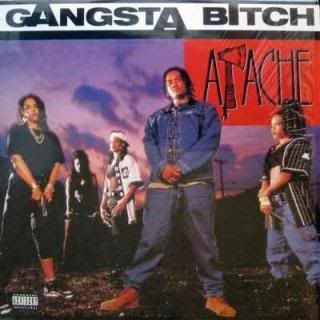
Apache: Gangsta B----
From Gangsta B---- (Tommy Boy, 1992)

The Beatnuts: Let Off a Couple
From Street Level (Relativity, 1994)

The Heath Brothers: Smilin' Billy Suite Pt. 2
From Marchin' On! (Strata East, 1976)

The Beatnuts: Ya Don't Stop
From Street Level (Relativity, 1994)

Nas: One Love
From Illmatic (Columbia, 1994)


I'm sure this is just sheer coincidence (or...is it?!) but in both these cases, The Beatnuts and Q-Tip both sampled the same songs...but used different parts of them to craft their beats. With the use of "Love and Happiness" (a lovely cover by the way), one could propose that the Beatnuts, not wanting to use the same part of the song that Q-TIp did for Apache's song from two years earlier, settled on a different portion of it.

With "One Love" vs. "Ya Don't Stop" though, they came out so close to one another, it could just be blind chance that they picked the same song but different sections. Whichever the case though, it does make measuring them against one another more intriguing.

Gilles Peterson giveaway update:
The correct answers were 1) Darondo's "Didn't I" on Music City and 2) Lonnie Hewitt on Wee. East Bay, represent!
Winners: Allen T., Adam D, and Talbot Y.
Congrats!


Labels: , , ,


Monday, October 01, 2007

Learning To Boogie: Dance Instruction Records Pt. 1
posted by O.W.


Johnny Frigo: Do Whatever Sets You Free
From Collected Works (Ubiquity, 2002)

Luigi: Kick & Luigi Strut
From Jazz Class With Luigi (Hoctor, 196/7?)

Artist Unknown: Scorpio
From 7" (Hoctor, 197?)

Artist Unknown: Swahili Boogie
From Dance Bandstand (Statler, 197?)


Dance instruction records are like the poor man's library records (except that some of them are not that cheap) but they share some important similarities. For one, they were targeted at a specialized audience and though some dance records might have been sold to the general public, most of them were marketed directly to dance schools and teachers.

Also, many were recorded by anonymous (or minimally credited) studio players and though it probably wasn't a huge prestige gig, as with library records, there was a good deal of latitude given to the bands to whip out whatever they wanted. Since these weren't for pop music play (and few featured lyrics), you'd imagine the recording dates had a jam session vibe to them and especially since they were made for dance, it was all about the rhythm section letting loose. That's not to say all dance instruction records were informal or thrown together. Indeed, many had very specific themes, though less driven by musical conceits and more by the kind of dance exercises or activities they were meant to score.

The result is that dance instruction records, especially from the 1970s, are a good source for funky instrumental tracks from off-the-beaten-path. I'm, by no means, an ardent collector of them though I'm always happy to add another title to the library given their quirky nature.

The best known artist has been Chicago's Johnny Frigo who worked on a modest handful of albums with dance teacher Gus Giordano for the Orion label. The Frigo/Giordano albums are notoriously expensive (especially compared to other dance labels) but you're paying for the quality and not just scarce quantity. Luckily, Ubiquity compiled most of the best Frigo/Giordano songs on a single anthology a few years back (our friends Egon and Cool Chris worked on that project). Frigo's work is also, in my opinion, the least obviously "instructional," and stand, quite well, on their own as soul-jazz compositions regardless of what their ostensible purpose was.

The best known label - amongst record nerds - is Hoctor which has, and continues to, released hundreds of dance instruction albums over the decades. Hoctor LPs are, in my experience, the most likely to turn up of all the major dance labels but that doesn't mean all their titles are equally easy to find. There's a few titles that can easily run $100+ on the private market and in my opinion, the cost is justified. However, that doesn't mean all Hoctor titles are worth the trouble; though for many of their 1970s titles, you could often tell from the album cover or tracklisting if you held genuine gold or vinyl coal.

Jazz Class With Luigi is the most common funky Hoctor title I've seen in the field and I'm assuming it's because it was pressed up in higher numbers than other titles. Luigi is a dance instructor of considerable note (Janet Pidoux whose song appears later in the playlist trained with him, for example) and for this album at least, his conception of jazz dance centered on any number of surprisingly funk backbeats to drive the rhythm section. That band, by the way, is the Stan Rubin Orchestra and bow down to a female drummer - Julie Epstein - who anchors those beats.

As suggested, the Hoctor catalog runs deep; the songs I chose barely skim the surface and I'm holding back on some of the heaviest titles but definitely look for Byron Peterson's Jazz Rock USA and any of the Robin Hoctor LPs from the era (I know of at least two). You could do very well by just their 7" releases alone. They have one of my favorite covers of "Cissy Strut" ever and this included version of Dennis Coffey's "Scorpio" does a solid job on covering the b-boy classic (Frigo does a killer version of the song as well). I'm not sure if this appears on a Hoctor LP or is a 7" only single. If anyone knows what LP this or "Cissy Strut" appears on, let me know? Not sure which band is playing on here either - it's not credited.

Statler, like Hoctor, produced dozens (if not hundreds) of dance instruction albums as well though, in my experience, their distribution was notably smaller and it's much harder to find their titles in an ordinary record store. I've also found that Statler is much less reliable for funky tunes but it could just be that the albums I've heard have been the weaker out of the catalog. Frank Hatchett has a series of Afro-Cuban-driven Statler titles which I think could be promising but his Soul Jazz album - despite appearing like it'd be killer - is marred by bad rock guitar that ruins the otherwise excellent percussion work. "Swahili Boogie" comes off a more recent addition, out of stack of Statler titles my friend came upon. My copy of the LP didn't have the actual cover so I don't know who the players on this album are which is a shame because the percussionist is killing it on here.

Part 2 in this series nods to some kids' dance music plus a few examples of dance instruction tunes from outside the U.S.


Labels: , ,


Sunday, September 30, 2007

M.O.P. vs. Scarface: Who Flipped It Better?
posted by O.W.


Roberta Flack and Donny Hathaway: Be Real Black For Me
From S/T (Atlantic, 1972)

M.O.P.: World Famous
From Firing Squad (Relativity, 1996)

Scarface: On My Block
From The Fix (Def Jam, 2002)


Like our last face-off, what's striking here is that the beats are, for all expressed purposes, identical. You might be able to quibble with the engineering differences but really, this comes down to which MC sounds better over this beautiful little loop from Roberta Flack and Donny Hathaway's anthem of self-love and pride.

I'll say this much: if it was a video showdown, advantage: 'Face.

Labels: , , ,


Saturday, September 29, 2007

Premier vs. Beatminerz: Who Flipped It Better?
posted by O.W.


The Blackbyrds:
From Cornbread, Earl and Me Soundtrack (Fantasy, 1975). Also on Lovebyrds.

Gang Starr: Say Your Prayers
From Step Into the Arena (Chrysalis, 1991)

The Roots: Silent Treatment (Beatminerz Remix)
From "Silent Treatment" 12" (Geffen, 1995)


I've had this idea for a long time but had forgotten about it until I had cause to listen to Gang Starr's Step Into the Arena the other day. I had always remembered "Say Your Prayers" back in the day mostly because I loved the sample but it was also a short song and left me wanting more. I was pleasantly surprised a few years later when the Beatminerz remixed "Silent Treatment" by The Roots and used the same loop: the moody, mellow "Wilford's Gone" by the Blackbyrds.

Normally, in these situations, I felt like the nod goes to the originator but that rule of thumb has so many exceptions to it (see the uses of "Hydra" by Grover Washington or "Nautilus" by Bob James for excellent examples of how later uses improved upon earlier attempts) that it deserved a re-evaluation. So here you go: part one in a series of side by side comparisons, beginning with a heavyweight face-off between Primo and Mr. Walt/Evil Dee.


Labels: , , ,


Wednesday, September 12, 2007

Bobby Byrd: We Knew He Had Soul
posted by O.W.


Bobby Byrd: I Know You Got Soul (Long Version)
From James Brown's Funky People Pt. 2 (Polydor, 1970s)

Bobby Byrd: I Found Out
From 7" (King, 1967). Also on King New Breed.

Vicki Anderson and Bobby Byrd: You're Welcome, Stop On By
From 7" (Identify, 1975). Also on James Brown's Original Funky Divas.


I take no pleasure in what seems like is a constant stream of in memoriam posts but truly, we're reaching a time when a lot of the musical giants from the last 30-40 years are passing away. Yesterday, it was Joe Zawinul, today, it's Bobby Byrd - James Brown's constant vocal stalwart and a striking soul/funk singer in his own right. I'm not going to write anything too extensive - I'm sure there will be far more eloquent and informed folks out there breaking down Byrd's legacy but I did want to at least share some music. "I Know You Got Soul" is Byrd's best known solo work (though one could argue that "Sex Machine" wouldn't be half the song it is without his exhortations), and one of the truly great, great James Brown productions of all time (and of course, given a new lease on life thanks to Eric B. and Rakim). "I Found Out" is taken from Byrd's early years with King, showcasing some of his vocal skills as a crooner and not just the illest hype man in funk history. Last, but not least, is a cover of "You're Welcome, Stop On By" sung by Byrd and his wife (who he met when she was one of Brown's key divas), Vicki Anderson.

Rest in peace Bobby. Word to the Byrd!


And speaking of funk greats, RIP to NOLA's Willie Tee.

Labels: , , ,


Endings
posted by O.W.


As some of you probably know, Joe Zawinul passed away yesterday and given my recent posting about electric piano, it seemed apt to pay a small tribute to one of the masters. Here's two songs that, for both personal and historical reasons, always stand out when I think about Zawinul and his contribution to the music world. R.I.P.

Cannonball Adderley: Mercy, Mercy, Mercy
From Mercy, Mercy, Mercy (Blue Note, 1966)

In that NPR piece I linked to, Herbie Hancock pays Joe a remarkable tribute by noting that, as a White European, Zawinul managed to compose a song that spoke to an African American spiritual and musical tradition as rich as anything Hancock had heard from a Black artist. For years, I always assumed Cannonball had come up with this one and was genuinely blown away to learn that it was actually Zawinul's tune.

Weather Report: American Tango
From Mysterious Traveller (Columbia, 1974)


Jazz purists hate Weather Report and their popularization of jazz fusion. Hip-hoppers (for a time at least) loved its mix of dissonance, rhythm and more moody loops than you could shake a stick at. Just listen to the song and try to count the number of different folks who've stolen snippets off it. Blows the mind.


Also, one of my favorite record stores in the country, Village Music in Mill Valley, CA, is closing after some 60 years in business. *sniff*

Respect!


Labels: , ,


Sunday, September 09, 2007

Pete Jolly + Shelton Kirby: Ride the Rhodes
posted by O.W.


Pete Jolly: Leaves + Springs
From Seasons (A&M, 1970)

Leroy Vinnegar: Twila
From Glass of Water (Legend, 1973)


One of these days, I'm going to get around to writing a whole set of posts celebrating the electric piano. I actually wrote, along with Eothen Alapatt, a long feature about the history of the Rhodes and its maker back in 2000 but it no longer is available online and I'm trying to find a new home for it. Until that day...

The funny thing is...I always assumed Pete Jolly's Seasons was a Rhodes album but as it turns out, he's actually using a Wurlitzer, the main competitor of the Rhodes amongst jazz players. Ok, no big deal, either way, the electric piano sound just marinates this entire album in warm, liquid keys. "Leaves" beautifully expresses how lovely a tone you can achieve, especially with all the reverb thrown on. Makes me sad this song is less than two minutes long. I wouldn't have minded some longer noodling (and I typically am not a big fan of noodling).

"Springs" isn't as abstract, bringing aboard a solid rhythm section lead by Chuck Berghofer on bass whose presence is just as prominent as Jolly's. Ugly Duckling fans will likely recognize this cut too and I can see what drew Young Einstein's interest in terms of the striking piano melodies (again with that reverb) and Berghofer's bassline twine.

By the way, Seasons is another one of the Dusty Groove's new series of reissues and there's at least one more (their reissue of La Clave's self-titled LP) that I want to talk about. Good stuff, all around.

In any case, with the Leroy Vinnegar, I'm almost positive this is, in fact, Rhodes (the two pianos have similar but not identical sounds), with Dwight Dickerson manning the keys. Glass of Water boasts a gorgeous set of jazz tunes, including a few funkier/soulful numbers though "Twila" (which begins the LP) is a personal favorite. Very "Sunday afternoon listening" if you know what I mean.

Whenever I do get to my Rhodes Week, I'll have some other electric piano goodies to pull out the woodwork, including songs by Shelton Kilby, Romano Mussolini and, of course, the great, late Weldon Irvine.


Labels: ,


Friday, September 07, 2007

Lee Moses: Hey Lee
posted by O.W.


Lee Moses: Time and Place (LP Version) + Hey Joe
From Time and Place (Maple, 1970s)


The Lee Moses LP on Maple was one of the first "holy grail" soul albums I learned about. I knew about the single, "Time and Place" already (thanks Positive K!) and I'm not exactly sure, but soon thereafter, heard about the LP it came off but understood that it was a tough LP to track down, especially if I didn't feel like paying $100 for it (this was the days when I actually would have hesitated to spend that much).

As it was though, I actually held a copy of the LP for a few days, back in the late '90s. I was visiting a friend in Brooklyn who asked if I'd be willing to bring a copy of the album back to a mutual acquaintance of ours in the Bay Area. Of course, it did cross my mind to claim that the LP got "lost" during the way but I didn't think it'd be a very convincing story. I did, however, take the time to digitize the album before handing it over and it's a good thing too: it's taken years for it to finally make it to CD but I have to say: Sanctuary (the reissue label) did a bang up job with this CD. Not only does it include the original Maple album but it comes with practically another CD's worth of bonus tracks, mostly singles by Moses that pre-date the album, including a raw, funky soul version of "Daytripper" and the 45 version of "Time and Place" that ended up gracing Soul Sides Vol. 1.

It can be confusing to place Moses - he sure sounds like a Southern artist yet Maple was a New Jersey imprint while Front Page (where "Time and Place," the single, came from) was from New York. Moses himself hailed from Atlanta though, thus helping to explain the ragged gospel edge to his singing style. Check out In Dangerous Rhythm's far more extensive biography of him.

The album version of "Time and Place" is very similar to the 45 version but I noticed some slight differences in the percussion (or maybe it's just the mix) and thought, given some listener familiarity with the song (assuming you *cough cough* copped SSV1), it'd be worth posting so folks can listen for themselves.

"Hey Joe" is arguably reason alone to track down the LP. Moses pulls off a fantastic, gritty cover of this Billy Roberts' classic and while it won't necessarily make people forget what the Jimi Hendrix version is like, Moses' take is compelling and passionate (not to mention a rock solid psych/funk/blues smash up).


Labels: ,


Wednesday, August 01, 2007

Cal Tjader, Camp Lo, 45 King/Latee, Maurice Davis: Sparklin'
posted by O.W.


Cal Tjader: Leyte
From Soul Sauce (Verve, 1964)

Camp Lo: Sparkle
From Uptown Saturday Night (Profile, 1997)

45 King feat. Latee: Brainstorm
From For DJs Only EP (45 King Records, 198?)

Maurice Davis: Mr. Lonely
From 7" (BeeGee, 197?)


I've spent the last week or so slaving over an assignment involving classic funk tunes and frankly, if I hear another Commodores or Ohio Players song, I might have a seizure. To unwind, I've been listening to a variety of different tunes, a sampling of which follows.

Technically, these songs are a bit out of order since I wouldn't have gotten to Tjader's "Leyte" if I hadn't been listening to Uptown Saturday Night and wondering, "I wonder what sample Ski used?" Admittedly, I probably should have already been up on "Leyte" given that Soul Sauce was one of Tjader's most successful albums ever but oddly, I never got around to picking this one up (probably because I saw it around so much, I just figured I'd grab it "next time").

Sometimes, there's nothing so good to chill out to than a great vibraphone track and Tjader has these in embarrassing abundance (at some point, I really need to post up his version of "Morning" off of Agua Dulce but another time, another time) and "Leyte" is right up there with the best. It has a smoky, Afro-Latin sabor that's laid-back without being lazy, what people should mean when they speak of "lounge" music instead of that campy kitsch that often passes for it. And the vibes - ah, the vibes - sparkling...

...which of course, brings us to Camp Lo's "Sparkle," one of the smoothest cuts off the still-slept-on Uptown Saturday Night album and obviously, one that borrows heavily from "Leyte." Given the throwback, '70s steez of Camp Lo, they sound perfect over this track (even if their lyrics could be more obtusely stream of consciousness than Ghostface's). By the way, be sure to track down the "Mr. Midnight" mix of "Sparkle" which is basically an acapella set over the "Sparkle" beat but filtered to a ghostly wisp of the original. Mega-minimalist and surprisingly effective.

As it was, by sheer coincidence, in my iTunes playlist, "Leyte" was followed by "Brainstorm" and the two songs were perfect for one another given that this obscure 45 King track also uses vibes on it. I still have to thank Unkut.com's Robbie E. for swapping this EP with me, plus Cold Rock Da Spot gets love for their recent 45 King-themed post. Had this been on a commercial single, it would have easily been up there with the best of Latee's Wild Pitch catalog not to mention 45 King at his best.

Lastly, I recently got a copy of this Maurice Smith single from rapper/producer/game show player Thes One who knew I was a fan of BeeGee material (the local, Los Angeles, Scientologist-funded label), especially since he thought keyboardist Shelton Kirby was playing the Rhodes on here (and I love me some Rhodes). As a vocalist, Smith's style sounds initially too old-fashined for the song - there's a time warp effect - but as the song builds, it all melts together better and Smith ends up reminding me of Eugene McDaniels; this song, sound-wise, would have fit nicely onto something like Headless Heroes. I love how the song builds slowly, and the arrangement takes these small, but significant turns after each bridge. Lovely indeed.


Labels: , , ,


Monday, July 23, 2007

Common: For the People
posted by O.W.


Common: Resurrection (Grooveman Spot Remix)
From Grooveman Spot EP (Subcontact, 2004)

Common: Drivin' Me Wild (snippet)
From Finding Forever (Good/Geffen, 2007)

The New Rotary Connection: Love Has Fallen On Me
From Hey Love (Cadet Concept, 1971)


It occurred to me today that, with one or two exceptions, I've probably interviewed Common the most times of any rap artist (three). This actually has less to do with an aesthetic preference - I've been a fan of his work since his first singles but he's not on my Top 10 - and more to do with his longevity; whatever you may think of Common, you can't knock his hustle. 15 years, 8 7 albums. Especially as a "conscious" rapper, he's far outlasted most of his peers AND mentors and by that fact alone, I've had the opportunity to speak to him about a few albums: Like Water for Chocolate, Be and now, Finding Forever.

I reviewed the album as a lead review for this month's Vibe and the gist of that review is this: it's a very good album. In fact, if you thought Be was an instant classic (I did not though I did like the album), then Finding Forever, in my opinion, is a better song-for-song effort.

My interview with Common was also about the album, though this wasn't a straight-up review, but rather an "On the Record" feature for the LA Times (that should run this Sunday). I was fine with doing the interview as a phoner since it wasn't going to be very long but for whatever reason, they preferred to schedule it in person and given that he was in L.A. today to tape a performance on The Tonight Show, it wasn't a real hassle to motor over to Burbank.

Let me make this following, some what tangential observation: the amount of manpower required to keep the culture industry - as an organizational structure and organism - running is mind-blowing if you think about it. Common's on the Tonight Show to promote his new album. Leno wants him on as a way to attract viewers. But of course, in order to make this "simple" arrangement work, there are dozens, if not hundreds of people scurrying around both men to help everything click. It's the kind of web of relations that Howard Becker calls Art Worlds - basically, behind any "artist" is a complicated network of other players who may not "make art" directly but make the creation and dissemination of art possible. Keep in mind - what I'm saying here is hardly extraordinary but I'm one of those guys who doesn't really try to get all behind-the-scenes even though I enjoy the experience on the rare occasions it happens. Especially when "behind the scenes" involves interviewing Common and then having this happen.

Ok, moving on.

For a Common post, I wanted to tag something old and something new even though, in this case, the Grooveman Spot remix (from Japan) is both old and new. I'm not even sure where I got this from (probably another audioblog that I've since forgotten to credit properly, sorry) but what I like about it is how it basically flips on the musical core of the original - a slick piano loop - and manages to offer an alternate look, or, er, sound that's new yet familiar. Even for a remix that arrived nine years after the original, it still makes the song sound fresh.

"Drivin' Me Wild" is my second favorite song off Finding Forever ("Start the Show" being the most) but it is, in my opinion, the one with the most potential to blow up off the album (it also happens to be the next single). It's just incredibly catchy. When I first heard it, I was wondering where Kanye put this together from, especially the hook which, though sung by the UK's Lily Allen, sounded like it came from somewhere else and when I got the official liners, I realized: ah, it's the New Rotary Connection (which is some what embarrassing for me to learn since I've owned the album for years but it was a song I never paid much attention to). I really like how 'Ye uses the loop here - it's so sublime, especially with how the music and vocals (I'm assuming that soprano is none other than Minnie Riperton) meld harmonically on that chorus from the original and how Kanye uses it to good effect here.

Interestingly, this is one of two Cadet albums that Kanye samples from and I'm wondering if that's because Cadet was a Chicago label and that 'Ye's crates are more likely to be stocked with Chicago records. Could just be a coincidence but I do think about how that Archie Whitewater was another Cadet Concept song that ended up on one of Common's albums. Whatever - just idle speculation.

Labels: ,


Wednesday, June 27, 2007

Grand Puba + DeBarge + Henry Mancini: Oooh...and We Like It
posted by O.W.


Grand Puba feat. Sadat X: I Like It (Blend Mix)
Original version from 2000 (Elektra, 1995)
Buckwild Remix from 12" (Elektra, 1995). Also on Diggin' In the Crates: Rare Studio Masters.

DeBarge: I Like It
From All This Love (Gordy, 1982). Also on Ultimate Collection.

Henry Mancini: Here's Looking At You, Kid
From Return of the Pink Panther (RCA 1975)


Strangely, I have never posted up any Grand Puba songs on Soul Sides despite the fact that some of my favorite songs of the '90s bore his name (namely "I Like It" and the insanely dope "360 Degrees" remix) but I was listening to DeBarge's "I Like It" the other day and realized it was time.Ok, so I actually have done a Puba post before but I was listening to DeBarge's "I Like It" and though a revisit was in order.

Puba's "I Like It" saved my life. Sort of. This was back in the mid-90s and I was driving 580 through the Bay Area, tired as hell and nodding off on the freeway. Not good. I decided to flip to the radio and somewhere in the mix, some DJ threw this on and even from the opening cymbal tap, I knew what was coming and I was suddenly invigorated and no longer drowsy. True tales.

He's made far harder songs but I love "I Like It" precisely for its light touch. For goodness sake - it's a rap song built off of a Cal Tjader cover of the Association's "Never My Love." That's like soft-batch twice over (though I love the original "Never My Love") yet the song clicks the same way, say, the best Tribe Called Quest songs did. It's the small things that work best here: the snippet of "and you say New York City," that little "bah baaadah" cry, and of course, the DeBarge sample of "oooooooh, and I like it." Yeah, we do it.

The remix, by Buckwild, is also compelling, not the least of which is because this song reunited Sadat X and Puba together, squashing rumors that the former Brand Nubian bandmates had beef with one another ("the Grand Puba is a great friend of mine" isn't the slickest line but it is direct). It's also classic Buckwild for that era - dude flipped vibes like Pete Rock flipped horns. In this case, Buckwild took a surprisingly mellow and funky cut from Henry Mancini's Return of the Pink Panther soundtrack and puts it to great use. "Here's Looking At You, Kid" is an aberration on that soundtrack - nothing else remotes sounds like it but I'm happy that it's the odd track out given how nice a listen it is.

I did a quick and dirty edit of the original Puba song with the remix (I used to do it a bit more artfully in the mix but it was simpler here to just cut in and out). Both songs are readily "available" in their original forms in case you absolutely need them that way. Otherwise, enjoy this trio.

Labels: , , ,


Monday, May 07, 2007

The Icemen + John Legend: Foxy
posted by O.W.


The Icemen: My Girl, She's a Fox
From 7" (Samar, 1966). Also on Lost Soul Oldies Vol. 13

John Legend: Slow Dance
From Once Again (Sony, 2006)


A reader brought to my attention that two recent songs - Legend's "Slow Dance" and Amy Winehouse's "He Can Only Hold Her" - are based around the same sample/interpolation and he was wondering: what is the original?

I was curious to and rooted around a bit and pulled up the Icemen's relatively obscure 1966 single, "My Girl, She's a Fox" (not to be confused with the Icemen's "How Can I Get Over a Fox Like You"...presumably, the post-break-up song). I say "relatively obscure" since the Icemen's tune is actually fairly well known for the simple fact of who's playing guitar on there: a young Jimi Hendrix. Legend's song uses the Hendrix lick obviously - Winehouse's song interpolates it but to be honest, I prefer Amy's track. It's more inventive but both songs make great use of the Icemen original.

Labels: ,


Wednesday, January 31, 2007

David Axelrod: Live From London
posted by O.W.


David Axelrod: The Edge + Holy Are You
From Live At Royal Festival Hall (Champion, 2006)


Like many, I discovered David Axelrod's catalog through the various producers who also stumbled upon his extraordinary catalog of production and arrangements from the 1960s and '70s. It's hard to exaggerate how remarkable a soundcraft he put together in those years; they defied genre conventions with a mesh of rock, jazz and funk aesthetics - and did I mention the symphonic accompaniments? - all woven together as if they were always meant to meld together so sublimely. (For more in Axelrod's career, here's a 2002 review I wrote on his Mo Wax album, David Axelrod. If I may say, it remains, to this day, one of my favorite pieces even if I probably overdid it on some of the adjective-use).

Despite his dense catalog, Axelrod rarely performs live - he's a composer/arranger foremost so he does most of his work in the studio - but he agreed to headline a show at London's Royal Festival Hall, resulting in this DVD/CD package. It's an interesting project - trying to recreate the songs that have made his music so famous - and to be sure, if you're expecting note-for-note re-enactments of various songs....you're not going to find it here. These are interpretations and while many obviously nod to the originals, it's hard to compare a live concert symphony with a studio band (especially when you had Carol Kaye and Earl Palmer in the mix!). "The Edge," - an Axelrod-produced cut for David McCallum (made famous on Dr. Dre's "The Next Episode") doesn't sound quite the same here: the guitar isn't as angular, the horns don't have the same wall of sound effect as the original. But you can still hear all the layers of music that were woven, an unforgettable blend of horns, guitar, bass, strings, and vibes (the latter which are new I think). I mostly included this song, however, because I loved Axelrod's monologue that starts it, all about how "sample money" basically gives him some cash to burn. Real talk.

I also included "Holy Are You," one of Axelrod's first major hits (done for the Electric Prunes) and the vocalist on there is Richard Ashcroft from The Verve. As it turns out, the group used to take to the stage with "Holy Are You" playing in the background and it only seems appropriate that Ashcroft would nod to the master by gracing his concert and singing the song.

Just to let you know - I didn't actually pick my favorite songs off the album - those would have been more like "Holy Thursday" or "The Human Abstract" but I wanted to give ya'll enough of a tease to whet your interest.

As it is, Dana Axelrod, David's son and the DVD's producer/director, sent me an extra copy of the project and I'd like to give it away to one lucky (and informed) Axelrod fan here.

This is what you have to do: I've created a short mega-mix of different Axelrod songs/productions. You have to tell me, in the correct order, what the titles and artists and albums are. (Yeah, it's thorough but did you think I was just going to give this away to caller #5?) Try to guess as many as you can but you have to at least include the artist, song title and album, assuming you think you know it. The person with the most correct guesses by the end of the weekend, wins.

Here it is: The Soul-Sides Axel-Medley Contest Clip[1]

Email your guesses to: soulsides@gmail.com. First one with most songs correctly IDed gets the DVD/CD (the only caveat is for int'l winners - you'll have to cover postage, sorry!)

Congrats to Lou N. from Canada for winning the contest, getting almost all the songs right.[2]

For everyone else interested in the DVD:
Visit DavidAxelrodMusic.com. And this project is very much a DIY affair so they could use help getting the word out (note to my fellow bloggers/writers out there).


[1] Just to note, this was thrown together really fast and on the fly so it's not like O-Dub's mixing at its finest.

[2] The correct songs in the medley are as follows:
Electric Prunes - Release Of an Oath - Holy Are You
David Axelrod - Song Of Innocence - Urizen
David Axelrod - Song Of Innocence - Holy Thursday
David Axelrod - Songs Of Experience - The School Boy
David Axelrod - Strange Ladies - Terri's Tune
David Axelrod - The Auction - The Auction
David Axelrod - Earth Rot - The Warning (Part II)
David Axelrod - Seriously Deep - 1000 Rads
David Axelrod - Heavy Axe - Everything Counts
David Axelrod - David Axelrod - Shadow Knows

Labels: , ,


Saturday, January 20, 2007

Jerry Butler: Spiced Up
posted by O.W.


Jerry Butler: I Need You + Don't Rip Me Off
From The Spice of Life (Mercury, 1972)

Snoop Dogg: Think About It
From The Blue Carpet Treatment (Geffen, 2006)


This may surprise folks but this is the only Butler LP I own...despite his incredible prolificness, Butler is one of many soul artists who I've been aware of but never made an effort to explore. I knew of his connection to the Impressions but I always thought of him more as a producer and songwriter, more or less forgetting that he had a massive career as a singer to boot.

I don't have a problem admitting - I discovered Spice of Life vis a vis Snoop Dogg and his "Think About It" (which opens The Blue Carpet Treatment). It was such a strikingly soulful track that I tracked the loop back to Butler's OG. No question, the instrumental passage is absolutely ear catching though the rest of the song doesn't quite hold up as well. In contrast, I do like the funky, bluesy "Don't Rip Me Off" the whole way though, especially in how understated Butler's singing is here - very cool and collected...the Iceman indeed.

I'm open to any Butler song suggestions people have. School me.

Labels: ,


Wednesday, December 27, 2006

THROW IT DOWN FOR JAMES BROWN
posted by O.W.


James Brown: Talkin' Loud And Saying Nothin' (Original Rock Version)
From 7" (King promo-only, 1970). Also available on: James Brown's Funky People 3.

James Brown: Give It Up Or Turn It Loose (Remix)
From In the Jungle Groove (Polydor, 1986)

Bonus: James Brown: Turn the Break Loose (soul-sides.com edit)


I'm genuinely honored that people expect the site to have something poignant to say about James Brown but honestly, I don't really have much to add besides 1) what I've already noted and 2) what other writers I respect have had to say about it. Maybe at some far later point, I'll have an epiphany to share but for now, I think there's enough very qualified voices out there who can breakdown everything you've wanted to know about his career and legacy without me having to reinvent the wheel on that one.

Instead, I want to simply share a few songs that have always been my favorites out of his catalog - and there are many, so expect this to be in the first in a long series.

What's remarkable about the two songs I have here is that neither ever saw a proper release until the 1980s and '90s even though, to me, they are far superior versions of songs that otherwise did appear as either commercial released singles or album cuts in the 1970s. The "Original Rock Version" of "Talkin' Loud and Saying Nothin'" was an unreleased King promo (still available on 7" for the intrepid) from 1970. It was recorded with producer Dave Matthews as part of the same sessions that eventually produced Sho Is Funky Down Here (often considered one of the black sheep of Brown's catalog, though people said the same thing about Gettin' Down To it and Soul On Top and I think history has vindicated both are marvelous examples of Brown's creativity and versatility). That album was Brown's attempt to foray into "rock" (though not like any rock music you could really compare it to) which explains the rougher, more fuzzed out sound of this version of the song. Brown eventually did release "Talkin' Loud" in 1972 but it was a different version, recorded in 1970 with the Pacesetters' era of the JBs).

Not to take anything away from that hit version (which was a monster smash for Brown) but I prefer the original version far, far more. Start with that raw guitar and the, "how ya like me now?" taunt that begin the song and then dig into the seams of what almost sounds like a garage funk rendition of the song's now familiar rhythms and lyrics. The JBs version sounds practically genteel in comparison to the rough edges of the original. It's possibly my favorite Brown single to play out when I spin - it just sounds incredible to me.

Same goes for the six minute version of "Give It Up Or Turn It Loose," possibly the most explosive funk groove that Brown ever laid out (though, in all fairness, there's many songs that could vie for that title). The song existed, in a sense, on the Sex Machine album but only as part of a medley and with overdubbed audience noise on it. This version (which again, is NOT like the actual commercial single) didn't receive a proper release until 1986 where it helped anchor the much-lauded In the Jungle Groove compilation, an anthology that went a long, long, long way to re-establishing Brown's centrality in the evolution of Black (and just plain American) music given how it became the blueprint for hip-hop's early sampling era.

In any case, this version of "Give It Up" is molten hot from jump. It's not wildly different in basic arrangement from the commercial version though it exclusively features a B3 Hammond organ. But whereas the commercial release is more stately and tightly wound, the Jungle Groove version really does turn things loose with a more expansive sound and energetic pulse. What makes it so insanely good though is the bridge which drops in around 4:20 where Brown strips things down into a simple conga beat and handclaps and exhorts you to: "clap your hands/stomp your feet/in the jungle brother" and follows this through for a few bars until yelling, "CLYDE!" and here comes Stubblefield on one of the greatest breaks in funk history before another four bars rolls by and here's James' yelling, "BOOTSY!" and Collins lays in with a mean bassline.

I liked this break so much, I made an edit of it so I could DJ with just that portion of the song through the track's end. It doesn't do proper justice to the entire song but think of it as a quick treat instead.

By the way, if you don't own In the Jungle Groove, it is, quite easily, the first album I'd recommend to anyone who wants to start digging into Brown's catalog. That's just my personal opinion and there will no doubt be other Brown fans who would suggest instead going with something far earlier (and hey, we'll get there) but for my generation, In the Jungle Groove is the Brown we first came to know (after *cough cough* conveniently forgetting "Living In America") and 20 years later, that anthology is still one of the hardest f***ing collections of music I know out there.


WFMU's Beware of the Blog has an excellent round-up of JB coverage 'round the WWW.

WFMU's "Music to Spazz By" show also had a three-hour dedication to the music of JB available in streaming audio.

Labels: , ,


Tuesday, December 12, 2006

SWEET CHERRIES + TRINIKAS: SWEET SOURS
posted by O.W.


Sweet Cherries: Don't Give It Away
From 7" (T-Neck, 1973)

The Trinikas: Remember Me
From 7" (Pearce, 197?)


Here's a nice pairing of sweet n' funky female soul singles, following up on the previous Three Degrees and Third Wave posting. The Sweet Cherries is something I recently learned about - a girl group formed by the Isley Bros. (hence why they appear on T-Neck). I like how "Don't Give It Away" begins with a blend of sweet and northern soul elements but then drops in that drum break from nowhere. Alas, I've heard some of their other material (including a few ballads) and it doesn't quite stack up musically.

The Trinikas is something I wish I owned, though it's been reissued and comped out of its previous obscurity. It is such an amazing song given how strong the rhythm section knocks it down here and that contrasts with the gospel-tinged sweetness of the Trinikas voices. Beautiful stuff.


In other music: someone of you might have heard this hilarious rant by Young Jeezy when he got into an argument with Monie Love over whether hip-hop was, in fact, dead. Producer Jee Eye Zee took some of that dialogue and used it as part of his remix for Na' new song "Hope" off of Hip-Hop Is Dead. Good remix, good incorporation of the Jeezy/Monie debate. Check it out.

Labels: , , ,


Friday, December 08, 2006

OLDIES BUT GOODIES
posted by O.W.


Al Hirt: Harlem Hendoo
From Soul in the Horn (RCA, 1967)

Dizzy Gillespie: Matrix
From The Real Thing (Perception, 1971)


I'm not feeling lazy - just nostalgic. These two are amongst the earliest posts that went up on Soul Sides back when we launched in 2004 (damn, that feels like a long time ago despite only being two years and change). They are also perfectly "common" in terms of songs that have no doubt graced many an other MP3 blog at some point.

We don't really care about that.

If it's not abundantly clear, I run this site as a proverbial "labor of love." I do it because it gives me a sense of happiness regardless if I'm compensated for it or not (though we'd love it if you buy our mix-CDs when we eventually get around to dropping 'em? And oh yeah - Soul Sides Vol. 2 is this close to being finalized. Thanks to Zealous Records for their, um, zealousness).

All I ask is very simple: you don't have to like the songs. But if there's one thing I cannot stand, it's people who suggest - in an obnoxiously condescending way - what this site should or should not focus on. It's not your site. If you think you can do a better job, then start your own audioblog. Otherwise, kindly take this advice.

Assuming we have an understanding, please enjoy the Hirt and Gillespie tracks with my full blessing.

By the way, speaking of "Matrix," here's one of my favorite uses of the song.

Labels: ,


Wednesday, December 06, 2006

CHAFFEY COLLEGE + BILLY BROOKS: WORTH EVERY PENNY?
posted by O.W.


Chaffey College Jazz Ensemble: Imagination Flight
Imagination Flight (Chaffey College, 1978)

Billy Brooks: 40 Days
From Windows of the Mind (Crossover, 1974)


I was perusing eBay the other day and came upon this auction. I had to gently lift my jaw off the table...$500? That's not as crazy as compared to, say, a Velvet Underground acetate but still, for this particular album, it seemed far inflated, especially for an album that, in the past, rarely sells for much more than $50-75. The main reason people even look for the album is the song I have posted above - which, in my opinion, is a really cool soul jazz tune. Just not 5 Franklins cool. You decide though.

The Billy Brooks isn't nearly as obscure..."40 Days" has been comped a bunch of times but that still doesn't prevent his album from selling well over $100 consistently. Some think the song itself - ATCQ sampleage aside - is piffle but personally, I've always liked how laid back and soulful it is. Whether it earns back its market price is a different story but it's all in the ear of the beholder.

Labels: ,


Friday, December 01, 2006

JACKSON 5 + PROMISE: FUNK FOR FROM THE KIDDIES
posted by O.W.


Jackson 5: >2468
From ABC (Motown, 1970)

Promise: I'm Not Ready For Love
From 7" (New Directions, 197?)

Both available on DJ Matthew Africa's Twee Funk Mix.


I was gonna hit ya'll with a dozen more Clipse posts then I figured...nah...

Anyways, if you recall, Matthew Africa and DJ B.Cause's Soul Boulders mix-CD was one of the best things I've heard all year and MA followed that up with his "Twee Funk" mix...some sh-- that he basically is giving away on his website. Yeah, he's ballin' that hard, he can just lace people with free mixes of obscure soul/funk tunes. God bless the internet.

The concept behind the "Twee Funk" mix is simple: kid-based soul/funk bands. That includes groups many of you probably know: Jackson 5 and the Sylvers but many you probably don't, like The Eight Minutes, Ponderosa Twins Plus One and The Young Gents. As it turns out, the first two songs off the mix were so good, I immediately put the Promise 45 on my want list and then realized: damn, how is it I didn't already own the Jackson 5 LP (oops)?

Anyways, both these songs are great, especially the Promise track which is currently receiving major rotation on my iPod. Don't know much about the group at all however (perhaps MA will chime in with some info). By the way, the mix online is kind of lo-fi but you can buy a more proper version from him. Support!

Labels: , ,


Friday, November 24, 2006

THE FOXY SOUND OF WILLIE HUTCH
posted by O.W.


Wilie Hutch: Tell Me Why Our Love Turned Cold
From Fully Exposed (Motown, 1973)

Willie Hutch: Overture of Foxy Brown
From Foxy Brown OST (Motown, 1974)

Willie Hutch: Baby, Come Home
From Concert in Blues (Motown, 1976)

Trae: Restless
From Restless (Rap-A-Lot, 2006)


Except for the fact that he, you know, uh, died in Sep 2005, Willie Hutch has had a solid year. The late R&B star's music has been coming back into play thanks to a few high-profile hip-hop songs sampling his work. The most famous example was Three 6 Mafia's "Stay Fly" from 2005 which was built solidly around Hutch's "Tell Me Why Our Love Turned Cold" but early 2006 also saw Ghostface and Ne-Yo teaming up for "Back Like That," whose main melody borrows (interpolates actually) the pretty piano that opens up Hutch's "Baby, Come Home." (We love that song, by the way. It's a lovely little ballad).

This year, the most prominent example of Hutch getting more love has been from Houston's Trae (aka Z-Ro's cousin) with the title song to his album, Restless. This may be a rare case where the sampled song is actually better than the original if only because the source for "Restless" is the short, one-minute, "Overture of Foxy Brown, which is more of a musical interlude than actual song. In contrast, the short part that gets looped for "Restless" breathes rich life into the entire song, especially in using part of Hutch's "no, no, no, no no" croons.

More Hutch!

Labels: , ,


Tuesday, October 31, 2006

RUBY ANDREWS: RUBY IN THE ROUGH
posted by O.W.


Ruby Andrews: Whatever It Takes To Please You + You Made a Believer Out of Me
From Black Ruby (Zodiac, 1972). Both also available on Just Loving You.


Ruby Andrews' two albums on Zodiac in the late '60s are easily some of the best, strong-armed soul recorded by any woman in the era. Both are pricey showpieces though Black Ruby tends to sell even higher than Everybody Saw You (personally, I think both are fantastic albums though I might have to give Black Ruby the nod for overall excellence).

Mississippi-born but Chicago-identified, Andrews had her share of hits though she never achieved marquee status. Interestingly enough, I didn't realize that Andrews was part of the Detroit-based Brothers of Soul (one of several female leads they worked with in the late '60s). The Brothers were also the team behind Zodiac and, as I recently learned at Ear Fuzz, they also recorded under the name, The Creations. (The Brothers of Soul's "I'd Be Grateful" is one of the Northern Soul singles that makes you understand why Northern Soul goes for beaucoup bucks).

In any case, the Brothers are responsible for the sound behind Andrews' Black Ruby and Everybody Saw You LPs and thus, deserve part of the credit for lacing her with some fantastic production: a rousing, energetic mix of mid-60s funk and soul that's a nice fit with Andrews' powerful vocals.

"Whatever It Takes To Please You" showcases all those elements, combined with a thick sound that draws powers off the horn and string sections but most of all, that driving bass that anchors the whole song. Don't sleep on that back-up singers other. This whole thing is just fantastic.

"You Made A Believer Out of Me" was actually off of Everybody Saw You originally but I guess it was so nice, they ended up using it twice. And indeed, I love this song enough to program it twice as well. If you missed it the first time, here's the rewind. (De La Soul fanatics might find this tune familiar as well).

I really want to emphasize that if you like either of these songs, seriously consider copping that Andrews/Zodiac comp I listed above - you can only imagine how good some of the other songs are in her catalog...these two here are simply first among equals.

Labels: ,


Sunday, October 29, 2006

APACHE REVISITED
posted by O.W.


First of all, welcome to Soul Sides if you've never been here before. I'm assuming those who are visiting via today's New York Times article on the Incredible Bongo Band's "Apache" are looking for the post on the song that appeared here last year: here you go.

I also assume, if you actually found your way here, you were able to do so through excellent google skills since the NYT, for all their touted fact-checking skills, managed to get our URL completely, absolutely wrong. No doubt, Mark Stanwyck, whoever you are, is enjoying a lot of traffic today despite the fact that his site is literally an empty template. Good god, it's a URL, not leaked intelligence about Iraqi's nuclear program. In any case, does this mean we get to be a "greenie"?

I greatly enjoyed Will's piece - the whole history behind "Apache" is such a remarkable tale about how a throwaway song became an anthem for an entire movement but I do have one, small nitpick. In the article, Will writes, "“Bongo Rock” is significant, however, for being one of the musical cornerstones of rap. While it’s hard to measure these things accurately, it is certainly one of the most sampled LP’s in history, if not the most sampled. Most every history-minded hip-hop D.J. has a copy..."

Well...not exactly. With all due respect to Will (who had an excellently researched and written piece otherwise)... what most hip-hop DJs have is a copy of "Apache" but not necessarily a copy of Bongo Rock. The song was what got bootlegged...by the early '80s, it was on at least three important sources: Paul Winley attributed the song to the "Arawalk All-Stars" and put it on 12" as well as one of his Super Disco Breaks series and of course, it was also on one of the Ultimate Beats and Breaks volumes. Between that trio of sources, no one ever really needed a copy of the Bongo Rock album and though I don't doubt many an interested DJ and collector has sought out the LP over the years, the LP always took a backseat to the song.

Likewise, "Apache" is a well-sampled song but in fact, there is some place where this sort of statistic is measured, however unscientifically: the-breaks.com. And what this reveals is that "Apache" barely makes the top 20 list. In contrast to the most sampled song of all-time, James Brown's "Funky Drummer," (182), "Apache" isn't nearly as popular (45). The reason: the "Apache" break is fantastic...a great, stand-alone breakbeat for dancers. It does not, in my opinion, translate as well as sample fodder. In those cases, you really want something that's cleaner, with more "open" space between kick and snare...this is why the Honey Drippers' "Impeach the President" is almost three times as better sampled than "Apache." With "Apache" what you hear is what you get: you can't really manipulate the "Apache" break unlike "Funky Drummer," "Sing a Simple Song," "Impeach the President," etc. It's those bongos - they're wonderful for the sense of polyrhythm but they also pack the break with a lot more sonic detail which can't be fiddled with easily.

Anyways, like I said, I'm being nitpicky but I think these distinctions are actually important to note.

Labels: ,


Thursday, September 21, 2006

ARETHA FRANKLIN: ONE STEP REVISITED
posted by O.W.


Aretha Franklin: One Step Ahead
From 7" (Columbia, 1964?)


I know this is supposed to go on Soul Sights but it deserves more shine.

Here's the thing you have to understand: this is one of Aretha's rarest sides on Columbia (where she was, more or less unsuccessfully, before Atlantic signed her and nurtured her into soul's greatest female icon). Let's put it this way: I'm a huge Aretha fan, I love her Columbia years and I love this song in particular...and I don't even have a copy of the 45. It doesn't even appear on an LP - besides a greatest hits comp which is how much folks come by it.

Yet, amazingly, there's actual footage of her performing this song. Seriously, my mind is so blown right now.

(And yes kiddies, we know, this is where "Ms. Fat Booty" came from).
(Source: Soulstrut)

Labels:


Saturday, September 09, 2006

IKE TURNER: KING OF RHYTHM
posted by O.W.


Ike Turner and the Kings of Rhythm: Funky Mule + Getting Nasty
From A Black Man's Soul (Pompeii, 1969)


It's a shame that Ike Turner had to be such a crazy, abusive s.o.b. since it's hard to listen to his music without thinking, "oh yeah, this was the dude who used to beat Tina. Crazy s.o.b." That said, A Black Man's Soul is still a great album, regardless of the personality behind it, and thanks to all the interest that's been directed at it over the years, it's been available on reissue for a while.

I'm sure some other audioblog has posted up these songs or probably the entire entire at some point but if you've never heard the music off here before, it's very, very good acoustic funk being played by a small outfit. "Funky Mule" is a cover of Marvin Holmes' hit dance (Bay Area, represent) and dare I say, I think it comes off a bit tighter than Holmes' version. For me however, the real gem is "Getting Nasty" - I love how they manage to make a piano-powered song like this swing with such a slick, funky feel. It's easy to see why both Large Professor and Jurassic 5 were so into the song.

Labels:


Tuesday, August 29, 2006

BEYONCE + JAKE WADE: SEARCHING FOR SUGA
posted by O.W.


Beyonce: Suga Mama
From B'Day (Sony, 2006)

Jake Wade: Searching For Soul
From 7" (Mutt, 1967). Also available on Searching For Soul.


I thought "Deja Vu" was a snoozer and kept wondering, "where's Rich Harrison at?" After, Rich hooked us up last year with "1 Thing" and of course, handled "Crazy In Love" in 2003 - you figure he'd be somewhere in the mix this summer and looks like this new song (not sure if it's a single though) will come in with the new album (which drops 9/5).

We like it for all the reasons we like Harrison's other best-known productions: it. is. funnnnnnkkkkkyyyyyy. Last time, it was The Meters, before that, the Chi-Lites. This time, Harrison gets a lil more obscure and dips into Detroit's bag of funk goodies, pulling out Jake Wade's hellaciously bad ass "Searching for Soul" (which we posted up back a ways before).

Feeeeeeling this. I don't care if it's paint by numbers. I need some rawness in my life after all this synthesizer orgies (PCD's "Buttons," I'm looking at you even if Polow killed "London Bridge.")

Labels: , ,


Wednesday, August 09, 2006

SONGS OF OBSESSION: "LA MURGA" + "WATER GET NO ENEMY"
posted by O.W.


Willie Colon: La Murga
From Asalto Navideño (Fania, 1971)

Fela Ransome Kuti and Afrika 70: Water No Get Enemy
From Expensive Shit (Editions Makossa, 1975)


At my going-away party in S.F., DJ Matthew Africa dropped a short set that put two songs back to back that I should have been up on...but wasn't...and both have still been blowing my mind almost two weeks later.

"La Murga (De Panama)" is one of the big hits to come from the partnership of Hector Lavoe and Willie Colon though I find it rather funny that such a rousing Latin dance anthem would have originally appeared on a Christmas album, of all places (then again, James Brown's "I'm Black and I'm Proud" was from a Xmas album as well).

Here's what makes this song so great: it's not just that wall of horns Colon throws at you at the very onset (though obviously, it helps)...it's the melodic counterpoint that the guitar makes right after each brass proclamation, a small but utterly significant dynamic that gives the song more nuance and something for your ear to anticipate. Throughout the rest of the song, the interplay between brass and guitar is key and despite the other excellent percussive and melodic elements (not to mention Lavoe's singing), they continue to power the song at its very core. This has automatically catapulted onto my top 10 Latin dance song playlist alongside others like Joe Cuba's platinum-selling "Bang Bang" and my personal favorite, "Que Se Sepa" by Roberta Roena y su Apollo Sound.

I've listened to a decent amount of Fela's stuff over the years but I either just let this slide past my radar or missed it completely but now I'm completely obsessed with it. I was instantly infatuated with it and here's why: like most of Fela's biggest Afro-funk songs, this track unfolds with a steady and sublime patience that reveals depths to the rhythm that might go otherwise missed unless you have the advantage of a longer view. But like "La Murga" what also makes the song such a pleasurable listen is how Fela brings in an electric keyboard...a softer, gentler sound for a song writhing in such thick rhythms and (once again) a monster brass section. The main riff are the horns (just like in "La Murga") but it's the piano that deepens the song's personality and elevates it towards the sublime. Even though the song is nearly 11 minutes, I've put it on repeat over and over and simply lounge into its folds. Heavenly.

Labels: , ,


Sunday, August 06, 2006

AFTERNOONS AT THE GROOVE MERCHANT
posted by O.W.


I published a column in this past Friday's Oakland Tribune where I have a monthly pop music column. It was written just a few days after leaving the Bay Area after 16 years and one of the things I'll miss the most (besides friends and family) is my weekly visits to the Groove Merchant, aka the greatest record store in the world.

I decided to write my August column in tribute to the Merchant and in doing so, I realized how deeply my visits there have influenced my relationship to music and as I note in the column, I don't think it's a coincidence, at all, that I started blogging about soul, jazz, funk, etc. records soon after I started shopping at the GM (this was before people called it blogging but if you're curious to see this nascent, pre-MP3 version of Soul Sides, go here.

The thing is this: there are good record stores - places where, if you get lucky, you might find some fantastic albums on the cheap. These are the lifeblood for most collectors - places that you walk into with a quiet prayer that you'll turn up some unexpectedly sick sh-- for next to nothing. I, of course, have a great appreciation for these stores - places like Village Music in Mill Valley or 2nd Hand Tunes in Chicago or that rinky dink, hole in the wall store in Dayton (if ya'll know, ya'll know).

But what marks a great record store isn't just good records (this does help however) but rather the knowledge you attain from merely visiting. People who visit this site are incredibly gracious about what they learn about music through it. I'm very happy it's able to achieve that. But for me, my musical education from the GM is how others may see Soul Sides. I've learned more about different kinds of music and artists and genres, etc. through Cool Chris - the GM's proprietor - in the last seven years or so than I did in the 28 that proceeded it. I can say, almost definitively, that this site would not exist if not for my afternoons spent at that store every week. It's not that everything I post here came out of the GM but the aesthetic that I try to establish in the music I post is undeniably shaped through what I've learned there.

The credit is due not just to the store itself but to Chris Veltri. People who don't spend a lot of time in record stores don't really understand this simple social fact: 90% of record store owners are complete a--holes. Imagine the Comic Book Guy from The Simpsons in real life and that's certainly one segment: know-it-alls who sniff their nose at having to share their knowledge with such obvious peons as ourselves. Then there's the know-nothings who run stores, log into eBay to check prices, and either grossly overcharge some albums and neglectfully undercharge others but shopping from them is an ordeal. Chris, on the other hand, is incredibly cordial and helpful and social in a way that makes you wonder what charm school other record store folk should be attending to get their consumer relations game up. He's just "That Dude" if you know what I mean. (I'm not the only person who feels this way - his fans are legion and international).

I feel so indebted and so enriched by my time rapping with Chris, checking out records he gets in, trading/buying from him that when Zealous Records asked me what my second Soul Sides CD would be, my first pitch was an Afternoons at the Groove Merchant theme which would include records I learned about through the store. For a variety of reasons, Zealous and I deaded that (you'll like the actual concept we ran with, believe that), not the least of which is because my favorites songs I've learned through the store haven't necessarily been jaw-dropping musical gems but rather, records that just have fascinating back stories.

I also note this in the column but people forget that even in the name itself - record - these pieces of vinyl exist to record things, both literally - like music - and figuratively, like people's life stories, whether intentionally or not. Every record tells a story, not just in the songs, but in who made it, when they made it, why they made it, etc. My personal interest in records is definitely fueled by what those backstories are and it's not hard to see how Soul Sides was an outgrowth of that interest.

In any case, this is all a long-winded intro in what should be a fun, recurring set of posts on Soul Sides - Afternoons at the GM - that discusses some of my favorite records that I learned about while at the store. Hope you guys enjoy. Let's start it off...


Aposento Alto: Rejoice
From Goodbye Old Friends (Windeco, 1978)

The Moon People: Happy Soul
From Land of Love (Speed, 1969)

The Moon People: Hippy Skippy Moon Strut
From 7" (Roulette, 1969)


The Aposento Alto LP was one of the last albums I ever picked up from the Groove Merchant before leaving the Bay. It's a crazy obscure, private press, Latin gospel soul funk album out of Modesto, CA. Yeah, Latin gospel soul funk...there's no better way to describe it and if you listen to "Rejoice" you'll see what I mean. I've never heard Latin gospel but now that I have...if it all sounds like this, I'm down like the ground. Besides "Rejoice," it has some slower soul tunes and this epic, eight minute cut "Te Amo" that features a ridiculous 2-3 minute drum solo complete with a steady, back-breaking, breakbeat (complete with all kinds of fills and rolls) that's over a minute long. Mind-boggling.

I copped the Moon People LP sometime last year - another great, funky set of Latin tunes (though no gospel). However, I hadn't really listened to it that closely until Christina Aguilera and DJ Premier dropped "Ain't No Other Man" and realized: oh yeah, this is a Moon People song even though it was erroneously reported online that it was a Luis Alvarez song that Primo flipped. Nope - it's pretty obvious it's the Moon People. The trick though: which version of this song?

My speculation is that "Hippy Skippy Moon Strut" came out first on 45 and then the Moon People used the same backing track, dumped the vocals, and laid down keys instead, then called it "Happy Soul." The instrumentals are identical - it's just the diff b/t the vocals or not. Personally, I like both versions equally though I suppose "Moon Strut" plays out better because of the vocals.

What I like about both "Happy Soul" and "Rejoice" is how each briefly interpolates other songs - on "Rejoice" the horn lines at the beginning sound like "I'll Never Go Back to Georgia" by Joe Cuba while "Happy Soul" pretty obviously takes up riffs from "Tighten Up" by Archie Bell and the Drells.

Labels: , ,


Saturday, July 22, 2006

SUMMER SONGS 06: THE ANTHEM
posted by O.W.


Eddie Kendricks:Intimate Friends
From Slick (Tamla, 1977). Also on The Ultimate Collection.

Common Sense: A Penny For Your Thoughts
From Can I Borrow a Dollar? (Relativity, 1992)

Sweet Sable: Old Times' Sake (After Hours Mix)
From 12" (Street Life, 1993)

213: Another Summer
From The Hard Way (TVT, 2004)

Rhymefest: Sister
From Blue Collar (J, 2006)


When I was listening to the new Rhymefest the other night[1], the song "Sister" came on and the first thought in my mind was, "Intimate Friends" again?

You have to understand, for three summers running, this Eddie Kendricks' song has been sampled by the likes of Rhymefest, Alicia Keys and 213. Plus, go back a decade and Common used it in 1992, then Sweet Sable the next summer. (I know I'm missing a few others too).

And the thing is, it always sounds really good because you really can't f--- up the original source. "Intimate Friends" simply sounds like summer. Breezy, laid-back and oh-so-soulful. It's definitely my favorite Kendricks song that doesn't appear on People...Hold On.

Of the lot above, 213 still did it best if only because they turned this into an official summer anthem in name even if the rest aspired to be that without announcing their intentions. The way Common flipped it way back when was interesting but the engineering on that album (in that era, of course) didn't really bring out the full beauty of the song. The Sweet Sable was closer to achieving that but it also loses points for just having inane lyrics. And as for the Rhymefast - I'm not mad at it even though it doesn't do much different from 213. I do wonder if Rhymefest was also trying to nod back at his fellow Chicago-ian, Common but it may just be a coincidence.


[1] Somewhat to my surprise, Blue Collar is actually a real good album. Not perfect but all things considered, I was very satisfied with it both aesthetically and conceptually.

Labels: ,


Wednesday, July 19, 2006

BREAK DIS
posted by O.W.


Chuck Jackson: I Like Everything About You
From Arrives! (Motown, 1968)

The Byrds: Fido
From Ballad of Easy Rider (Columbia, 1969)

Lincoln Mayorga: Peace Train
From Missing Linc (Sheffield, 1972)

Jackie Jackson: Is It Him Or Me
From S/T (Motown, 1973)

Sassafras: Boxcar Hobo
From Wheelin' 'n' Dealin' (Chrysalis, 1975)


Ah, the liberating power of the combing through your record collection while moving is the figuring out, "hey, why the hell have I collected drum breaks over the years? I don't even make beats..." With that bit o' revelation, I pretty much sifted out 2/3rds of my "breaks" section and put 'em out for sale. If you want to rock Tommy Roe's "Dizzy" drums, you're quite welcome to it.

That said, sometimes, a good drum break can open up into a far better song or other times, the break is just so damn good, you're willing to forgive that it might be surrounded by 48 other bars of wacktivity. The two Jackson cuts - by Chuck and Jackie respectively - are cases of the former. They come from very different soul eras but I like how each song is executed (Jackie's song is especially great) and the little breaks at the beginning of both is just an added bonus.

With "Fido" and "Boxcar Hobo" - the rock songs themselves aren't bad at all - "Fido" has a nice, uptempo groove to it but it's all dress rehearsal for the main attraction here: that ridiculous 12 bar drumbreak in the middle that comes flying in from nowhere. More cowbell! (I cannot listen to this song and not have Schooly D pop into my head). Likewise, "Boxcar Hobo" kicks off with a nice steady four bar break that slips into an unexpectedly funky Afro-Latin groove. The whole song holds up nicely (more so than a lot of other rock songs with ace breaks).

Lastly, we have Lincoln Mayorga's cover of Cat Stevens' "Peace Train": one of those songs where the drum break seems totally incongruous with the rest of the song given its flamenco feel but all things considered, it's rather listenable (I'm biased though: I kind of like harpsichord).

Back to packin'.


Labels:


Tuesday, July 11, 2006

ROBERTA FLACK, NANCY SINATRA & MARVIN GAYE : MELANCHOLIA
posted by O.W.


A good ballad is worth more than a dozen great dance tunes. Not that I don't like music that moves my ass, but at the end of the day, when you're coming home, escaping whatever craziness transpired in your life or the world at large, it's so much more satisfying sitting down with something that eases the mind even as it pulls at the heart.

And I realized something important in this: when I first got into writing about music, over a dozen years ago, I was writing almost exclusively on hip-hop and I think it's because I found the music intellectually stimulating enough to want to commit thoughts about it on paper. I actually liked hip-hop more for the sonic element but when it came to writing about it, it was always the ideas and context that made hip-hop compelling.

But as I've gotten older, my interests as a writer/critic have shifted away from an intellectual engagement and become far more about tackling songs and music on an emotional level, fighting myself to express the ineffable in terms of what a song makes me feel like and why. It's still an intellectual exercise of course but fundamentally, the kind of music that interests me more and more is soul, precisely because 1) it has that poignancy often built in and 2) the back stories behind the artists form an important dimension to how a song is understood or received. Hip-hop is still intellectually interesting - at times - but for the most part, there's so little hip-hop I hear that I engage with emotionally.

I don't know if this is some kind of personal paradigm shift or just a momentary realignment but seriously - I'm appreciating slower, soulful songs so much more right now and am so thankful to have new things to listen and discover as a result. Here's a trio of songs that have been haunting me lately.

Roberta Flack: Gone Away
From Chapter Two (Atlantic, 1970)


It's hard to go wrong, covering a song written by/for the Impressions but in revisiting "Gone Away," Flack has the benefit of more sophisticated production and her own, incomparable voice and presence. I admit, the first time I heard this, I was a little thrown off by how the song builds and evolves but with every subsequent listen, I realize how beautifully it unfolds and balances a variety of musical moments that powerfully build towards that bridge with the heavy horns and Flack's soaring vocals. I must say though: for a song about loss, it doesn't feel that way...it sounds instead like something celebrating the glory of love (not that the two are mutually exclusive) and by song's end you don't feel sadness but something closer to awe.

Nancy Sinatra: As Tears Go By
From Boots (Reprise, 1966)


My friend Hua sent this to me and at first, I was a little skeptical since I wasn't sure how good Nancy Sinatra covering the Rolling Stones could really be but by the 1st minute, I put aside all my preconceptions and let the song gently drift over me. It has a light and airy quality but it's not slight in the least. The echo chamber Sinatra sings into lends itself to a certain dreaminess but Sinatra's voice is also so deadpan, that even the bossa nova accompaniment isn't as frolicking as it might be otherwise. This conjures wet streets lit by streetlamps, as shot by Chris Doyle for a Wong Kar Wai film (or the outro credits for the unwritten Kill Bill 3 if you want to get all Tarantino about it).

Marvin Gaye: Just To Keep You Satisfied (Alt. Vocal)
From Let's Get It On (Deluxe Edition) (Motown, 1973/2001)


Let me start by saying, I had no idea this was a cover until I was listening through the reissued Deluxe version of Let's Get It On from 2001 (the whole CD is essential for any Gaye fan. Seriously)
which includes two earlier versions of the song by The Originals and The Monitors. However, if you listen to its antecedents, Gaye's version shares only the barest of things in similarity. He completely takes the song over and remakes with his own sensibility.
(It pays to read liner notes more closely and avoid embarrassing errors).

For an album all about seduction and sex, this song is like a bucket of ice water to your groin. It's also one of the most devastating songs about the end of love, not the least of which is because it's autobiographical. Gaye is clearly singing about the disintegration of his marriage to Anna Gordy (Berry Gordy's daughterdaughter). Provided, Gaye ended up writing a whole album about their divorce (one of the most brilliant, bizarre and bruising musical projects ever) but for those who can't take that much despair, "Just To Keep You Satisfied" at least only pummels you in the gut for 4.5 minutes.

It's remarkable how such an undeniably beautiful song could have been composed for such a terrible event as the death of love and dissolution of a relationship. But this song is absolutely, undeniably beautiful in every element, from Gaye's unmistakable falsetto, to the soft and sweeping accompaniment. The version I've included here is actually an alternative vocal mix which strips the song down to minimal orchestration and lets Gaye's voice do more of the work. I especially like the overdubbing Gaye does himself, adding layers of his croons in key moments. This doesn't exist on the album version and I think it loses something for it.

By the way, if you want to know where the song turns, where everything simultaneously stops with a pained breath but also moves forward with a fatalistic certainty, it's around 2:23 where Gaye, a little out of nowhere, paces out his words carefully and sings in crescendo, "now...it's...time...for...us...to...say...farewell... farewell my darling...maybe we'll meet down the line... it's too late for you and me... it's too late for you and me... much too late for you and I..."

Destroys me every time.
Every.
Time.

Labels:


Friday, June 30, 2006

EDDIE BO + ABRAHAM: HOOK IT BABY
posted by O.W.


Eddie Bo: Hook and Sling
From 7" (Scram, 1969). Also on Hook and Sling.

Abraham: Hook and Boogie
From 7" (Hy Sign, 19??). Also on Sound of Funk, Vol. 7.


I've been cleaning out the digital closet, came upon Abraham's 45 and figure it was high time to finally get this posted and then shelved. As you will shortly hear, the latter is - as far as I understand - an uncredited cover of Eddie Bo's "Hook and Sling"...I've even read the accusation that Abraham was basically trying to pass off "Hook and Boogie" as a new dance tune without acknowledging the prior existence of "Hook and Sling."

Bo's song is arguably his biggest hit as a solo artist - so good I heard it in a...margarine commercial a few years back. That was bugged. Super snappy and a brilliantly assembled funk tune that shares a lot in common with the better qualities of other NOLA dance tracks of the same era like the Meters' "Cissy Strut." Not surprisingly, that's why "Hook and Sling" is also Bo's most covered song.

"Hook and Boogie" is fun enough but clearly, completely derivative...a cover in everything but name. If the story is true - that he was trying to pass it off as if "Hook and Sling" didn't exist - I have to say that must have been completely brazen or just plain stupid. Not a bad tune though.

Labels:


Tuesday, June 06, 2006

BE THANKFUL FOR THE RETURN OF SUMMER SONGS
posted by O.W.


William Devaughn: Be Thankful For What You Got
From Be Thankful For What You Got (Roxbury, 1974)


I introduced the summer song series last year, inviting a series of guest posters to discuss what they thought were the ideal summer songs. With Memorial Day behind us and the summer solstice up ahead, I decided to bring it back with a whole new set of guests (beginning with Dr. Joseph Schloss aka Joe Twist) who will be bringing us their favorite summer songs all throughout the season.

I recently wrote about summer songs for my monthly Oakland Tribune column and in going back to my Soul Sides archives, realized that I had never written about Devaughn's song specifically for the site (though I had posted two covers of it over the time). It is a quintessential summer song for reasons I explain in the column:
    [This is] one song that's a complete package — the feel and flow of summer, the wistful allure of nostalgia, and the fragility of those moments. Find the album version — all seven minutes of it. The languid groove builds from the opening congas into a subtly funky mix of dulcet guitars and soft vibes and it's the perfect score for a long drives, lazy afternoons and sweaty house parties alike. DeVaughn's vocals bring it all home, urging us to appreciate what life offers even if we're not able to enjoy "diggin' the scene with a gangsta lean." DeVaughn's song is all about living for the moment, advice worth remembering as our summer fast approaches and, inevitably, will end sooner than we realize.
But hey, summer's not done yet. We're just getting started.

Labels: ,


Saturday, May 20, 2006

SONGS OF OBSESSION: THE DELLS' "LOVE IS BLUE"
posted by O.W.


The Dells: I Can Sing a Rainbow/Love Is Blue
From Love Is Blue (Cadet, 1969). Also available on the Ultimate Collection.

V/A: I Can Rhyme In Colors Medley
    Features snippets from:

    Prince Paul: Open Your Mouth
    From Psychoanalysis (Tommy Boy, 1997)

    Edan: I See Colours
    From Beauty & The Beat (Lewis, 2005)

    Smut Peddlers: Red Light
    From "Talk Like Sex Pt. 2" 12" (Eastern Conference, 1999). Also available on Porn Again (Revisted).

    Ghostface: Shakey Dog
    From Fishscale (Def Jam, 2006)

    Blu: My World Is...
    From Below the Heavens (Sound In Color, 2006 forthcoming)
There's no rush quite like a song obsession, where you just need to keep hearing the same song over and over again, with no diminishing returns. Despite the volume of music I sift through, it's not often that I become that infatuated with a track. The last one was Smith's "Baby, It's You" and today, it's been all about the Dells' "I Can Sing A Rainbow/Love Is Blue."

Let me rewind a moment. In my interview with the LA Weekly, I make a point to note: "I appreciate how [hip-hop era] sampling opens a door into the past, but often what you find is that the original material is far and away better than however the song gets sampled." This Dells song is as perfect an example as I can think of. I was listening to the Blu song and the first thought was, "oh, this is the same loop at Ghostface's "Shakey Dog." I went and tracked down the original source (i.e. the Dells) and played it for a friend who then remarked: "yeah, Edan used this too." I was surprised since I know Edan's catalog pretty well and I definitely didn't remember him having a song that sounded like the Ghostface or Blu...but then I realized: he sampled a totally different part of the song. Ok, that's three. But Edan, at the beginning of the song says, "Prince Paul already looped this" - it's in the actual song that he acknowledges this - so I went back and indeed, Paul did use the same loop that Edan uses for the short "Open Your Mouth." Finally, just to make sure my bases were covered, I checked the-breaks.com to see if I had everything covered and realized I had forgotten about the Smut Peddlers who used the Ghost/Blu portion back in 1999.

So here's the thing: five songs, a few by artists I really genuinely like and respect, using the same sample source...and none of them come close, in their own songs, to touching how goddamn amazing this Dells is. I'm not disrespecting the rappers; I'm merely noting that the original song is just on some insanely sublime level and that there's no fuggin' way you can sample it and hope to do justice to the source.

What's so great about this song? Three things. 1) The shift from the mellow, almost folksy "I Can Sing a Rainbow" and then the out-of-nowhere dip into the funky soul blast of "Love Is Blue". 2) The call and response between the lead vocalist and the rhythm/brass sections, i.e. "Blue!" BLARE! Blue! BLARE! BLARE!" There's that moment where you know the hammer is about to drop between voice and instruments and you just know it's going to be incredible. 3) Check out the string arrangement that's subtly slipped underneath following that call-and-response. It adds this extra musical layer which turns a really good song into a wholly awesome one.

Of the various hip-hop songs that have flipped the track, "Shakey Dog" makes the best use of it, especially in bringing in Marvin Jr.'s loooooooong note from the end of the song and pitching it up to a scream. On the other hand, the Smut Peddlers were wise to use "my world is blue!" line (as does Blu, albeit seven years later).

Labels: , ,


Friday, May 19, 2006

JEAN KNIGHT, JIMMY HICKS, VICKI ANDERSON: TOUGH ENUFF
posted by O.W.


Jean Knight: Mr. Big Stuff
From Mr. Big Stuff (Stax, 1971)

Jimmy Hicks: I'm Mr. Big Stuff
From 7" (Big Deal, 1972). From Funky Funky New Orleans

Vicki Anderson: I'm Too Tough For Mr. Big Stuff
From 7" (Brownstone, 1971). Also on Mother Popcorn


Jean Knight might have been known as a "one-hit wonder" (fair or not) but her hit - Mr. Big Stuff - almost didn't happen. Just goes to show that not every hit is obvious when first recorded and I'm tickled that the great, late King Floyd and his "Groove Me" (recorded the same day as "Mr. Big Stuff" at Malaco Studios) was able to convince Stax that, "hey, maybe this Malaco sound is something people like!"

The song was such a big hit that it sparked off a few "answer" records. My favorite is Jimmy Hicks' "I'm Mr. Big Stuff" which obviously borrows HEAVILY from Knight's original arrangement, even down to the back-up singers. It's still a fun cover, especially when you play this back-to-back with Knight's.

James Brown's "funky diva" Vicki Anderson also recorded an answer record, "I'm Too Tough For Mr. Big Stuff" which finds Anderson backed by the JBs doing their own take. They change things up more than Hicks does but you can still find a few musical references back to the original and Anderson brings a similar vocal quality to the song as Knight did.


The Stepfather of Soul has his "Mr. Big Stuff" post up now, with seven more songs for you to check out.

Labels:


Monday, April 03, 2006

DIAMOND + BUSTA: CREDIT IS DUE
posted by O.W.


Diamond D: I Went For Mine
From Stunts, Blunts and Hip-Hop (Chemistry, 1992)

Busta Rhymes: New York Shit
Upcoming from Big Bang (Aftermath, 2006)

?: "Drunk Girl"
From ? (?, 1977)


I first heard this new Busta song on the XXL website and it's just now leaked onto the internet. The first thing I thought when hearing it is, "damn, Busta jacked the beat from Diamond D" (technically, DJ Scratch produced it). After all, it's a very distinctive track and I don't think another rapper has flipped it since Diamond D cut "I Went For Mine" (co-produced by Jazzy Jay) back in 1992. That latter cut was always a favorite of mine from the album even though it only appeared on CD and cassette version but not, alas, the vinyl (it's since been bootlegged on 12").

With Busta's new song, Swizz Beats actually opens the song but he was so incredibly annoying to listen to as a hypeman that I simply edited him out. What's funny is that half the song is really just Busta shouting out every single rapper/producer of note from NYC. I don't mind the roll call but what I thought was a bit weird was that Diamond basically gets a perfunctory shout-out in the "producers" section but Busta seems to have forgotten that he's rhyming over a track that Diamond made famous. Provided, "I Went For Mine" was a sleeper hit but I'm surprised nonetheless. Scratch should have schooled him!

In any case, I don't believe the original sample to "I Went For Mine" was officially cleared back in the day even though 1) it's already been bootlegged on a few comps and 2) according to Diamond himself, he's more or less insulated from any copyright problems over that album at this point. Regardless, I'm not going to list the artist and title here (please respect that - if you throw it up in the comments, I'm deleting it). Sufficed to say: the O.G. track is niiiiiice. Why can't more disco songs sound like this?

Labels:


Wednesday, March 15, 2006

JUNIOR PARKER + PETER HERBOLZHEIMER: FABBED OUT
posted by O.W.


Junior Parker: Taxman
From Love Ain't Nothin' But A Business Goin' On (Groove Merchant, 1971)

Peter Herbolzheimer Rhythm Combination & Brass: A Day In the Life
From Touchdown (Polydor GER, 1977)


I felt out of it today. Slightly blue. I don't know what's going on - it's just been a weird (though actually quite ordinary day). Oh my f----ing god, I'm turning into one of those people who blog about their life but aren't actually saying anything of import. Stop me.

Random stuff, just for the hell of it:
    1) Photoethnography.com. What my site is to old records, her site is to vintage cameras. So dense and thorough, it's scary. I am now desirous of one of these.
    2) My friend Hua's blog. He's starting to post more MP3s, including that ridiculously hot Juelz Santana song I mention in my Six Picks -->. Plus, he told me he's been getting a lot of hits off of Catchdubs site and I want to see if I can out-refer. (It's nothing personal Nick, your site rocks).
    3) I want these shoes. But they're sold out in my size. Alas.
    4) Gourmet hot chocolate is my new s---.
    5) Isaac Hayes is an amazing musical force but his religious beliefs are suspect.
So yeah, Beatles covers. To be honest, I could do a whole month on just Beatles covers and as much as I adore the Fab Four's output, I think that might be a bit much. That said, one of my favorite all-Beatles covers albums is Ramsey Lewis' homage to the White Album, Mother Nature's Son. (And yeah, I know about George Benson's The Other Side of Abbey Road but I never liked it that much).

Junior Parker straight up owns his version of "Taxman." No disrespect to George Harrison but Parker's funky blues take on the song cannot be f---ed with. That's all there is to say.

The Peter Herbolzheimer version of "A Day In the Life" is a strange cover of a strange enough song to begin with. I begins innocuously enough with Don Adams on vocals doing a super-slowed down, ballad-y version. Then the RC&B creep in a bit...it's still pretty mellow, nothing to write home about. Then they hit the second bridge and the song goes bat-sh-- on some funked-up fusion tip only to slow back down after a few minutes. I can't say I love the overall effect but it is, uh, different. (Just to make it clear, I like RC&B stuff - I own three of their best albums and there is some scorching material on there).

Labels: ,


Saturday, March 11, 2006

SERGE GAINSBOURG: CHECK OUT HIS MELODY
posted by O.W.


Serge Gainsbourg: Melody + En Melody
From Historie De Melody Nelson (Phillips FR, 1971)


This is one of those albums that should have been highlighted already but somehow escaped my recollection. The Melody Nelson LP is not the rarest of Gainsbourg's works - he was ridiculously prolific as a composer - but it is the one that shows up on want lists all the time. You probably would get more out of listening to it if you actually understood French (which I don't) and friends of mine have told me that Gainsbough is downright nasty on this album with his salacious lyrics. You can hear him try to get his mack game on with "Melody" - a signature track where Gainsbourg's smoky voice is layered over a masterfully moody beat built on one of the most memorable basslines you'll hear, a few bolts of electric guitar and simple but steady drum work. It's an understated funkiness at its best.

In contrast, "En Melody" uses the same basic instrumentation but kicks the groove into a far higher gear with a speedier beat that races along at breakneck pace. If I'm not mistaken, that's Jane Birkin's laughter chiming in on the track (she appears elsewhere on the album was Gainsbourg's great muse on many of his best compositions). Great, great stuff.

(By the way, for the curious, there's a Japanese-recorded remake of "En Melody" you can check out)

Labels:


Tuesday, January 24, 2006

WILSON PICKETT: TOO WICKED
posted by O.W.


The Falcons: I Found a Love
From 7" (Lupine, 1962). Also available on A Man and a Half.

Wilson Pickett: 99 1/2 (Just Won't Do)
From The Exciting Wilson Pickett (Atlantic, 1966)

Wilson Pickett: Mustang Sally
From The Wicked Pickett (Atlantic, 1967)

Wilson Pickett: Get Me Back On Time (Engine #9)
From Wilson Pickett In Philadelphia (Atlantic, 1970)


I didn't really do a post on Lou Rawls since I was never a deep enough fan to feel like I had much to say. Pickett, on the other hand, was someone I listened to more. He was never my favorite compared to contemporaries like Otis Redding but for many years, I couldn't get enough of songs like "In the Midnight Hour" (hands-down, one of the best soul smashes of that era). I wanted to write up a small retrospective (emphasis on small) the takes into account the many different paths that Pickett was able to walk in his career.

Unlike the great soul crooners of the 1960s – men like William Bell, Otis Redding, Marvin Gaye, etc. – Wilson Pickett’s strong point wasn’t finesse so much as pure energy and verve. He was a shouter and rocker, with a raw, gritty voice that became his calling card.

His career began in his native Alabama in the 1950s, with a gospel group called the Violinaires but like mentors Sam Cooke and Aretha Franklin, he made the transition from gospel to R&B in the late 1950s. His first group was responsible for several R&B greats: The Falcons. Pickett was a later member, already joining Eddie Floyd and Sir Mack Rice. I've included the Falcons minor hit, "I Found a Love," a song that only features the male artists I listed above, but supposedly, singing back-up were the Primettes who later became...the Supremes. (I can't quite hear them though, but I'm assuming they're on the chorus).

What broke Pickett into superstardom was when Atlantic Records – then home to any number of important soul artists, especially Aretha Franklin – signed Pickett as a solo artist. Producer Jerry Wexler took Pickett down to Stax Studios in Memphis where the raw, Southern rhythm section made an ideal match for Pickett’s vocals. It was there he recorded his first mega-hit, the explosive "In the Midnight Hour" in 1965, along with about half a dozen other songs including a personal favorite of mine from that era, "99 1/2 Won't Do." It's got that classic Stax sound: killer rhythm section and nice, subtle integration of the horns.

This is where things enter into the rumor mill: Pickett's strong-headed personality apparently grated the Stax band and combined with Al Jim Stewart's mistrust of Wexler, Atlantic soon ended their relationship with Stax, sending Wexler in searching for another Southern studio to record the label's talent. Enter Muscle Shoals' Fame, back in Pickett's native Alabama. It was there that Pickett minted his next set of hits, the biggest being the salacious, blues-influenced “Mustang Sally” and uptempo “Land of 1,000 Dances.” The former is one of the nicest slices of slinky funk you'll ever enjoy.

The last major era of Pickett’s career came in 1970 when he returned up north to work with Gamble and Huff in Philadelphia. The resultant album, Wilson Pickett in Philadelphia would be the highest charting album for the remainder of his career, turning out a series of solid singles, especially “Get Me Back On Time,” which (to me at least) shows some distinctive James Brown influences but it's not derivative in any blatant way.

Pickett's career began to decline from there, despite a few other minor hits, including a cover of "Hey Jude." To be honest, I need to check out more of his mid-70s material so if folks have recommendations, leave 'em in the comments.

Labels:


Monday, December 19, 2005

AL GREEN: SWEET AS LOVE
posted by O.W.


Al Green: Strong As Death (Sweet As Love)
From 7" (B-side of "Oh Me Oh My") (Hi, 1974).

Al Green: Belle
From Belle (Hi, 1977)


Both available on The Immortal Soul of Al Green


Closing out Al Green week, two songs: one an all-time (and rather obscure) favorite; the other a track from one of Green's most contested albums. The first is "Strong as Death (Sweet as Love)". I first heard this on the Green anthology from '89, Love Ritual which was all unreleased or rare (non-LP) songs. Though it was a '74 song, you'd swear it was recorded a few years earlier: it seems to fit perfectly into the sound and vibe of Green during his best Hi Records work. In fact, I'd put it up there with my top 3 Green songs of all-time; it's that good, especially the production (sublime). (Word to KGB's "Bless Ya Life," by the way).

As for "Belle" - at least four people have asked me in the last week what my opinion of Belle album is. For those who don't know the backstory: Belle was Green's first LP on Hi Records after it was sold to Al Bennett (Dot, Liberty) and it's his first album away from Willie Mitchell (and Al Jackson who had tragically died a few years prior). For that reason, a lot of Green purists are not huge fans of Belle (it also doesn't help that Green was already on the fast-track away from secular music towards gospel). Personally, I don't think it's his best work either, though I can't say it's definitively worse than his last few Mitchell-produced albums either. But it's not a bad album and it's an important shift in Green's career, especially since he produced most of the songs and also played acoustic guitar on them, something he didn't do under Mitchell's watch. I like the song "Belle" in any case - it's no "Love and Happiness" but it's still a solid listen.

Labels:


Wednesday, December 14, 2005

MARGIE JOSEPH AND MONTY ALEXANDER: PIECES OF GREEN
posted by O.W.


Margie Joseph: Let's Stay Together
From S/T (Atlantic, 1973)

Monty Alexander: Love and Happiness
Form Rass (MPS, 1974)

Al Brown: >Here I Am (Come and Take Me)
From 7" (Tit For Tat, 1973)


By the time you're getting to Al Green's 1971-72 output - Let's Stay Together, I'm Still In Love With You and Call Me, you're talking about his most famous, most popular, most reissued material, hands-down. Posting up anything from these three LPs would be like posting up Marvin Gaye's "What's Goin' On?" If you don't have that by now...well, you should hang your head in shame and pay penance to the Church of Soul and Salvation.

So, instead, I decided to pick out covers of some of the best-known song from each of these three albums, starting with Margie Joseph's sultry version of Green's biggest hit, "Let's Stay Together." It's a loyal cover, doesn't divert in an extreme way but I like hearing a female voice handle Green's classic. The arrangement and orchestration is nicey too.

Not only is this one of my favorite Al Green songs, but the way Monty Alexander (along with Ernest Ranglin) approach it is so amazing in nodding both to the original yet transforming the song. Some hip-hop heads will pick up on the various samples in here but really, the song is so much more than that. Ranglin's guitar work is absolutely gorgeous and Alexander's choice to use an electric piano is perfect, giving the song a vibe and character that couldn't have been possible with an acoustic. This is like joy transmuted into a song.

Last, we have Al Brown giving "Here I Am" a reggae makeover that's loyal to the original but clearly brings in a ska influence to the rhythm section. I dig the guitar especially.

Next Post: We close our week of Green with another 45 rarity by the man, plus a visit to Belle.

Labels:


Friday, November 25, 2005

MIZELL BROTHERS: THE ORIGINAL DISCO JAZZ
posted by O.W.


Bobbi Humphrey: Blacks and Blues
From Blacks and Blues (Blue Note, 1973)

Donald Byrd: Wind Parade
From Places and Spaces (Blue Note, 1975)

Both available on The Mizell Brothers: Mizell


As one of Blue Note's main producers during the mid-1970s, the Mizell Brothers sound was so distinctive that you could spot their signature on a song within the first few bars. I'm sure there's a better way to put this but their style was what I would call proto-disco soul; take a listen to a song like "Wind Parade" and you can definitely hear how disco would evolve out of this particular aesthetic: the vocals, the long, building tracks, the shiny studio sound, etc. The Mizells park their sound somewhere between Saturday night and Sunday afternoon if you follow me.

Their work for Donald Byrd's Spaces and Places is probably amongst their best known (though their production for the Blackbyrds is equally popular) and songs like "Wind Parade" and "Fallin' Like Dominoes" are indisputable classics of mid-70s soul-jazz. My favorite Mizell's related track though is Bobbi Humphrey's sublimely mellow "Blacks and Blues" - I love how it foregrounds Jerry Peters' beautiful piano work at the front end and Humphrey's flute floats in with a nice subtlety as does Fonce Mizell's clavinet. It's a great arrangement - memorable from jump and a song you can come back to a dozen times over and never tire of.

By the way, this Mizell anthology that Blue Note has just released includes at least two previously unreleased tracks (though I wasn't really blown away by either) from Donald Byrd and Gary Bartz respectively. Worth noting for completionists or just the curious. Also, Blue Note is sponsoring a contest tied into their recent releases (including the Mizell comp and that Axelrod anthology I put up last time).

Labels:


Saturday, November 19, 2005

THE AX IS BACK
posted by O.W.


Lou Rawls: You've Made Me So Very Happy
From You've Made Me So Very Happy (Blue Note, 1969)

David Axelrod: Human Abstract
From Songs of Experience (Capitol, 1969)

Both featured on The Edge: David Axelrod At Capitol Records 1966-1970.


Not like he ever really disappeared off of anyone's radar screen but David Axelrod's making quite the comeback of late. Not only does he grace the latest issue of Wax Poetics but as we noted in our last Axelrod-related post, Eothen "Egon" Alapatt (Stonesthrow) has compiled and re-mastered a selection of different productions from Axelrod's prodigious years spent at Capitol Records in Los Angeles.

Let's be candid here - the fact that it's limited only to Capitol means that some of Axelrod's best work doesn't appear: his production for the Electric Prunes, his later '70s output for Polydor and MCA, etc. Also, I am really curious as to why "Holy Thursday" (which was recorded for Capitol) is absent on this anthology considering that it's one of Axelrod's most celebrated (not to mention sampled) compositions. This said, the material on here is still stunning, whether you're an Axelrod junkie from way back when or a newcomer to his material.

I for one had totally forgotten how good Rawls' version of "You've Made Me So Very Happy" is, especially with that soulful piano melody at the beginning; it adds a whole new dimension to the song, alongside the vocal accompaniment. I also love how they bring it back in after the last bridge. A remarkable production and arrangement.

As good as that is though, "Human Abstract" goes so much deeper (how deep? Seriously deep). The song builds a slow burn with a simple acoustic piano melody that quickly becomes the song's core refrain, playing itself over and over on keys and later, strings: the effect is both melancholy and mesmerizing. The song is also a showcase for Carol Kaye's distinctive bass work and she's plucking her way throughout. All these elements flow into the solemnity of the track; the song feels like heavy rain in the summer.

Labels:


Monday, November 14, 2005

ISAAC HAYES + HAWKEYE: JIVE ON BY
posted by O.W.


Isaac Hayes: The Look of Love
From To Be Continued (Enterprise, 1970)

Isaac Hayes: Need To Belong To Someone
From Black Moses (Enterprise, 1971)

Both available on Ultimate Isaac Hayes: Can You Dig It?
.


Isaac Hayes has been enjoying a resurgence in attention lately, and no, not just because of the new season of South Park (the fact that Hayes plays "Chef" is both awesome and bizarre). An anthology of Hayes' Stax years, where he recorded his best and most influential records, has just come out.

I have to say, I'm a little surprised this album is missing "Walk On By," considering how monster a song it is and how popular it's been in other contexts (soundtracks and sampling) but The selection here covers a nice diversity of different sounds and eras within Hayes' own mercurial career. "The Look of Love" captures the same kind of vibe that "Walk On By" has: take a Burt Bacharach standard, give it a huge symphonic sound, and make it sultry enough to seduce the pants off singles everywhere. God bless Barry White but Isaac's slow burn grooves were just as good.

"Need to Belong to Someone" sounds a lot like the Originals' "Sunrise" doesn't it? Just or Kanye needs to play with those intro horns - awesome stuff. Seriously though, this song, in particular, very much reminds me of Gamble and Huff or MFSB for some reason...the guitars are Memphis but the horns feel really Philly to me. Great song, either way.

If the whole of your Isaac Hayes begins and ends with Shaft, do yourself a favor and check out, Can You Dig It? (Yes, we can).


Bonus Beat:

Hawkeye: Still Jivin'
From Breakbeatraer (Melting Pot, 2005)


Meant to get this up earlier...my wacky brethren at Soulstrut.com have put their music where their mouths are and come up with a quartet of tracks for beat fanatics. Peep how Hawkeye flips on the Co Real Artists' "What About You" with his funky dance twister.

Labels:


Wednesday, October 26, 2005

SONGS OF OBSESSION: DIONNE WARWICK'S "YOU'RE GONNA NEED ME"
posted by O.W.


Dionne Warwick: You're Gonna Need Me
From Just Being Myself (Warner Bros, 1973)

Dee Dee Warwick: I'm Glad I'm a Woman
From 7" (B-side of "Suspicious Minds") (Atco, 1971)


This Dionne Warwick is one of the most amazing songs I've heard in a long, long, long time. I put it on repeat and literally was listening to it over and over for hours. I was trying to figure out how to articulate just what makes it so perfect - Holland-Dozier's amazing arrangement, Dionne's piercing vocals - but really, you just know it's that good when you listen to it. It's catapulted to the very top of my "favorite soul songs of all time." I just can't believe I never heard it until recently (thanks HHH for putting me up on it).

As for the Dee Dee Warwick - on any other day, Dionne's younger sister wouldn't be forced to play the second fiddle role: I like a lot of her songs and this one is no exception: a very well-down soul blaster by the undersung vocalist. However, like the Dee Edwards, the songwriting is a bit too fawning over the male species; it's like a cheesier version of Aretha's "Feel Like a Natural Woman": I mean, you should never have a line about bringing someone coffee in bed and then rhyming that with "run my fingers through his head." That said, it's still a nice song. But Dee Dee ain't no Dionne today!

Labels: ,


Saturday, October 22, 2005

DEE EDWARDS + JAKE WADE: DETROIT'S DOWN N' DIRTY
posted by O.W.


Jake Wade and the Soul Searchers: Searching For Soul Pt. 1
Dee Edwards: Deal With That
From Searching For Soul (Luv N' Haight, 2005)


Following in the line of other excellent regional soul/funk comps like Luv N' Haight's Bay Area Funk and California Soul or Jazzman's Texas Funk, the Wolverine State gets combed over for Searching For Soul: Rare and Classic Soul, Funk and Jazz From Michigan 1968-1980.

As always, there's some downright awesome stuff on here. I actually had the Jake Wade up last year with only one comment about how friggin' baaaaaaad ass this song is. Seriously, this is one of the illest 45s I know...are people just not into deep, dark grooves like this anymore? Ok then, more for me.

I love this Dee Edwards cut - it just leaped off the CD and grabbed me by my ear. For one thing, it has that blues+funk soul sound I can never get enough of. Moreover, when you actually listen to what Edwards is saying, you realize how completely f---ed up of a message she's sending here, basically, "you can cheat on me, but as long as it's on a 'don't ask, don't tell' tip, I don't really mind."

Girl, do like Eddie Kendricks and get thee a change of mind! Soul power = yes! Cuckold empowerment = not so much.

Labels:


Sunday, October 16, 2005

SHADES OF BROWN + THE BRADY BUNCH: HERE COME THE DRUMS
posted by O.W.


Shades of Brown: The Soil I Tilled For You
From S/T (Cadet, 1973)

The Brady Bunch: Drummer Man
From The Kids From the Brady Bunch (Paramount, 1972)


I've always been wary of "drum" records. Since I'm not a producer, it doesn't often make sense for me to drop loot on a record that happens to have bad ass drums on it...but nothing else. Still, I like a neck-breakin' breakbeat as much as the next guy so I've tried to limit myself to records with drums plus something else to actually hang your ear on (note: "Put Your Hand In The Hand" is not one of those songs. "Get Out Of My Life, Woman" is).

Shades of Brown are a bit of an enigma to me...they appeared on Cadet in the early '70s and even there, were kind of anomaly, which is saying a lot considering how out there Cadet was in that era. For example, their sole album, a self-titled affair known as the "SOB" album was sandwiched between Dorothy Ashby's funky-harp-jazz LP Rubaiyat and Lou Donaldson's Fried Buzzard on one side and big band jazzist Woody Herman's Herman and pianist's Ramsey Lewis' excellent Them Changes on the other. Actually, if you're a fan of Cadet (and I am), this whole era, from 1969-1971 was pretty much ace for the label, including awesome releases by Ray Bryant, Eddie Fisher, Ramsey Lewis and Marlena Shaw. I digress.

What makes SOB unusual is that they were a soul band in the midst of mostly jazz colleagues on Cadet (though the Dells and Shaw were also releasing albums at the same time). And not just any garden-variety soul group from the early '70s...just listen to "In the Soil I Tliled For You," it's obviously got a lot of sweet soul, doo-wop, blues and jazz influences winding their way through it. And oh yeah, that intro drum break is like pretty dope, short as it is (but ah, the magic of samplers!) and not surprisingly, a lot of key hip-hop sides from early '90s all flipped it.

By the way, you gotta respect that this group was made up of all early 20-somethings, bunch o' youngun's from Chicago South and West sides.

As for "Drummer Man," it's a novelty song off a novelty album (unless you can take The Brady Bunch seriously as a band...which we can't. I mean, they're not the Partridges or anything) but all things considered, it's pretty cool in my book. Nice drumming (duh) and that guitar sounds straight off a blaxploitation record (though, um, the singing does not). And peep the lyrics: "Make me feel it, drummer man. Tear it up, drummer man. Lay it on me, drummer man. Don't stop playing, drummer man." Oooh baby, the Bradys gettin' funky!

Labels:


Monday, October 10, 2005

GHOSTFACE AND RAEKWON: WE WEIGH WITH KILOS
posted by O.W.


-----------
-----------

Ghostface and Raekwon: Kilos
From Fish Scale (Def Jam, 2005 upcoming)


Ok, we're back from 10 days on vacation, refreshed and ready to put some work in (at least until we get burnt out). While on break, we admit, we checked in to see what was poppin' off and last week, this new Ghostface and Raekwon track, "Kilos" hit the internet, fresh off a recent Kayslay mix-CD.

Ghost and Rae rappin' about drugs is nothing new and in general, crack nostalgia seems to be at an all-time high (check my man HHH's analysis when he drops it) but what really caught my ear with "Kilos" is the fact that the producer, Moss, flips this crazy children's album that's all about metrics. I picked it up a few months ago and was planning on dropping a song off of it (not this one above in any case) for a mix-CD at some point but looks like Ghost beat me to it. The whole album is pretty funny: blaxploitation-type funk licks used to educate kids on the metric system vis a vis a cartoon character. Suffice to say, I doubt this LP really caught much fire in the U.S. (But it's never too late. C'mon dudes, metric is not evil. It's simpler than what we use now, word!)

Labels:


Monday, September 26, 2005

CURTIS MAYFIELD: RIGHT ON (AKA SOUL SIDES LIKES CURTIS, REALLY)
posted by O.W.


Curtis Mayfield: We the People Who Are Darker Than Blue
From Curtis (Curtom, 1970)

Curtis Mayfield: Right On For the Darkness
From No Place Like America (Curtom, 1975)

Curtis Mayfield: Hard Times
From Back to the World (Curtom, 1973)


As my man Noz pointed out, I've never (personally) done a Curtis Mayfield post here at Soul-Sides, though both Noz and Mark Anthony Neal both guest-posted Mayfield songs in the past. It's certainly nothing personal, I guess I tend to focus on more obscure artists to the point where I neglect the obvious ones (note: I have yet to do an Al Green post despite the fact that he is, hands-down, my favorite soul artist of all time. I will rectify this eventually). Since it pains me to think that the world might believe that I don't care for Mr. Mayfield (when in fact, I'm quite in awe of the man and his musical legacy), here's the corrective:

"We the People Who Are Darker Than Blue," which appears on Mayfield's self-titled solo album - his first after leaving the Impressions - isn't simply an amazing song (listen to that opening horn chorus. Good gawd) but it has one of the best titles ever. Also, the way that the song shifts from ballad to uptempo percussion jam midway through is a mind-blower.

"Right On For the Darkness," is an even more impressive composition and arrangement - one of the best songs he ever put together in his post-Impressions days, in my opinion. If you can't feel this, you simply can't feel.

Last, but not least, "Hard Times" was recorded a few years earlier by Baby Huey and the Babysitters, one of Mayfield's backing groups, and in contrast to the hard-edged funk of Huey's version, once it came time for Mayfield to lay down his take, he chills it out to this smoky, slick ballad. Sink into it.

Labels:


Friday, September 23, 2005

GHOSTFACE KILLAH, THE SYLVERS, RHYMEFEST, SHARON JONES & THE DAP-KINGS: BRAND NEW/OLD
posted by O.W.


Ghostface Killah: Be Easy
From Fish Scale (Def Jam, 2005)

The Sylvers: Stay Away From Me
From Sylvers II (Pride/MGM, 1973)

Rhymefest: Brand New
From Blue Collar Poppin' (J, 2005)

Sharon Jones and the Dap-Kings: Pick It Up, Lay It In the Cut
From Dap-Dippin' With... (Daptone, 2002)


I'm hardly the first to put this up but bottomline: this Ghostface track is pretty hot, no? Pete Rock produced it, flipping the Sylvers track. I wish he let the sample play more instead of only at the beginning but we're not going to be too picky here. Speaking of the sample...I wrote about this Sylvers album before but the short reminder is this: it's fuckin' awesome. One of my top 5 soul albums of all time.

Rhymefest, aka the dude who wrote most of "Jesus Walks," finally gets some time to shine with his new 12" though you might be confused since Kanye hits the track first. Here's the thing: the two share some flow similarities - should we assume Rhymefest has been ghostin' for Kanye for a minute? Or maybe it's a Chi thing. This said, I'm feeling this fonky track but I'm really blown away by the lyricism by either artist.

As for that track, apparently even the Daptones had no idea Kanye looped up one of their tracks from Sharon Jones' debut album until someone pointed it out to them. Uh oh - I expect 'Ye will be getting a ring ring from someone's copyright representation soon. It's all good - dude can afford it. (Oh yeah, and this Sharon Jones LP kicks ass, especially the cover of Janet Jackson's "What Have You Done For Me Lately?" Rock with their rhythm nation).

Labels:


Tuesday, August 23, 2005

BYRON LEE + CARL MAULTS-BY: WHO DONE WHAT NOWHERE
posted by O.W.


Byron Lee and the Dragonaires: Who Done It
From Reggay Blast Off (Trojan, 1970)

Carl Maults-By: Nowhere
From Honey Baby, Honey Baby OST (RCA, 1975)


Still more sound file closet cleaning...

I don't know if Byron Lee and the Dragonaires were the most prolific reggae band of the 1970s but it sure feels that way considering how many albums they put out. I own a handful of his titles, my favorite being Reggay Splash Down with its cover of "Express Yourself" (tasty!). This LP has at least one solid cut, "Who Done It" which begins with a nice percussive break (and yeah, it's been looped). Not exactly designed to blow your socks off but it's pleasant enough.

"Nowhere" comes off of the blaxploitation soundtrack for Honey Baby, Honey Baby (composed by Carl Maults-By). The soundtrack isn't the illest ever but it has a handful of solid numbers, "Nowhere" being the best with its driving rhythm and small touches in the arrangement that you appreciate as you listen closer. I can't really make out what the vocals are saying but the rest of the song speaks to me just fine.

Labels:


Sunday, June 19, 2005

CAESAR FRAZIER: PRODUCER'S CHOICE
posted by O.W.


Caesar Frazier: Funk It Down & Sweet Children
From 75 (Westbound, 1975)


As is general policy around here at S.S., I try to avoid doing posts that are purely based on samples but I admit the genesis for today's songs is directly inspired by sampling. I had been meaning to post up songs off this LP at some point but it was resting on the back burner until I was listening to Common's new Be and the song, "Real People." I knew I had heard the music on there somewhere and it was tickling me until I finally figured it out: it was Frazier's "Sweet Children."

Frazier was a studio organist back in the '70s who did work with Prestige, Atlantic, Westbound and Eastbound. His LP on Eastbound is more rare than this one but it's also, in my opinion, inferior besides an "ok" cover of "Hikky Burr." 75 on the other hand just has better songs, including "Funk It Down" which has clearly been a favorite of DJ Premier since he's used two different samples off the same song (and in fact, he also used another song off this LP for an Arrested Development remix he did a while back). It is, of course, all about the bridge on "Funk It Down" though it opens nicely too but you can't f--- with the chorus. Gorgeous.

"Sweet Children" also opens beautifully, especially the first minute or so with that soaring saxophone and the funky horn section plus all those soft keyboard tones melding in. I initially thought Frazier was rocking a Rhodes here but I'm not positive it's not an organ or synth. The song, to me, gets just a tad noodly a few minutes in but believe me, I'm not mad at it. For some reason, the sound of this song really gives me flashbacks to my childhood in the '70s - shag carpeting, full mirror bars, the Hustle, you name it.

Labels:


Thursday, June 16, 2005

KOOL AND THE GANG: BACK AGAIN
posted by O.W.


Kool and the Gang: Give It Up & The Gang's Back Again
From Kool and the Gang (Delite, 1969)


Like many in my generation, my introduction to Kool and the Gang came through their big hits like "Celebration" and...um..."Celebration." Therefore, when I started discovering their back catalog, I admit, I was rather surprised to hear that the same band that put out one of the most schlocky wedding songs of all time built their career on some of the funkiest tunes this side of New Orleans.

Their first LP on Delite brought together a series of their hit 7" singles and at least half this disc is straight smokin' with the other half filled with more mellow (but no less enjoyable) fare. "The Gang's Back Again," should sound familiar to those who've heard Funk Inc.'s version of "Kool and the Gang." To be honest, I think Funk Inc. does it even better but K&G's original is nothing to sneeze at either.

However, "Give It Up," (which may or may not be a cover of James Brown's "Give It Up Or Turn Me Loose," I'm too lazy to really sit down and compare the two) is an unqualified winner: love the way it opens with the horns and then launches into that stripped down rhythm section. Can't get enough of that funky stuff, for real.

Labels:


Sunday, June 05, 2005

BETTY DAVIS: THEY SAY SHE'S DIFFERENT
posted by O.W.


Betty Davis: Anti-Love Song
From Betty Davis (Just Sunshine, 1973)

Betty Davis: Shoo-B-Doop and Cop Him and They Say I'm Different
From They Say I'm Different (Just Sunshine, 1974)

Betty Davis: Nasty Gal
From Nasty Gal (Island, 1975)

All songs above also available on This Is It!.


I've been meaning to write something on Betty Davis for Soul Sides for a long time but what finally gave me an incentive was the release of Vampi Soul's compilation, This Is It!, which, as far as I know, is the first anthology to highlight Davis' musical career. I always thought it was strange that no one had done it sooner - though this may have had something to do with how Davis (now back to her maiden name of Mabry) is legendary for how difficult she is to reach.

All three of her albums are worth checking out, especially her first two on Just Sunshine but if you need a primer, this anthology is as good as any.

CONTINUE READING "THEY SAY SHE'S DIFFERENT"
(the following essay is adapted from a brief Critical Karaoke paper I gave at the 2004 EMP conference. I've added additional details at the end).

I first heard Betty Davis when I found her album Nasty Gal. On it, she’s decked out in black fishnet stockings, her legs kicked out in an aggressive dare and within moments of listening to her, she owned me. Partly, it was her voice, swinging from a seductive lilt to a jagged dagger in the blink of a bar. It was also her music, this tidal force of funk, rock and blues that could spin you dizzy or drag you in deep. Mostly though, it was her attitude – as brash and proud as her Afro, lit by the spark of youth but powered by the proverbial fury of a woman scorned.

Betty Davis didn’t sing love songs, she sung anti-love songs, but even her whispered warnings about her cruelty and cattiness couldn’t stop you from falling for her. In the space of a song, Betty could make you crawl, make you sweat and before you knew it, she held the deed to your soul.

Most of what I initially found about Betty was just mere footnote – she was known more by her married surname than as an artist in her own right. Born Betty Mabry, she’s the Mademoiselle Mabry that Miles Davis composed about and her face adorns Miles’ Filles De Kiliminjaro album. The two, separated in age by 25 years, were only married for a year but in that time, she’s credited with introducing Miles to Jimi Hendrix, who was Betty’s friend and rumored lover.

Considering Miles’ famed fusions between rock and jazz, one has to think of Betty as the bewitching inspiration behind his Bitches Brew but more than just a former First Lady of Jazz, she was also a Queen Mother of funk. Betty Davis was the missing link between Marva Whitney and Parlet, Nina Simone and the Brides of Funkenstein, not to mention the inspiration behind more recent funk fatales like Macy Gray and Kelis. However, unlike female mouthpieces for male producers and songwriters like James Brown and George Clinton, Betty wrote and arranged every song on all three of her albums and produced two herself. As she says on the title of her second album, They Say I’m Different.

Miles once said of his ex-wife that with more support and better luck, she could have been as big as Madonna and in retrospect, she had all the markings to be a huge star. Her photogenic image and flamboyant personality preceded Diana Ross’ disco diva conversion while predicting Tina Turner’s 1980s comeback. But far more than a pretty face and big hair, I was drawn to Betty for her striking songwriting, musical breadth and most of all, her blend of sass and seduction. I long adored the sentimental soul stylings of Aretha Franklin and Etta James but where they emoted, Betty inflicted. In her, I hear the wrenching misery of the gut bucket blues but Betty pours it out through funk’s cathartic energy. She tackles love and lust by shaking out frustrations and fantasies in a tremble of slapping bass lines, serrated guitar riffs, jabbing drum breaks and her own scratchy voice.

Her song titles alone - “If I’m In Luck I Might Get Picked Up”, “Nasty Gal”, and “Game Is My Middle Name” made it clear that she wasn’t penning Burt Bacharach tunes. Unlike ‘60s soul’s preoccupations with romance and heartbreak, Davis trumpeted funk’s indulgence with raw sexuality. She sang – singed really – about obsession and rapture, bragging about roughing you up, dragging you down and leaving you begging for more.

Yet, Davis was no raunchy tease – she understood that love and sex formed a blurred line that anyone was in danger of slipping into – including herself. On “Anti-Love Song,” she’s irresistibly seductive when she purrs, “No, I don’t want to love you/’cause I know how you are…/I know you could posses my body/I know you could make me crawl.” But with a wink of an eye, she turns the tables and you realize, who’s really in control: “Cause you know I could possess your body too/(don’t cha)/you know I could make you crawl/and just as hard as I’d fall for you/(boy)/well, you’d know you’d fall for me harder.” Truer words were never spoken.

The four songs I pulled are my favorite by Davis. "Anti-Love Song" is a no-brainer - it's an incredible piece of songwriting and attitude, not to mention funky as hell. That said, I like "Shoo-B-Doop and Cop Him" even better - that bassline cannot be f---ed with and it's such a goddamn sexy song.

"They Say I'm Different" isn't simply a title track, it also encapsulates Betty Davis' whole attitude and outlook. Just listen to it and you'll see what I mean. Last but not least, "Nasty Gal" is just, well, nasty, especially the breakbeat on the chorus.

Labels:


Sunday, May 22, 2005

NATHAN DAVIS' TRAGIC MAGIC
posted by O.W.


Nathan Davis: Stick Buddy
From If (Tomorrow Int'l, 1976)


I've been patiently waiting to get this LP for damn near 5 years now and finally, the opportunity presented itself. Just goes to show - patience is the best virtue for diggers, not a fat wad of cash (though, that can't hurt). (Thanks Chris/GM!)

Nathan Davis is known in jazz circles as one of the most accomplished musicians "to ever be almost completely overlooked by the American press," since the bulk of his early career was mostly based in Europe. His first five albums were all recorded in Europe, including several LPs for the famed German imprint, Saba.

If was Davis' third album recorded in the U.S. and while most of his other titles are valued for the saxophonist's virtues as a straight-ahead and spiritual jazz player, If has become legendary among soul-jazz circles. The whole album isn't hopped up on that funky stuff but a trifecta ("Tragic Magic," "Stick Buddy," and "Mardi Gras") are all excellent soul-jazz songs that combine the playing powers of Davis on sax AND flute, Abraham Laboriel's basslines and Dave Palmar's sharp drum work. "Stick Buddy" also features more prominently the electronic keys of George Caldwell. Especially for an album from '76, this is surprisingly tight and doesn't betray the pandering to bad disco that other jazz and soul artists indulged in, nor limp fusion either.

Labels: ,


Wednesday, May 18, 2005

RODRIGUEZ & OLIVIERI: SUGARMEN
posted by O.W.


(Sixto) Rodriguez: Sugar Man
From Cold Fact (Sussex, 1969)

Dennis Olivieri: I Cry In the Morning
From Come To the Party (VMC, 1970)


Sorry for taking so long but I got married over the weekend. 'Nuff said. Onto the tunes...

The best description I've heard for Sixto Rodriguez's Cold Fact LP is: "This album is heavier than a fart at a funeral.". Mega trill. The question I want to know is: how did this album come one of the biggest things ever in South Africa? Can someone break that down? Do they smoke a ton of weed in SA? This song, which is about candy that makes you feel good (but not the kind to give you cavities), doesn't simply sound like it was recorded under the influence. Listen to it enough times and you'll think you're the stoned one.

Speaking of mellow moods, there is something even more melancholy about Dennis Olivieri's "I Cry In the Morning," a psych-influenced ballad that fits my criteria for "sublime". It's not just Olivieri's plaintive singing but certainly the production of the song too - it's unlike anything else on the album and is mezmerizing in its tone and texture. Gorgeous, gorgeous stuff.

Labels:


Friday, May 06, 2005

WELDON'S WAY
posted by O.W.


Weldon Irvine: Morning Sunrise
From The Sisters (Saucerman, 1999)

Weldon Irvine: Here's Where I Came In
From Sinbad (RCA 1976)


I'm always a month late in remembering but April 2005 marked the third anniversary of Weldon Irvine's suicide. I often think about Irvine, his music and his legacy...as I noted the last time I posted up a memorial piece, I only interviewed him a few times but there was something about his personality that I felt genuinely touched by. Moreover, he surely was someone who died long, long before his time and so I often remember his legacy with a bitter sweetness.

I posted up two songs by Irvine. The latter is one of the few songs I keep up on Soul Sides all the time, Irvine's haunting piano solo "Here's Where I Came In," from his Sinbad album. It's a simple, plaintive solo, played acoustically, that I find sublime, beautiful and haunting - all apts ways of describing my memories of the late, great man himself. The other is new this time around: "Morning Sunrise," a previouly unreleased song that appears on the Sisters anthology. Longtime friend and colleague Don Blackman plays the electric piano and is also singing on the song while Irvine is on acoustic paino, with Bobby Broom on Guitar and Marcus Miller on background vocals. It's a gorgeous slow jam that plays as an elegant elegy to the man who made it.

I also went back into my archives and pulled out a 2000 interview I did with Irvine - the full transcript has never been published (until now). Enjoy.

CONTINUE READING "WELDON'S WAY
Oliver: My introduction to you was through sampling…how was it for you for the first time to be discovered and sampled by hip hop artists?

Weldon: KRS-One, Blastmaster, I hope you’re listening. I had Criminal Minded and I was waiting for By All Means Necessary to hit the stores. I was first in line, bought the tape, put it in my tapedeck and I heard “duh, duh, duh…you’re a philosopher, yes! I think very deeply” and I stopped the tape. I said, that’s my keyboard in there. I played the whole thing and Kris and Scott La Rock had sampled "Sister Sanctified", which is a joint I wrote for Stanley Turrentine. It rocked my world, I loved it. Kris was the first one to sample me and I’m a big hip hop fan, a big KRS One fan, so I wasn’t mad at all. Took a while to get the check, but it’s all good now.

What about other artists?

Q-Tip, he definitely came correct. I met him in Queens at a workshop basement I was doing with a bunch of guys, a Music Theory Workshop. We had an instant rapport and when he wanted to do "Award Tour," he actually called me up and cleared the sample. He said, I want to use "We Getting Down," that was one of my jams that I did on RCA Records, the album was called Spirit Man, so again, I’m not mad at hip hop for using things from the past. I’m glad when they acknowlege the originators and it’s all good. Who was that? 3rd Bass, on the Cactus album, they sampled "Sister Sanctified," that song was called "Soul in the Hole." Ice Cube sampled the same joint, the song was called "What They Hittin For", Leaders of the New School, their song was called "Too Much on My Mind" and my song was called "Fat Back." So in all, about 20 diff crews have sampled me over the last 5-8 years.

Do you scrutinize how they sample you?

Only in recent years were they clearing the sample, so many times, it was done. I didn’t have the chance to scrutinize or evaluate. In some cases, I may have taken exception to a lyric or a direction, but by in large, those who have sampled me, I thought their rhymes were in good taste and their utilization was on point.

A lot of folks composers/song writers/ folks don’t validate hip hop….

In college, I went to school at Hampton, and guess what my major was, English Literature, I was a poet before I was a piano player, singer or composer, so I always loved poetry and on one of my earlier albums, Time Capsule, 1973, this is a footnote for all you hip hop aficionados, yes, "King Tim III" was the first hip hop single before "Rapper’s Delight," but in 1973, if you dig in your crates and pull out Time Capsule, you will hear Weldon Irvine rhyming over tracks. I would also do limericks, on, I think it was Cosmic Vortex, “what did the chicken say to the duck/you ain’t good looking/but you sure can dance” it doesn’t rhyme, but you know what i’m saying. I listened to hip hop, I knew about Cash and of course King Tim III and Roxanne Shante and Treacherous Three. So I was a hip hop fan before I was even sampled. And I recognized the art form as valid because the lyrics were poetic and a lot of the original bands were bands, Stetsasonic, they were bands, they weren’t sampling. So for me, I thought it was a continuum of what had gone on before and I’m glad to be a part of it then and glad to be a part of it now.

What was it like working with Nina Simone?

Hey, again, another high point in my life. I saw Nina Simone when I was second year at Hampton. She was such a perfectionist, I said, I’d give anything to just play one gig with Nina Simone. But I didn’t think it would come to pass because she was a pianist and I was a pianist. In 1968, she decided that she wanted to be liberated from the piano. She wanted to hire an organist. She auditioned for two weeks, hadn’t come up with anyone. On the last day of the second week, I was maybe the last person that she saw, I came in, she said, “look, turn that thing up, I don’t want to hear any lip, turn that thing up so I can hear.”

I went in, played one chord. She said, “You have perfect pitch. You’re hired.” Got the gig as her organist, became her musical director, collaborated on several songs to include Revolution and a song called To Be Young Gifted and Black, 1968, to be released in 1969, Nina Simone, love, high priestess.

Why did you stop working with Nina?

After two and a half year association, she is temperamental, I’m not going to say anything bad about you Nina, not on this interview, but we had a long run. I may have been her longest musical director. Before I joined her I had a very stellar big band and in playing with it, went around the world several times, but there were things I needed to do and we just took different paths. But it’s all love.

Still talk to her?

I don’t speak to her. You know, she lives in France. I haven’t talked to her in a good 10 or 15 years. But I know she was recently here, I was in Paris with Mos Def so I missed that concert.

Mos Def talks about when you first met him and what you liked in him and what he saw in you

I heard him before I met him, I heard the singles, I heard some of the collaborations with Talib and I bought the Black Star album. I met him I was invited to attend a lyricist lounge session with Q-Tip. That was the first time I saw him on stage. When we met there was immed. Chemistry in terms of what he was doing, his rhyme style, his affinity for poetry and his love for jazz sparked several conversations.

I’m on the Black Star album. I played on the first cut, Astronomy, that’s the song that was the last song that he recorded. So even though I played on it, I hadn’t heard any of the other cuts on the album. But again, the rapport was instantaneous, and after collaborating with him on Astronomy, he invited me to join him on Black on Both Sides. Wonderful experience. I believe I played on at least five maybe six songs and we co wrote three. He’s the only emcee I know that’s actually, not one, but five instruments. He plays bass, congas, trap drums, little keyboard and vibe on the Black on Both Sides album. So the recording was a wonderful experience and since then we’ve done several gigs on the road with me as part of his road band which includes Will Calhoun on drums, myself on keys and Doug Winbish of Living Colour fame. Respect.

Do you see shades of yourself in Mos at all?

I see alot of myself in Mos only because it seems as if the path that he’s taken, in terms of his love of literature, the poetic tradition, you know when I was in college, my major was English literature, my minors were speech drama and music theory. So I’ve got that theatrical connection as well. His sense of social consciousness as well to call a group Black Star and to have knowledge of Marcus Garvey and be twenty five years old and be co-owner of Nkiru Bookstore and not to be afraid to tell it like it is in an era of fluff and frontin is extraordinary but you know, praise God, he is getting props in his own time. I was scuffling to get the message out. And I think the only props I got was people propping up my records in the next to the back end of the record store in the rare grooves category.

What about Kweli?

They are cut from the same cloth. His album hasn’t dropped yet, but I recorded at leas two cuts which I hope make the final assemblage of Reflection Eternal. Talib, Q Tip…I’ve most recently met Common and maybe, Oliver, somebody wrote somewhere that I was giving Q Tip keyboard lessons, which is true and has recently become the case with Common. So I see a very exciting trend in hip hop. I’ll name them, mos def, talib kweli, the roots, erykah badu, I may be leaving out a couple, but all these people know each other and they’re going to be highly visible in each other’s company in some photo ops you’ll see very soon. And they’re on similar courses of thought in terms of music and ideology I think it’s going to be quite exciting when these emcees really learn how to play. It’s going to write a whole new chapter in the musical lexicon.

D’angelo? Competition?

No, no. I don’t compete with other keyboard players. In fact, on my albums, I’ve been known to feature other keyboard players with myself. The first thing I want to say about D is that we are homeboys of sorts in that we both hail from the state of Virginia, I’m from Hampton, he’s from Richmond, but this guy is a guy that is definitely operating from an internal muse. And of course a lot has been written about his influences, Curtis Mayfield, Marvin Gaye, but he’s coming into his own in terms of his own voice, he’s a natural player, what I want to do with D’Angelo, and with Prince, who I was hanging out with 3 days ago, I want to catch both of these brothers at a keyboard and in case they don’t know, which I suspect they don’t, just drop a couple of jazz moves on’em, throw a little Bud Powell on’em, a little Horace Silver, a little Wynton Kelly and a lot of Weldon Irvine, and if they choose not to use it, that’ll be their choice, but I’d like to see them become a little more connected

Amadou Project?

This is a project, as I stated in my own liner notes, I call it Master Wel, by the way, Master Weldon is the name I use when I rhyme, but it’s titld Master Wel presents the Price of Freedom, subtitled The Amadou Project. Such a serious set of circumstances to imagine a person could be shot at 41 times, hit 19 times but be guilty of no crime and in the end, those who took his life, be rendered no guilty of any wrongdoing. Believe it or not, I anticipated the verdict as soon as I had read of amadou’s plight. And Amadou has not been the first victim of unwarranted shooting in anyone’s view. And I felt that this needs to stop.

So the Amadou Project was an attempt on my part to speak about the whole subject of police brutality in general and Amadou in particular. I was very fortunate many spoken word artists including Mums the Schemer, Rah Goddess, Rich Medina, Tree, so many people, Sister Nzingah. From hip hop we had Mos Def, Talib Kweli and Q-Tip, Don Blackman, Carla Cook, even Amadou’s mother herself. I sampled her. But all of us collectively had so much to say about this tragedy, this unjust act and under the title the Amadou Project, which I hope people will avail themselves of we spoke very passionately about not only the fact that he was killed, but things that we feel as a society we should do to stop this from every happening again.

Creatively speaking, what are some of the similarities and differences between the way you think as a musician/playwright?

Oliver, you come with these complicated questions, brother. Similarities between the playwright Weldon and the musician Weldon, first similarity is that I believe that in order to be a good playwright, your story has to have a beg, middle and end and in terms of the entirety of your theme as how you develop it, in my composition, even if it’s instrumental, I like to have a beginning, middle and end. I like for the beg to be enthralling, I certainly want to hook you from the jump and then reel you in. so in the storytelling process itself, I certainly realized that in the theater of course not only do you have a story line and plot development, but you have the characterizations themselves. I liken that to the musicians that I may choose to be a part of my ensemble. The musicians are comparable to actors on the stage and the parts that you write for them are comparable to the lines you would write for actors to speak. So this is a question that I’ve never been asked before, but as I attempt to answer it, I do stand by my answers.

Let's turn back to your music. How many songs have you written for other people?

I have approx. between 100-130 songs have been recorded. In terms of songs for other people, of that entire number, I would think about 30 or 40 for other people and the rest on my own albums.

What covers are your favorites?

Freddie Hubbard’s version of Mr. Clean on the Straight Life album. I like his version better than mine. I also like the version of that song Mr. Clean that was done by Peter Herbolzheimer that was a big band and I like the version I rearranged for Bernard Wright, Mr. Clean. I think it was an album he did for Manhattan Records, I can’t think of the title. Now, Sister Sanctified, I recorded it but I prefer Stanley Turrentine's version to mine. Young Gifted and Black has been recorded by so many people, Aretha Franklin, Nina Simone recorded it first, Dionne Warwick but my favorite would be Donny Hathaway's. Those are some examples.

What happened in the ‘80s? You didn't record at all.

In 1972 I put out my first album and it was independently released in terms of ideology and concept I was certainly doing what Prince has spoken about in terms of ownership of my masters and the belief that artists should take the initiatives in terms of doing it themselves. However, I had submitted demo after demo to record companies and was being rejected. I was the person who at that time, my greatest claim to fame was association with Nina Simone, who was political, and having written Young Gifted and Black, was not something that was making all the major labels beat down my door to give me a recording contract.

So I did three albums under my own label and then I did have a short stint with RCA, I did three albums for RCA. When I was dropped from RCA, no one would touch me with a 25 million foot pole. I think I was blacklisted. Or whitelisted. Again, the things I was doing, not only in terms of what I was saying, but also taking the initiative in ownership, was things that the industry at large was not embracing.

I take it you didn't get into disco much.

When you think in terms of what happened after the ‘70s and in the ‘80s, when disco began to proliferate and you saw a waning of the social consciousness that you had had in the ‘60s, with Disco Fever, and Love to Love You Baby and Shake Shake Shake Your Booty, I wasn’t trying to hear that. And I think not to be disparaging about disco artists as such, but in terms of content, I don’t think we’re going to be talking about the content of any disco artist in the year 2030. by the same token, there was a certain repetitive nature to disco that, as far as I’m concerned, was setting back musical progress.

When I was dropped from RCA, being one circumstance, and then the music changing, it was hard not only to sustain a recording career, but many of my protégés were also dropped, and the music kind of fell into a cave. I think hip hop at least reignited a spark and a zeal in the music industry and people like myself, Roy Ayers, who were quite active in the ‘70s, we all somewhat fell off the scene in the ‘80s, and some of us have come back into favor through acid jazz and or hip hop.

Your reputation in the ‘70s was as an ensemble player….what do you see the similarities and differences between who you worked with in the past and the younger cats you’re working with now?

In the ‘70s, and I was and am an ensemble player, when I came to NY from VA, I wanted people like Coltrane, Freddie Hubbard, Elvin Jones, Tony Williams, Ron Carter, to be in my band. I wanted them in my band because they were the best players among the best players in NY, but I knew it was very unrealistic for me to think I could ever get those guys to play with me, a veritable unknown. But I moved to Jamaica, queens, and although I couldn’t get Elvin Jones or Tony Williams, I did get Billy Cobble. Clint Houston and George Cables and I played saxophone for awhile. Later on I got Marcus Miller and Bernard Wright and Tom Brown. So what I discovered was, okay, if you can’t get Tony Williams and Elvin Jones, but you can get Lenny White, you’ve got Tony Williams and Elvin Jones, at least the embodiment of their styles in one drummer. So all props to the cats in Jamaica, Queens, you all know who you are.

I’m fortunate that all of those guys played in my bands over various periods of time. They comprised what we call the Weldon School, I being older than them was mentoring them as a leader and a teacher. The main difference between those guys and the guys in hiphop that I’m teaching now is those guys were players from the jump. It wasn’t a question of me teaching them what a locrean mode was or what a scale was, but it was a question of me fine tuning which aspects of the music they found themselves deficient in. with these new guys, I’m giving them a grounding in music theory and basic technique and after they get that, then we’ll explore, spending a lot of time in the blues in particular, it’ll be up to them how deep in the swimming pool called jazz do they want to go. But they’ll at least have the working tools to express their musical ideas as they see fit.

Who were your musical influences?

My earliest musical influences were singers, as I said, I was a singer, I was a poet first, then I was a singer. When I had my tonsils and atenoids removed, it left me with this nasal speaking quality and I didn’t like the way I sounded. But at the same time, the rock and roll piano players were coming out, Little Richard, Fats Domino, a guy named Huey (?), well, I was fooling around with the piano, but believe it or not, but the first money I made in music was as an arranger. Because I found out I have a gift for writing music, though I wasn’t trained to write music. But the more I wrote, the more fascinated I became with the piano. So I began with doo wop piano, then rock n roll, r&B piano and Ray Charles was a tremendous influence but Horace Silver, if I have to name one, perhaps was my most formidable influence in terms of those people who are known by your audience. There is a gentleman, now deceased, we called him Virginia Joe Jones, I actually featured him on my record In Harmony, but it’s a large list of pantheon of pianists who have inspired me.

Regarding, the Fender Rhodes, that is an electric piano, but the first electric piano I played was a Wurlitzer piano. Ray Charles played that on “What I Say”, Joe Zawinul played it on “Mercy Mercy Mercy”. The Fender Rhodes, I recall Herbie Hancock telling the story about seeing one in the studio, when Miles was doing “In a Silent Way”, that was about the time I saw it. Because it was being used and I had played the Wurlitzer and Hammond B 3, it was in fashion and its sound is inimitable and i’ve used it quite extensively. I still use it. I have a passion for fender roads, clavalets, ray modulators and wah wah pedals, and phase shifters, just like Primo has, just like Ahmir has, just like your preeminent hip hop producers today like that ‘70s sound that I was a part of, I still like.

You played the Rhodes throughout your career and have been a big fan of its sound. What is it about that sound?

Funky and soulful. If I’m playing in a straight ahead context, I don’t want to see a fender roads nor a fender bass. I want a Steinway acoustic grand, I want you know, Tony Williams snare drum or a Elvin Jones. You know, music comes in different eras and the sound is reflective of those eras. But in my view, I don’t discrim. Between the eras and i don’t pit one against the other. It’s an overworked phrase, but as they say, it’s all good. It just depends whether or not you like it all or your view is narrow. My view is inclusive, not exclusive.

Where do you see your sound moving now?

I hope that I’m evolving, it has been said about me that I’ve always been ahead of my time and there may be some truth to that. Because when I’m sampled some 15 or 20 years after the original composition, and I listen to the way my music is couched with in the confines of hip hop, but I must admit that it sounds fresh to my ears now. It doesn’t sound dated. So the question deals with evolution. I think I have a very sound grasp of the cultural lineage, particularly of the black musical experience, from African chants, to field songs, to gospels, to big bands, to swing, to be bop, to r&b to hip hop to whatever the next flavor is going to be.

So being grounded in the past and wanting to be innovative myself, I came by a style that we now call it the Weldon School. But this school extrapolates from things that came before and there are so many different influences, you know I’ve written over a thousand songs, so I think I evolved maybe around the time I was 19 or twenty. Some of the best songs I’ve written I wrote in 1963 and I’m just now getting around to recording them.

Anything else you want your audience to know?

Definitely support all of the Amadou projects. The Hip Hop for Respect project on Rawkus, Mr. Bruce Springsteen has caused controversy. I want folks to know I don’t have major label support and my record the Price of Freedom, you can get it, Tower, Border, HMV, and also there’s a website, www.cdflip.com but I’m hopeful that some major record label if Amadou is going to become topical all of a sudden and you’re looking for something more than a single, there is only one entire 72 minute CD dedicated to police brutality and Amadou Diallo and I’m not the only person on it as I said, so I’m hoping that that one particular project can receive wider exposure.


Property of Oliver Wang - Copyright 2000 - May not be republished without permission.

Labels: , ,


Tuesday, April 19, 2005

ALL ROADS LEAD TO APACHE
posted by O.W.


(sound files moved here)

Bert Weedon: Apache
From single (JAR, 1960). Also on Very Best Of.

Cliff Richard and the Shadows: Apache
From single (1960). Also available on Greatest Hits.

Jorgen Ingmann: Apache
From single (ATCO, 1961). Also on Apache/The Many Guitars of Jorgen Ingmann.

The Ventures: Apache (snippet)
From The Ventures Play Telstar (Capitol, 1963)

Davie Allan and the Arrows: Apache '65 (snippet)
From Apache '65 (Tower, 1965)

Incredible Bongo Band: Apache
From Bongo Rock (MGM, 1973)

The Sugarhill Gang: Apache
From 12" (Sugarhill, 1981). Also on Sugarhill Hip Hop Box Set

West Street Mob: Break Dance (Electric Boogie) (snippet)
From 12" (Sugarhill, 1973). Also on Best of Grandmaster Flash and the Sugarhill Gang.

Goldie: Inner City Life (snippet)
From Timeless (Metalheadz, 1995)

Future Sound of London: We Have Explosives (snippet)
From Dead Cities (Astralwerks, 1996)

Moby: Machete (snippet)
From Play (V2,1999)

The Roots: Thought @ Work (snippet)
From 12" and Phrenology (MCA, 2002)

Nas: Made You Look
From 12" and God's Son (Columbia, 2003)

Ed. Note: At the recent EMP Conference up in Seattle, I caught a paper by the Seattle Weekly's Michaelangelo Matos who presented what amounted to a cultural history of the song "Apache." Folks in my generation know the song through the Incredible Bongo Band's classic b-boy anthem by the same name but as Matos' paper demonstrates, that was the umpteenth variation of the song and one that would go on to beget dozens more. It was a fascinating paper, the kind of musical genealogy that geeks like me get all twittered about. The only problem was: there was no music. Matos acknowledged the oversight at the beginning of his paper but it still nagged at me - here was this interesting set of changes all occuring to one song but I had no idea what they sounded like (aside from the versions I knew). After the paper, Josh Kun came up to me and said - "see, this is what would be perfect for an audioblog." One email to Matos later and it came together.

Below is the original EMP paper (warning: it's long but worth getting through) plus a baker's dozens worth of songs that Matos mentions, especially the most relevant ones to his discussion. Note: there's a small handful of songs I did NOT include simply because it seemed like overkill already and on half the songs, I'm only including snippets since you don't REALLY need to listen to the entireity of "Break Dance" in order to appreciate its incorporation of "Apache." I trust I will not get people writing in to complain about these decisions unless you're trying to encourage me to
never do something like this again. With that, onto "Apache."

--O.W.


All Roads Lead to “Apache”
by Michaelangelo Matos

Jerry Lordan was not an American Indian. He was a Londoner who had served in the Royal Air Force, dabbled in stand-up comedy, and worked in advertising before he began writing song hits for Mike Preston, Anthony Newley, John Barry, and especially the the Shadows, the backing band of Cliff Richard, Britain’s premier rock and roll teen idol until the Beatles came along, who would go on to become the Pat Boone of England.

In 1959, Lordan saw a Burt Lancaster movie called Apache, which had come out in 1954. In much the way Charlton Heston played a Mexican in Touch of Evil, Lancaster was Massai, the last Apache left after Geronimo’s surrender to the U.S. Cavalry in New Mexico, and a man out for vengeance. The story was based on fact—the real-life Massai did in fact escape the prison train after Geronimo’s tribe was captured—but the movie was primarily a frame for nonstop action. This gave Lordan an idea for a song, also titled “Apache,” and Lordan sold it to Bert Weeden, then the top-selling solo guitar instrumentalist in England.

34 years after Weedon cut the song, Lordan was still complaining: “He hasn’t even played the music that I wrote,” the songwriter told an interviewer in 1993, two years before he died. “I wanted something noble and dramatic, reflecting the courage and savagery of the Indian.” Soon after, Lordan, who also cut some minor hits as a vocalist, went on the road with Cliff Richard and The Shadows. He introduced the song to them (stories vary how), and after the band returned to London, they recorded “Apache” in less than 45 minutes, expecting it to be a B-side. Instead, it became a hit.

CONTINUE READING "ALL ROADS LEAD TO APACHE"
Sonically if not in fact, the Shadows’ “Apache” functions as the missing link between Speedy West, Link Wray, and Ennio Morricone. The steady galloping rhythm is a cross between military march and, thanks to the ride cymbal, the jaunty, Latin-esque dance beat, similar to Ray Charles’ recent hit, “What’d I Say.” The straightforward melody—especially its clear, ringing lead notes—was robust and instantly memorable, with Hank Marvin’s guitar nicely laconic and laden with echo. As British critic Tom Ewing put it, “It conjures a shimmer of desert heat,” an effect helped along by the Chinese tam tam drum Cliff Richard kept time on while drummer Tony Meehan played his kit—the most Indian-in-quotes portion of the arrangement. But the Shadows’ use of echo on “Apache” stayed out the realm of kitsch futurism. Instead, you could call it kitsch nostalgia, giving the old west a kind of day-glo sheen.

The song went to number one in England on August 27, 1960, staying there five weeks and selling a million copies; it did just as well all over Europe. It also became something else—a modern standard, in part because of its tough, cool melody line, in part because of its eminently variable tempo (“Apache” sounds equally good fast or slow), and in part because it was adaptable to any style of music you could imagine, though during the ’60s, most of the covers seemed to be by surf guitar bands from California.

A major exception was the version that hit number one in America the year after the Shadows’, the one by Jorgen Ingmann, a Danish guitarist who would later win the 1963 Eurovision Song Contest along with his wife, Grethe, with a song called “Dansevise (I Loved You).” Credited to Jorgen Ingmann and His Guitar, the beat of this third version of “Apache” is played entirely on a tom-tom, losing the Shadows’ drive but emphasizing the song’s cod-Native American war-drum associations; though the acoustic that the lead line was played on had some slapback echo on it, it didn’t answer itself the way Marvin’s did. Instead, Ingmann overdubbed curlicuing slide playing on the higher-pitched electric that evoked Hawaiian and Pacific Island music, then enjoying a vogue in American pop, in part via artists like Les Baxter and Martin Denny, who mined those sounds for their own hi-fi head-trips.

In short, what Ingmann did was take something that was already sourced in the ersatz—it gets no less realistic than Burt Lancaster playing a Native American—and added a sonic patina of “exotica,” turning a simulacrum of a simulacrum into a Moebius loop of third-hand representation. (This was added to by the photo on the cover of Ingmann’s album, which featured the musician in war paint and headdress—Comanche war paint and headdress, to be precise.) Add to that Lordan’s comments about nobility and savagery, and the cumulative implied condescension becomes thicker than Hank Marvin’s guitar tone.

Yet “Apache” was evocative, conjuring dusty plains via echoing guitars, the old west arrived at though modern methods. It loomed and sunk, cast long shadows and bided its time until the cavalry arrived. It had presence—you could move away from it, but it was so rich and full you didn’t necessarily want to. For a record that sounded like the soundtrack to the most somber Bugs Bunny vs. Yosemite Sam cartoon ever made, it didn’t sound silly. It meant business. Until its legacy took a turn in the mid-’70s, the artist who deviated from its melody the most was the person who first recorded it, Bert Weedon. Yet pliability was built into the song’s structure—not just in its inherent, if suspicious, pluralism, but the fact you could do just about anything with it and it would remain recognizable.

For the next several years, lots of people did things with it. For the most part, this meant taking it to the beach or out for a ride. Surf-identified artists like Seattle’s Ventures honored it as a forerunner of their hollow, wave-riding guitars, while the wild-assed Davie Allan and the Arrows, from L.A., revved it up and dragged it through black-tar roads, fuzzing it up. “Apache” it remained, which meant it stayed earthy. Guitar rock, however, did not—it got cosmic. Psychedelia began in earnest in the mid-’60s, and while a few of the surf vanguard were down—Davie Allan’s best song was a seven-minute ditty titled “Cycle-Delic”—the old guard suddenly became the corniest thing going, a fate sealed in June 1967 by Monterey Pop, where the Beach Boys no-showed, the San Francisco sound began its long ascent into classic-rock radio-programming tedium, and Jimi Hendrix introducing himself to America by lighting his guitar on fire and intoning, “You’ll never hear surf music again.” He was wrong, but the damage was done: Like girl groups and the Twist, the forms that “Apache” had nurtured would seem like a relics even—especially—when revived by future generations.

That would likely have been the fate of “Apache” itself if it hadn’t been for Richard Nixon. In 1970, Nixon awarded a special commendation to Mike Curb, the future governor of California who was then running MGM Records, for ousting 18 artists from his roster the previous year for supporting drug use, including Frank Zappa and the Mothers of Invention, the Velvet Underground, and . . . Connie Francis! Actually, the real reason he dropped the artists was that none of them made money, but that didn’t stop Nixon from praising Curb, or the two of them from becoming friends—such good friends, in fact, that Curb oversaw the music at Nixon’s second inaugural.

Working alongside him was Michael Viner, a Canadian who had worked on Robert Kennedy’s 1968 presidential campaign before becoming an MGM talent scout and A&R man in L.A. Viner was also a bongo player who did occasional film work. In 1972, the year of Nixon’s inaugural, Viner put a pair of songs on the Psychotronic drive-in classic, The Thing with Two Heads, which starred fallen ’40s star Ray Milland and football player Rosey Grier together as the title character. Milland was white, Grier was black, the joke got old fast, and Viner’s cheesy “Bongo Rock” was a minor hit for MGM’s Pride subsidiary. Viner recorded it under the name the Incredible Bongo Band with a revolving cast of studio musicians anchored by Viner and drummer Jim Gordon, formerly of Derek & the Dominos.

“Bongo Rock” was a remake of Preston Epps’ 1959 instrumental hit; Viner reconstructed it as a goofy funk number. Like the original, it entered the charts alongside several other instrumental hits: Deodato’s “Also Sprach Zarathustra (Theme from 2001),” Eric Weissberg & Steve Mandell’s “Dueling Banjos,” the Edgar Winter Group’s “Frankenstein,” Focus’s “Hocus Pocus,” and Love Unlimited Orchestra’s “Love’s Theme” were all top-ten in 1973. For the Bongo Rock album, Viner tried a few others in the same vein.

The best of them was “Apache,” which the Incredible Bongo Band reworked into grandiose, kitschy funk. But something about that stentorian melody escaped camp, even when turned into a pitched battle between colliding horns, jetliner guitar, boiling-over organ, and massed percussion. Viner and his crew had concocted the most crazed piece of orchestral funk ever recorded, and what made it all the more ridiculous was that the song never lost its shape, never stopped being “Apache.” It was, as Jerry Lordan had wished, noble and dramatic, and maybe a bit savage, though probably not all that courageous—apart from the biggest liberty it took, which was to extend the song via a minute-long percussion break, the trap drummer (probably Gordon) and the congaist (probably Viner) dueling to a draw, the congas winnowing into the beat, the drummer never losing pace. The song was never released as a single; after a second album in 1974, the Incredible Bongo Band—never really a band to begin with—was no more. It was around that time that a young man named Clive Campbell began playing the record at parties.

“I’m not a DJ, I’m a disc jockey. I play the discs that make you jockey,” Campbell, professionally known as DJ Kool Herc, told Terry Gross in March on Fresh Air. “The breaks came out of an experiment. I’m watching the people dancing, a lot of people used to wait for some particular part of the record. I’m studying the floor . . . I was noticing people used to wait for the particular parts of the record, to dance to, just to do their special little moves. So I said, Listen, I’m going to do a thing, I’m-a call it the Merry-Go-Round . . . At the time I had a record called ‘Apache,’ and it was off an album called The Incredible Bongo Rock [sic]. And when I did that, that experiment went out the window. Everybody would come and really wait for that particular part of my format for me to get into it. And that’s when everybody started searching for the perfect beat, try[ing] to beat that record. They still can’t beat that record until this day . . . Everybody’s still using Bongo Rock’s ‘Apache.’”

In other words, a record written by a white Englishman imitating Native Americans as portrayed by white Americans and made famous by a Dane with a vaguely Hawaiian sound, arranged by a Canadian, became the biggest record in black New York. Juggling multiple copies of the track’s percussion break until they became a hypnotic rhythmic mantra, over which his accompanying MCs would rhyme, Kool Herc and the pioneering hip-hop DJs who followed him—the most storied being Afrika Bambaataa and Grandmaster Flash—turned the Incredible Bongo Band’s “Apache” into an underground hit in the manner of other early-’70s records like Manu Dibango’s “Soul Makossa” or TSOP’s “Love Is the Message”—a DJ specialty, played and treasured by those in the know. And like those songs, “Apache” eventually become a mass-cult hit. It just wouldn’t do it as itself.

The Sugarhill Gang were the first group to utilize “Apache” as hip-hop source material, releasing their own “Apache” in 1981, where the interpolated break was replayed by the Sugarhill Records house band and the Chops horn section. (They too emphasized the cod-Native American leanings of the original: “Tonto, jump on it . . . Geronimo, jump on it.”) But it wasn’t until two years later that the Bongo Band’s “Apache” made its way onto wax as a sample source, getting cut up on West Street Mob’s “Break Dance—Electric Boogie.” The following year, it was interpolated into Double Dee and Steinski’s “The Payoff Mix,” its bongo-led opening providing the starkest moment on a jam-packed record, and both subsequent “Lesson Mix”es by the cut-and-paste duo also featured it.

I believe the first major rapper to utilize “Apache” is—and I’m happy to be proven wrong about this—L.L. Cool J, with “You Can’t Dance” from his 1985 debut, Radio. By the end of hip-hop’s sampling era, “Apache” had become nearly ubiquitous, thanks to its inclusion on the first volume of Street Beat’s Ultimate Breaks and Beats compilation series of popular hip-hop crate-diggers’ treats, inspiring partial or wholesale swipes until the early ’90s. After the combined effects of litigation and Dr. Dre’s The Chronic ended the sample era, “Apache” didn’t die—it migrated into dance music. Drum and bass, which was created by speeding up hip-hop breakbeats, took to it instantly: two artists on London’s Metalheadz label, Goldie and Digital, utilized “Apache” for “Inner City Life” and “Metro,” respectively. It made its way into several techno records as well: Future Sound of London’s “We Have Explosive” and Moby’s “Machete” both contain it.

That seemed to be all for the song—until late 2002, when two big hip-hop names resurrected it for completely different reasons. On The Roots’ “Thought @ Work,” from Phrenology, the group looped a hefty chunk of “Apache” underneath Black Thought’s rapid-fire flow, emphasizing the MC’s playfulness—and, by extension, the group’s and hip-hop’s as well. Nas went the other direction: On “Made You Look,” from God’s Son, while Nas taunted, “You’re a slave to a page of my rhyme book,” producer Salaam Remi isolated a guitar echo and slowed it down until menace oozed out of the grooves. Hank Marvin would have been proud.

Labels: