Monday, July 14, 2008

PICK SIX: LOUIE LOUIE
posted by O.W.


Louie Ramirez: The New Breed
From In the Heart of Spanish Harlem (Mercury, 1967)

The Latin Blues Band: Oye Mi Guaguanco
From Take a Trip Pussycat (Speed, 1968)

Dianne & Carole: The Fuzz
From Feeling the Pain (Speed, 1968)

Kako and His Orchestra: Shingaling Shingaling
From Live It Up (Musicor, 1968)

Jose "Cheo" Feliciano: Esto Es El Guaguanco
From Cheo (Vaya, 1971)

La Crema: Cisco Kid
From El Party Con La Crema (WS Latino, 1973)

Bonus: Beatfanatic: Cookin'
From Adventures in the World of No-Fi Beats (Raw Fusion, 2006)


My most recent Side Dishes was on Latin arranger/composer/musician Louie Ramirez and the recommended Louie's Grooves anthology. I've been wanting to write something on Ramirez for a while and though the Side Dishes post allowed me to riff on some of his work, as the comp's liner notes acknowledge, it just brushes the surface of how deep his catalog can run. I'd suggest folks read that post first and then come back here.

My pick six for Ramirez focuses mostly on albums not already covered by Louie's Grooves, beginning with arguably the easiest of his solo albums to acquire: In the Heart of Spanish Harlem. This was recorded for Mercury; I find that interesting since Mercury didn't have a ton of Latin recordings (that I know of) on the label but I suspect it may have had something to do with producer Richard Marin who was doing some A&R work for labels like Mercury and Verve at the time. Marin's brother Bobby - another Latin soul giant and fellow composer - is on this album as well; he was a frequent collaborator with Ramirez and it's not at all unusual to see them on the same projects together. In fact, for this album, Bobby appears on the cover photo alongside Richard and Louie

I was always struck at how Ramirez was able to work on so many different labels at the same time; not long after that Mercury album, he must have been working with Fania on the Ali Baba LP (several of the songs from that rare title are on Louie's Grooves and then he was also working for Morty Craft's Speed imprint. I wrote about The Latin Blues Band for the Happy Soul Suite piece and I enjoy revisiting it - any Latin album that has Bernard Purdie as your studio drummer is bound to be rather interesting though instead of the funkier fare I could have nodded to, I went with "Oye Mi Guaguanco," a solid piece of classic Cuban style by Ramirez, feat. (I think) Luis Aviles on vocals.

Like the Latin Blues Band, the Dianne and Carole album was also on Speed. Speed packed, in my opinion, the biggest bang for the buck - their catalog wasn't more than a dozen titles or so but what was there was almost all exceptional. This Dianne and Carole album is especially notably since it had one of the few examples of female singers heading a Latin soul album (La Lupe excepted of course). There's very little known about the two singers - their surnames aren't even credited on the album! In any case, "The Fuzz" leads side 2, where 4/5 of the songs are arranged by Ramirez and I suspect that most of the same players from the Latin Blues Band played on here as well.

Not long thereafter, Ramirez was also helping compose, play on (and possible arrange?) for the great Puerto Rican bandleader Kako and his Live It Up album on Musicor. Personally, I've never figured out what separates a shingaling from a boogaloo and "Shingaling Shingaling" certainly displays many of the stylistic characteristics of both. I'm feeling this - and the whole LP is exceptional.

Ramirez was multi-talented as a musician - known to rock both the timbales and vibes - and I wanted to include an example of the latter by including one of his salsa era performances, playing vibes on Cheo Feliciano's classic "Esto Es El Guaguanco." He's a big reason the opening is so memorable and Ramirez comes back to solo towards the second half of the song.

Last in the pick six is this cool lil cover of "Cisco Kid" that Ramirez arranged for the La Crema album, a one-off project that involved him, Bobby Marin and some other familiar folks but in the Latin funk era of the 1970s.

Bonus: As for "Cookin'", that might have been the first time I "heard" any Louie Ramirez song since it liberally borrows from "The New Breed." Slammin' Latin club cut - trust me on this one.


Labels: ,


Wednesday, July 02, 2008

LEFT FIELD FUNK: ANANDA SHANKAR + MANTECA
posted by O.W.


Ananda Shankar: Streets of Calcutta + Dancing Drums
From Ananda Shankar and His Music (EMI India, 1975)

Manteca: Afro-Funky + Gozando Tropical
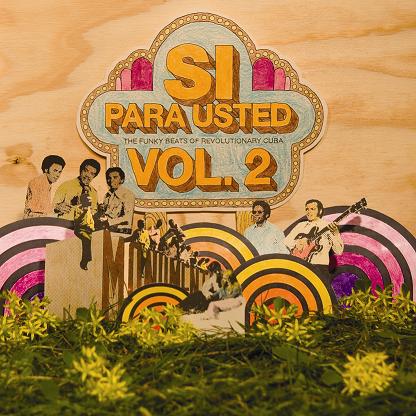
From Ritmo + Sabor (GRC/Sound Triangle, 197?)


The thing about funk's entry in pop music in the late 1960s and forward was how artists would find ways to work in its rhythmic signature when you least expected it. (See this for a great example). Hearing the Ananda Shankar for the first time just blew my mind, probably because I assume Ananda's sound would be more like his uncle Ravi's but clearly, Ananda was on some experimental, world fusion tip by blending his training in classical Indian music with some Moog and a killer trap set drummer. Both of these cuts above are well-comped at this point but they still don't fail to impress. Sitar funk for real.

Manteca is the nickname for master bongosero Lazaro Pla, a Cuban legend who used to play with Ernesto Lecuona and the Cuban Boys. His Ritmo + Sabor is one of the holy grail Latin funk LPs given its ridiculously funky percussion. It's an interesting album for Manteca since he didn't record out of Cuba much as a solo artist yet this album has been pressed up three times: GRC (Miami), Sound Triangle (Colombia) and Desca(?). And despite that, you'll still end up forking over a few Franklins, unless you're my man Adam M. who managed to cop one for $3 from Amoeba in Berkeley (that story still kills me). "Afro-Funky" is the outstanding cut here: the interplay between the basslines (which some opine might have been Cachao) and the percussion section is ridiculously funky not to mention pure rhythm - notice, there's no melodic composition in the song at all. "Gozando Tropical" is more in a conventional Cuban dance style with its piano montuno riff but even here, the hard timbales (alas, uncredited) still put percussion first...sometimes I feel like the song is mis-engineered and should have cooled down the timbales a bit but then I shrug and figure if the drummer wants to get some, who am I to deny? This has been out of print on CD for a while but luckily, they're about to bring it back later this month.
Labels: ,


Friday, June 06, 2008

SUMMER SONGS 2008: LAUNCH!
posted by O.W.


Soul Sides' Summer Songs Series has moved to its own exclusive site. I've ported over all of the past posts but for all the new, upcoming posts, I'll make a quick post here and point folks over.


Labels: , , , ,


Monday, May 12, 2008

MAMBO MONDAY CON LA PLAYA
posted by Captain Planet


bailando.JPG vaya.JPG exciting.JPG

La Playa Sextet : Hong Kong, Hunca Munca, Olaya & El Chico Boogaloo
taken from the album
Bailando El Boogaloo on Musicor (1967)

La Playa Sextet : Le-Lo-Lai & Sugar's Delight
taken from the album
Vaya Means Go! on United Artists (196?)

La Playa Sextet : Coco Seco/Anabacca & Mambo Inn
taken from the album
The Exciting New La Playa Sound
on United Artists (196?)

I felt inspired to give
La Playa (even THEY have a myspace page!) their due respect for several reasons. The first is selfish: I've been carrying these records in my crate consistently, week-in week-out, for probably a year now, and before I wear out the grooves on my favorite tunes, I wanted to retire the vinyl properly and let the music itself live on forever in digitally-preserved mp3/serato heaven. The second reason is because I'd also like to start doing a regular feature on somewhat overlooked latin groups. "Dura Obscura" or something like that. If I highlight a big name artist like Tito Puente or Eddie Palmieri, I'll pick out something that is a bit lesser-known from their catalogue. La Playa seemed like as good a place as any to start. Chronologically, they rose to popularity on the Latin tidal wave that crashed in 1968 with the death of the Boogaloo and the subsequent birth of "Salsa" superpower Fania. Cha-cha, Charanga, Mambo, Bomba, Bolero all got branded conveniently under one banner, and La Playa somehow didn't make the grade.

Most of what little I know about La Playa I picked up
here and here. But without knowing about all the players and particulars, one of the major aspects of the group's sound that stood out to me from the start, and caused me to seek out other titles, is the killer electric guitar playing by Payo Alicea. Beyond simply taking over the montuno parts traditionally played on piano, Payo really steered the sound of the group in a latin-rock direction (pre-Santana). "Hunca Munca" has that classic bluesy rock progression that sounds pretty dated today (maybe even tacky to some), but back then I imagine this was some pretty progressive stuff. I'm not sure what happened to the group after "Bailando.." was released, but their music is still heating up dancefloors here in Brooklyn on a weekly basis.

Labels: , ,


Tuesday, May 06, 2008

BACK FROM THE CRAZY HORSE
posted by O.W.


As noted, I went to go see Joe Bataan play the Crazy Horse in West Covina. It was cool insofar as there were a lot of older, hardcore fans of his who rolled through and that's always great to see. But for once, I'd like to see him play a venue where the average age isn't 42 - he deserves a wider audience but so far, promoters out here in Los Angeles seem to only book him in places where things skew considerably older. If someone wants to help me work on this, holler.

A small, unexpected, very pleasant surprise: at the beginning of the show, Joe came into the audience and was handing out photocopies of this. It reminds me: I really should scan the original in since the issue is sold out.

In the meantime, enjoy these:

CONTINUE READING...


Labels: , ,


Friday, May 02, 2008

(EXTRA)ORDINARY: JOE BATAAN
posted by O.W.


First off, for my Angelinos, Joe Bataan is playing at the Crazy Horse in West Covina on Sunday. See you there!

I recently finished up a set of liner notes for an upcoming anthology on Joe's rich recording catalog for the Fania label. As folks probably know, I'm a huge fan of Joe and it's been a genuine honor to be able to interview him over the years and bring attention to his remarkable career.

This post is part of the boogaloo series (and I'll do some more closer to the date the comp drops) but was really inspired by what is Joe's best-known song, "Ordinary Guy." It's not just a fan favorite - he's recorded it five times (and released it six) - but it's also a song integral to his own sense of self; he may be a star but in his own mind, he's still just a regular Joe (you saw that coming, right?) From the man himself: "While in prison, we did a lot of experimenting with songs. I had first heard the title “Ordinary Guy” in prison in Coxsackie, so I eventually rewrote the words, came back home, put ‘em to music. The song makes me cry sometimes when I see the reaction of people. In New York, it is so popular. People just love that song, and I guess the words mean a lot. “Hey, I’m just an ordinary guy, don’t expect anything else. That’s me” and I’ve always been that way. Having sung the song and how I have endeared a lot of people, how they felt about it, only influenced me more [to] give more of my heart than almost any other song. It describes me."

CONTINUE READING...


Joe Bataan: Ordinary Guy
From Gypsy Woman (Fania, 1967)


The original version of "Ordinary Guy" was recorded for Gypsy Woman, Joe's debut album for Fania. He and his band, the Latin Swingers, recorded the album in one single studio session, a relatively unusual practice. By the end of the day, Joe had this - his last song - left to record but his voice was starting to give out. Session engineer (and Fania co-founder) Johnny Pacheco asked, "'Don’t you want to come back tomorrow?’ and I said no," said Joe. "Actually, my fear was that they were going to change their mind and not use it." So, even with his voice at the point of breaking, they recorded this and completed the entire album that day.

Ordinary Guy
From 7" (Fania, 1967)


For reasons not entirely clear, Fania decided to re-record the song to release on single. For the most part, this 7" version isn't wildly different from the LP except that Fania brought in pianist Richard Tee. Tee changes the opening to the song, giving it a stronger presence, especially with a striking arrangement that sounds very much like the beginning of Marvin Gaye and Tammi Terrell's "Precious Love." This is probably my favorite version of the song, precisely for that intro which gives the tune such a rich, soulful feel to it. (Thanks to Reynaldo for digitizing).

Interestingly, at the Crazy Horse show, when Joe sang "Ordinary Guy", he opened it with that same Tee melody.
Ordinary Guy
From Riot! (Fania, 1968)


By Joe's third album, the gold-selling Riot!, Fania convinced him to record the song again, but this time with a dramatic makeover as the song was given a new arrangement by Broadway's Harold Wheeler. Joe admits, "I didn't particularly like it...I love it now but at the time, I just thought he was altering my music because he gave it this jazzy feel. It had to grow on me because I thought it was too fast." This new version, in my opinion, is lovely and a great change-up from the original. Wheeler adds in some vibes, speeds up the tempo a bit, and has Joe open with some soaring vocals and well-timed drum hits.

It's worth noting, Fania put this same recording - albeit longer by a few seconds - onto Joe's Singin' Some Soul album. I'm guessing it's because they thought it'd fit well with the concept of that album. That would be the last time Joe recorded "Ordinary Guy" for Fania.

Muchacho Ordinario
From Salsoul (Mericana, 1973)


The next incarnation of the song is perhaps the most unique: a Spanish-language version that appeared on Joe's first post-Fania album, Salsoul. The arrangement is completely different too - here, the song isn't really in the R&B vein, it's much more like a son montuno. Bueno!

Ordinary Guy
From Afrofilipino (Salsoul, 1975)


The final version of the song came on the next album, Afrofilipino. This is a version I know a lot of Soul Sides folks are familiar with - I comped it for Soul Sides Vol. 1. I like to think of it as a bridge version between the Latin-fied flavor of "Muchacho Ordinario" and the more R&B stylings of the earlier versions. The song is more in a soul vein in the beginning but at the end, he yells, "salsa!" and the ballad then transforms into a whirling dance tune.

Labels: , , ,


Thursday, May 01, 2008

THE HAPPY SOUL SUITE
posted by O.W.


Unraveling musical mysteries is part of what motivates me as a music journalist. I don't claim to be very good or thorough at it, but the process alone is a way to appreciate the beauty and complexity of music-making that isn't necessarily transparent through listening alone (or, er, the sonic equivalent of "transparency").

This post is one such example and it begins, for me at least, with a song called "Happy Soul" that appears on an album by The Moon People that I picked up at the Groove Merchant a few years back. (Note: ironically, "Happy Soul" is the one song I did NOT include in the Suite but for reasons that will become clear shortly). "Happy Soul" is very striking, especially for a Latin soul song because 1) it's fast and 2) it's funky. Really funky. Funkier than most Latin soul songs one can think of. I would play it out when I could, especially because it's a great "transition" track between Latin and funk sets. It's not surprisingly then that, in 2006, when the DJ Premier-produced Xtina Aguilera single, "Ain't No Other Man" came out, I recognized the sample immediately.

At least I thought I did.


CONTINUE READING...

A little while later, I heard "Happy Soul (With a Hook)" by Dave Cortez with the Moon People and it was basically the same instrumental track as "Happy Soul" but with Cortez' trademark organ vamping all over it. Then, last year, I discovered the Latin Blues Band and their album, Take a Trip Pussycat. On there, they have a song called, "I'll Be a Happy Man" and it is basically, the same exact song as "Happy Soul" only with vocals (and without the Cortez organ).

The plot thickened.

The LBB, the Cortez single and the Moon People album are all on Speed, a smaller Latin label of the late '60s that specialized in Latin soul and boogaloo bands, including Frankie Nieves, and one of the rare female Latin groups, Dianne and Carole and the Latin Whatchamacallits. It's one of the great, great Latin boutique labels of that era and the Big Ol' Bag O Boogaloo series comps heavily from their catalog (with some odd omissions but that's for another time). It was on that album that I heard The Moon People's "Hippy Skippy Moon Strut" which sounded like the Cortez' song but minus the organ and with a new piano arrangement.

WTF?

Around the same time I acquired a copy of the LBB album (thanks Rodney!), I also stumbled across this feature on the great Spectropop website (Latin fans should check out their thorough Tico feature). They finally helped me put many of the details together and I'm trying not to duplicate their already great work but, there was one element yet to add here: the testimony of Bobby Marin.

Marin is a composer and producer and he and his brother Richard were major players in the NY Latin scene in the 1960s and '70s. I spoke to Marin while putting together the liner notes for an upcoming Fania anthology on Joe Bataan and wanting to take advantage of being able to speak to such a storied veteran in the scene, I asked him what some of his favorite compositions were and he named "I'll Be a Happy Man." At that point, I didn't own the album yet so I had no idea he, along with Louie Ramirez and other players, were in the Latin Blues Band and I asked him to trace for me the history of the song. Between the Spectropop site and Marin's own information, here's what I was able to pull together (and to be sure, I really should talk to Marin again to fill in blanks):

Morty Craft - who ran Speed and was the main producer for the label - reassembled the Latin Blues Band into The Moon People. I'm not clear why he did this nor why he would have the group essentially record over their own LBB backing tracks with slight changes (but sans vocals) and then release it as its own album. I guess Craft felt like he could sell consumers the same songs twice. "Happy Soul," from what I can tell, is simply "I'll Be a Happy Man" without vocals. Well, almost without vocals...Marin told me that when he was in the studio, editing the Land of Love album, he insisted that they keep something of his original vocals, which ended up being a "whoooo!" somewhere in there. (In any case, I didn't include "Happy Soul" in the suite since it's a subtraction with no additions, unlike the other songs).

Soon thereafter, Craft sold the mechanical rights to that instrumental to Morris Levy at Roulette. At that point, the song transforms into "Happy Soul With a Hook." The original piano is stripped off and replaced with Cortez' organ playing plus some spacey wah-wah guitar. Speed ends up releasing this "new" song as a single. According to Spectropop, "Hippy Skippy Moon Strut" appears just a few months later and it is basically "Happy Soul With a Hook" minus organs, keeping the wah-wah, and throwing on that new piano arrangement I mentioned plus some vocals yelling, "hippy skippy!" and similar phrases. That single appears on Roulette rather than Speed (possibly because the latter had been purchased by Roulette by this point). Then fast forward nearly 40 years and DJ Premier flips "Hippy Dippy" for Xtina and the story ends.

Well, not quite.

My convo with Marin yielded two more tidbits of information. First of all, RCA apparently didn't clear the sample correctly. My guess is that they cleared the mechanical rights but not the songwriter rights and when Fania (who, by now, owned the Speed catalog) figured this out, they got ready to sue. The problem is: they didn't know who the original composer was either and one day, when Marin was visiting, they asked him, "hey, would you happen to know who the composer is?" upon which Marin replied, "yeah...me." So as it turns out, Marin is waiting to see if a settlement happens, and if so, he likely stands to make a nice piece of change off this.

The second piece of info I gleaned from him was around who the hell was the drummer on the song. After all, one reason why the song stands out so much, why it probably got remade three times and then sampled, is because of those drum breaks. They're unusual for a Latin soul song - I can't think of many other songs in that era that featured open breakbeats - so I had to ask Marin about it. His reply, "well, that was Bernard Purdie."

Jaw drop.

That explains quite a bit...and it makes total sense (Purdie did a grip of studio work in NY in that era, plus the drumming sounds like something he'd put together) but it's a detail that, as far as I can tell, no one has ever noted before. And that, my friends, is the kind of discovery that motivates me to get up every morning. With all that, thanks for reading...here's the "Happy Soul Suite" for your edification:

Soul-Sides.com presents...The "Happy Soul Suite"

Created from...

The Latin Blues Band feat. Luis Aviles: (I'll Be A) Happy Man
From Take a Trip Pussycat (Speed, 1968)

Dave Cortez with The Moon People: Happy Soul (With A Hook)
From 7" (Speed, 1968). Also on El Barrio: The Bad Boogaloo.

The Moon People: Hippy, Skippy Moon Strut
From 7" (Roulette, 1969). Also on Big Ol' Bag O' Boogaloo Vol. 1.

Christina Aguilera: Ain't No Other Man
From Back to Basics (RCA, 2006)


Labels: , ,


Tuesday, April 29, 2008

BOOGALOO[LA] GETS ITS OWN MUXTAPE
posted by O.W.

Want to know what kind of music we roll to at Boogaloo[LA]? Peep:


Labels: , ,


Thursday, April 24, 2008

MUXOLOGY
posted by O.W.

Hua put me up on this new experiment in social music networking: muxtape.com.

I've gone ahead and created my first Soul Sides Muxtape, filled with a bunch of goodies, a few songs I've written about but most of them I've yet to yap about here. Consider it the preview.

I like the lo-tech quality of the site and its basic concept but seriously, would it kill them to throw in a search function? Random play is not a bad idea in principle but I still like some level of organization. And while we're whining, it'd be nice to be able to FF and RW on a track. But really, we like it otherwise.

In any case, be sure to peep the other muxtapes in rotation, including Hua's (both of them), Sasha Frere Jones' and Tony Phrone. Sasha just blew my mind a bit by including a cover of "Crumbs Off the Table" by Dusty Springfield.


Labels: , ,


Sunday, April 20, 2008

HOP TO THIS: RABBITS & CARROTS
posted by O.W.


Rabbits & Carrots: Las 4 Culturas + Romeo Y Julieta
From Soul Latino (Musart, 1969). Also available on LP.

Bonus: Rabbits & Carrots: Express Yourself (snippet)
From We Got More Soul EP (Musart, 1971). Also on Soul Latino (CD but not LP)


File Soul Latino under those albums seemingly too good to be true - a group of Mexican rock/jazz musicians with a trio of brothers and nephews at core - sitting down in 1968 to record a series of instrumentals, most of them with a hard, funk edge. Frankly, if someone had told me this was some retro-soul band, masquerading as a vintage group with that backstory - I'd sooner believe the hoax. Not that Mexico City would lack the necessary musicians to put something like this together but it's like stumbling across an album such as that by Chile's infamous Xingu. Given how rare this purports to be, it's a genuine treat that the folks at Vampisoul got Musart's permission to reissue it.

Yes indeed: Rabbits & Carrots were real, as was their Soul Latino album and subsequent EP. That album constitutes one of the holy grails of Mexican funk albums and it's not just because of rarity or its unusualness - it's damn well put together and recorded well. Check out how they take on Don Randi's "Theme From Romeo and Juliet" - all dissonant whines and moody loops, beautifully accented by Luis Agúero's guitar and a brass section lead by Ramón Flores and Ramón Negrete and I'm assuming its bad leader and percussionist Salvador Agüero on those tinkling chimes.

"Las 4 Culturas," according to the liner notes, is the album's sole "original" song, a song about the Tlateloco Massacre. That may very well be true that the song is meant to inspire awareness around the murder of potentially 200-300 people before the Mexico City Olympics but musically speaking, most people would probably note: "uh, isn't this 'Get Up, Get Into It, Get Involved' by James Brown?" And you'd be right - it is. In fact, that's how it's billed on this 12" from a year or so ago. Not that I'm complaining - it would make sense to take a song with a title as politically charged as Brown's and reapply it to the happenings in Mexico City.

For a bonus cut, I threw on a tease of the group's 1971 cover of "Express Yourself." This came after Salvador Agüero (nickname "Rabito," hence the group's name) left the band and a vocalist named Max (Max what?) joined. This isn't necessarily my favorite cover of the Watts 103rd's immortal classic but I dig its Spanish-language remake and given the timing with the Watts 103rd Week, it seemed only apropos (plus, that ridiculous drum-break toward the end doesn't hurt either). Just be aware: this song, along with covers of "Sex Machine," "We Got More Soul" and "Spill the Wine" are available on the CD of the album, as well as a separate EP, but it's not on the vinyl LP version of the Soul Latino album.


Labels: , ,


Tuesday, April 15, 2008

TRAVELOGUE
posted by O.W.


Sorry to have been away for a while - my thanks to the Captain's Crates crew for holding it down.

I've been on award tour, starting last week at Duke University where I gave a pair of talks in conjunction with their Transcultural Humanities project. It was a great opportunity to talk about my work but the real enjoyment was spending some time, rapping with Mark Anthony Neal who brought me out there. He put me up on this stunning Max Roach/JC White Singers song but I'm still trying to track it down so that'll have to wait.

CONTINUE READING...

I did catch an equally compelling exhibit at the Nasher, an impressive, first-ever retrospective of Barkely Hendricks' paintings. Hendricks has flown under the radar for decades but hopefully, this show - which will travel to the Studio Museum in Harlem and then the Santa Monica Museum of Art - will rectify that situation. His works from the '60s, in particular, are such beautiful snapshots of the time, both in terms of the cultural signifiers and the personalities that he captures in them. Here's a personal favorite, "Tuff Tony":

Folks might be more familiar with this more recent painting of Fela:

If you're in Durham...or New York in the fall (or Santa Monica next spring, or Philly after that), I highly recommend you see his work. Soul inspired, for real. Shout out to Trevor Schoonmaker for having the foresight and resources to put this retrospective together. Here's a video preview he helped put together for the Nasher:


After Duke, I came home for all of 12 hours then had to fly out again for the EMP Pop Conference in Seattle. I. Love. This. Conference. Which is probably something only an academic would ever say, but f--- it. I have no shame in my appreciation for the conf (as noted in the past). I'm not going to do a complete run-down but I'll say this much: the conf does much to both inspire me intellectually as well as turn me onto new music/ideas/people. Here's a quick scattering, perhaps a follow-up post later.

1) Jeffrey Govan: This bassist in the LA ska scene is also now a grad student at USC's American Ethnic Studies program. He gave on paper on the Latin influence on ska back in the 1960s (and influence that has been remarkably cataloged here. Apart from introducing me to the Skatalites' "Latin Goes Ska" (a flip on Perez Prado), I was most thankful for Govan putting all of us onto this:

Tommy McCook and the Skatalites: Sauvitt
From 7" (Dodd, 1964). Also available on Tribute to Tommy.


It's a cover of a Mongo Santamaria song ("Sauvito") and the subtle intertwining of ska and Latin rhythms here are simply delicious. I love how the song opens with that piano, how the horns come in and layer themselves, and my favorite moment comes right before the two bridges with the four note horn hits - wish they had made that into an entire chorus. Great song - a new favorite.

2) Lauren Onkey: This professor at Ball State Univ. is doing fascinating research on the undersung Black rock and doo-wop bands who were part of the Mersey Beat scene in Liverpool circa the 1950s/60s. Onkey was drawn to this research given how, in most of the literature she had seen on Liverpool's music scene and the Beatles, rarely were any of the city's numerous Black bands ever acknowledged even though groups like the Fab 4 played with them and, according to some rumors, learned their R&B-styled chops from them. Onkey also makes the very provocative argument that Liverpool's historical Black population (dating back centuries to the city's prominence as the slaving port in Great Britian) is one reason why the blues fetishism that hit other British bands like the Rolling Stones or Cream bypassed Liverpool groups - they had grown up with Black people and thus, weren't as likely to romanticize/nostalgize them through the blues.

In any case, during her talk, she played this clip by the Liverpool doo-wop group, The Chants, who worked with the Beatles early on before they really became "The Beatles." Here they are, covering the jazz standard, "I Could Write a Book."


3) Gayle Wald: I last mentioned Gayle a year ago, in connection to her book on Sister Rosetta Tharpe. Gayle's now working on researching the life and times of the late Ellis Haizlip, a remarkable artistic force in New York, who, among other things, hosted the PBS show, Soul!. It's hard to quite capture how remarkable a show this was - in the late '60s through early '70s, it was an incredible meeting point of different Black artists, musicians, politicians, etc. in ways that have never really been duplicated since (no, not even by Arsenio).

The problem is that this show will likely never, ever be released to the public on DVD or any other format - the release contracts signed at the time make such a occurrence logistically impossible for all practical purposes. It's a damn shame - the clips that Gayle brought included a mind-melting interview between Haizlip and Farrakhan talking about gay sex, Ashford and Simpson performing on one of the last Soul! shows and - coincidentally enough - Max Roach w/ the JC White Singers.

Luckily (however illegally), clips have snuck out, including this 1973 performance by the Spinners on the show.


4) Last but not least, one of the other people on my panel (besides Gayle) was EMP organizer and fellow L.A. partner-in-culinary-crime Eric Weisbard who did a paper on Elton John's "Benny and the Jets" - a song that most everyone (I presume) has heard but may not remember being a big hit on not just the pop charts, but also the R&B charts. Don't believe it? Just ask Mary. Or the Diabolical:

Biz Markie: Sounds of Silence (by the Beastie Boys) (Capitol, 1999)

For real though, listening to that version isn't half as fun as watching it:


Labels: , , , , ,


Wednesday, April 02, 2008

BETO DROPS IN AT BOOGALOO[LA]
posted by O.W.


This week at Boogaloo[LA], it's me and special guest DJ Roberto Gyemant, aka Beto.

I've talked about Beto before - he's one of the most knowledgeable people I know concerned the jazz/soul/Latin music scene in Central/South American (the Afro-Antilles as he refers to it) and he wrote liner notes for both the Panama and Colombia comps. This should be a real treat - he'll be dropping in around midnight and hopefully will be blowing minds with some incredible Latin heat. I think I might just turn the whole evening into an all-Latin affair in tribute.

I owe Beto and my regular partner, Murphy's Law, a great deal for finally opening my ears to salsa. It's not like I wasn't aware of it but I think I've had bugalú tunnel vision for so many years, I wasn't all that interested in the era that followed and it wasn't until I started hearing some of the tracks Beto and ML enjoyed that I realized: "oh, this is why salsa is, you know, huge." Strangely, the road for me doesn't go to NY - it actually leads back to Colombia and specifically, Fruko (who's been a favorite here twice over). It probably could (should) have been Willie Colon or Hector Lavoe or the Fania All-Stars but no...it was a scruffy bassist who really sparked my interest.

In homage to him - and as a preview for tomorrow night - enjoy this:

Fruko Y Sus Tesos: El Preso
From El Grande (Fuentes, 1975)


This apparently is a stone-cold classic around the salsa world and I can see why. That "ay ay ay" kills it, on top of everything else.


Labels: , ,


Monday, March 31, 2008

AY AY AY! MICAELA X QUATRO
posted by O.W.


Pete Rodriguez: Micaela
From I Like It Like That (Alegre, 1967)

Pedrito Ramirez y su Combo: Micaela
From 7" (Popo, 196?)

Los Cinco De Oro: Micaela
From 7" (Philips, 196?)

Tone Done's Hollywood Quintent: Micaela
From 7" (Vance, 196?)


As promised, here's the first in hopefully many boogaloo-themed posts in honor of the new Soul Sides Boxset #2.

In general, I've found that Latin soul/boogaloo songs are not always given to covers very well. I'm still not sure why this is - whether it's a failing on the groups covering or something inherent to the genre but, for example, covers of Joe Cuba's "Bang Bang" never sound as good as the original (in contrast, "El Pito" seems to go over better). However, it dawned on me recently that there's another boogaloo classic that might disprove my casual theory: Pete Rodriguez's "Micaela." Not only is the song well-covered - possibly the most of his several hits - but many of the other versions are done competently, often on par with the original. I think that says something important about said original: that it's one of those magical songs that lends itself to multiple permutations, all of which excel simply be referencing back to the original (for another example, see variations on Tito Puente's "Oye Como Va" - a song that can be covered any which way and still sound great).

I genuinely love this song and how it sounds and have made it a pet project to track down other versions of "Micaela" in hopes of finding yet another charmer. I have to admit though, until very recently, I barely understood it since my Spanish lexicon is limited to, um, counting 1-10 and ordering from taco trucks. That great if I ever need to order "dos tacos, carne asada," not so good for deciphering even basic songwriting en español.

CONTINUE READING...

Luckily, I had some friends help me out and what they came up with is a translation that suggests that Rodriguez was singing about how Micaela blew him away on the dancefloor, which seems apropos for a boogaloo song. If someone has a more elaborate translation, feel free to share in the comments.

In any case, I start with Rodriguez's original, featured on his best-selling I Like It Like That LP for Alegre. The "ooh aah" intro is just a touch too forced but it's all about that piano montuno. Hands-down, one of the best riffs of its kind in Latin. (I'm curious if it has an antecedent...songwriters borrowed from each other all the time in this era). And then there's the hook, "ay ay ay, Micaela se boto" - so catchy.

The Pedrito Ramirez y su Combo version is out of the Bay Area of all places, making it one of the rare West Coast Latin boogaloo cuts I know of (see below). I really like this version - it's livelier and brighter, especially with the addition of the piccolo and greater use of coro-pregón (call-and-response). You can also hear the obvious Joe Cuba influence with the "ah ha, beep beep" chorus that opens. A great party cut and one that I play out at Boogaloo[L.A.] with much pleasure. If you like it, the one dealer I know who has copies is selling one now.

The Los Cinco De Oro version comes from PeruColombia and is notable for at least two reasons: one, it feels much faster than the original. Had I not known better, I would have thought it was a 33 record that I accidentally put in 45 but nope, it's supposed to be that fast. Second, it's a very stripped down version: all piano and hand-claps and that's practically it (save for a lil flute)! I made the mistake of playing this out at the club only to remember: oh yeah, there's no low end to this at all. Can't say this is my favorite but even sped-up, stripped down, with no bass...the song is still catchy.

Lastly, we come to what may be my favorite version and - damn - wouldn't you know, it's also the rarest of the batch? Let's give credit where it's due: I first read/heard this at Office Naps, which included it as part of their West Coast boogaloo series. It's an L.A. record in fact, but one that is uber-obscure and thus, this sound file is likely the closest I'm going to come to it.

What I like about it is how it's also stripped down but not as sparsely as the Los Cinco version - instead, Done's Quintet keeps it to piano and some percussion and really, the song doesn't need any more than that essence. The Ramirez is more lively but Done's just nails what I think is the essence of the song.


By the way, congrats to Asid and Dan who won the Truth and Soul/Fallin' Off the Reel Vol. 2 contest.

The correct answer to the mini-mix selection was: Tom Scott ("Today"), Sylvia Striplin ("You Can't Turn Me Away"), Wild Sugar ("Bring It Here") and the one that caught most folks: S.O.U.L. ("Peace of Mind"). Get familiar!


Labels: , ,


Monday, March 24, 2008

FUZZ NUGGETS
posted by Captain Planet


mikis.JPG sumsum.JPG

yaki.JPG bluecaps.JPG
Mikis Theodorakis : Cafe Rock
taken from the soundtrack album "Z" on Columbia (1969)

Sum Sum : Mountain Beauty
taken from the album "Midnight Guitar" on Regal/EMI (196?)

Los Yaki : Las Estatuas De Marfil
taken from the album "Vol. II" on Pickwick/33 (196?)

Los Blue Caps : Tu Mujer, Yo Yaron & Solo Vivo Por Tu Amor
taken from the album "Cuando Te Miro" on Parnaso (1970)


Imagine the immense awe that must have splintered into the core of the first fuzz guitarist when, upon strumming his coiled strings, he heard not the sweet melodious ring of a clean plucked note, but instead was met with the scream of electrical feedback that will forever voice the raw agitation of youthful rebellion. Did this forgotten string-strummer catch any glimpse at the vast impact of his forever raging bastard child? Was it done on purpose? Did he finally achieve the sound of his burning inner torment after exhaustive hours of experimentation, or was it an accidental buzz that stabbed him in the back when he innocently left the volume knob turned up too high? Whatever the case may be, today I'd like to celebrate a few obscure shrapnel nuggets that were flung in different directions across our planet in the aftermath of this explosive auditory revelation.

Mikis Theodorakis is perhaps one of the all-time greatest and most widely recognized Greek composers. I addition to scoring virtually all the major Greek theater productions of the 60's, he achieved international renown for his film score to "Zorba The Greek" and then, "Z" (looks like he also did Serpico, which is such a badass film). Mikis has always had a serious lean to the left, and for this he was imprisoned and then exiled (before making Z). Included on the soundtrack (I still haven't seen the film, but it looks like a winner) are several bootleg-sounding recordings of just Mikis singing and playing piano "in secret circumstances" (according to the liner notes). A true rebel indeed, and this short little fuzz bomb stands as proof.
Sum Sum is a mystery to me, but I really dig this record she made. Found it in a bargain bin recently and have put it on whenever I felt the need for a bit of Austin Power groovy-kitch.

Los Yaki are also pretty far off my radar, but they appear to be from Mexico. This album features them covering "Yellow Submarine", "Good Love", "secret Agent Man", & "Sunny" (which they turned into "Sonia") among others. The whole album isn't the best listen, but I'll ride for "Estatuas" any day. Hand claps, screechy vocals, B3 organ, and yes... gritty guitar full of fuzz.
Los Blue Caps (not to be confused with Renato E Seus Blue Caps) are another Mexican garage group that I know nil about. But this record is chock-full of pounding drums (yes breaks) and fuzz, fuzz, fuzzzzz. The vocals are a bit hit or miss (lil more on the miss side) but this is the birth of punk we're talking about, so just roll with it.

*Last note: it happens to be my birthday today, so if anyone feels like sending a record my way (hint hint), hit me up with an e-mail. hehe.

Labels: , , ,


Sunday, March 23, 2008

CUBANO CRASH
posted by O.W.


I don't know if marketing/promotions fell short but last night's gig to celebrate the release of Fania Live 03 at the Crash Mansion L.A. was thinner than I expected. That hardly dimmed the enthusiasm of those of us who came out to see DJs Sake-1 and Bobbito spin alongside an incredible set of performances by Francisco Aguabella and his Latin Jazz Ensemble, with special guest pianist, Chuchito Valdes.

Great, great, great show. And humbling insofar as I was reminded that despite my intense interest in Latin over the last decade or so, I'm just a babe in the woods when it comes to the depth and breadth of the music.

Some pix from last night:


Labels: ,


Saturday, March 22, 2008

CACHAO: 1918 - 2008
posted by O.W.


Cachao Y Su Ritmo Caliente: Descarga Cubana
From Cuban Jam Sessions in Miniature - Descargas (Panart, 1950s). Also available on The Havana Sessions.

Cachao y su Orquesta: Juan Pescao
From 7" (Maype, 1958).

Bonus
Tito Rodriguez: Descarga Cachao
From Tito Tito Tito (UA Latino, 1964)

Gerardo Frisina: Descarga
From 12" (Schema, 2001). Also on Ad Lib.


Israel López, better known as Cuban master bassist, Cachao, died early today. I don't profess to know Cachao's career intimately but even a beginner Latin fan knows he was a giant in the scene. My acquaintance and colleague Ned Sublette has gone as far to name Cachao, "the most important bassist in twentieth-century popular music."

His catalog is immense though it's easy enough to know where to begin: Cuban Jam Sessions In Miniature - Descargas, a groundbreaking moment in Afro-Cuban music and one of those essential albums for anyone interested in the genre. I included "Descarga Cubana" off that album as a way to highlight Cachao's skills as a bassist - that bassline is so simple, so deep.

The Cachao y su Orquesta songs are from a 7" I picked up at the Groove Merchant back in the fall and both sides have been in constant rotation since ("Manicero" is on the flip and, with any luck, will be featured on an upcoming Latin dance mix-CD I've been working on). You can hear on "Juan Pescao" the meeting point of some classic Cuban musical traditions - more stately and formal - with the upcoming revolution in rhythm that Cachao and his compatriots were assembling in after hours Havana.

The two bonus songs show how influential Cachao was with other musicians. Mostly obviously, it's Tito Rodriguez's "Descarga Cachao" which flips on the original "Descarga Cubana". Likewise, Gerardo Frisina's great 2001 club 12", "Descarga" is another remake of sorts (he subtly changes the bassline riff, but you can still hear the obvious reference back to Cachao).


Labels: ,


Thursday, March 13, 2008

DJ SAKE-1 IN L.A., 3/22
posted by O.W.


Speaking of some cool gigs coming up, on March 22 (Sat), DJ Sake-1 from San Francisco is coming down to Los Angeles to celebrate the release of the Fania Live 03: From the Fresh Coast mix-CD.

Here's a 8 min snippet from the mix.

You might remember I gave love to the first volume and Sake-1 does the series proud with some killer salsa selections including Eddie Palmier's "Justica," Ray Barretto's "Indestructable" and one of my personal, all-time favorites: "La Murga" by Willie Colon and Hector Lavoe.

His release party in L.A. will be at the Crash Mansion and will feature not only himself and Bobbito but in live performance, Francisco Aguabella and Chuchito Valdez. Altogether, this looks to be an absolutely stellar show.

Labels: ,


Wednesday, January 23, 2008

ROLLING BROWNOUT HITS L.A.
posted by O.W.


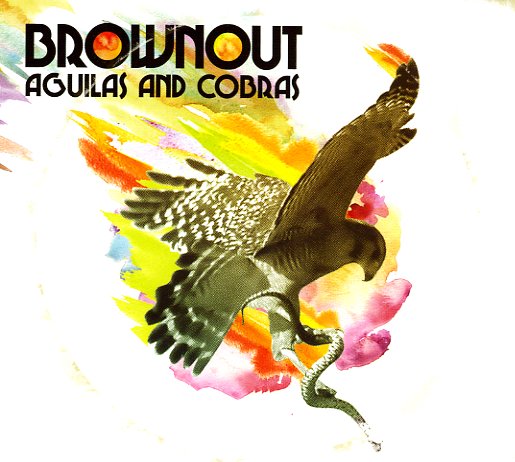
Brownout: Laredo 77 + Barretta
From Homenaje (Freestyle, 2008)


I've recently been enjoying the sounds of Brownout, a Latin funk outfit out of Austin, Texas. They've been around for a minute in the form of Grupo Fantasma except here, they're strictly instrumental. What I like about these guys is not only that they have their chops down but rather than following a strict revivalist route, their sound has a clear Latin influence but isn't holden to simply trying to sound like it's East Harlem 1968 again.

There's an impressive diversity of styles on the album and the two cuts I pulled out above can't do it proper justice. "Laredo 77" reminds me a lot of the Calbido's Three (who I really should get around to blogging about one of these days...note to self). Super laidback and smooth Latin-flavored soul-jazz.

"Barretta" goes in the other direction: dark, funky. with a slick kick and thump. I may very well have to play this out at my next gig (heck, I'm tempted to spin out half the album, just to see how it sounds loud).

Here's the extra treat for Los Angelinos: Brownout is playing two shows, starting tomorrow night:
  • Thursday at The Root Down
  • Friday at Soul Sessions

    These guys ain't local so use the opportunity to catch them at least once while they're out here!

    More info:
    Brownout on MySpace

    Oh yeah, one last thing: I'm forever indebted to Brownout for putting this video on their myspace page. Now I can see how the boogaloo is danced, by JB himself!


    Speaking of gigs, Murphy's Law and myself will be back at the Short Stop next Thursday, Jan 31. Hopefully, this will turn into something regular there. More info on this later.


    Labels: , , ,


  • Thursday, January 17, 2008

    BOOGA-LOO NIGHTS
    posted by O.W.


    I have my first piece for The Nation available on newsstands now: "Boogaloo Nights," looking at - you guessed it - Latin boogaloo in all its splendor. This essay serves as a primer on not just boogaloo's history but its import in understanding the intertwined complexity of American cultural exchange.

    A few "additions" - mostly things that were cut from the article for space. First of all, I tried, in the original drafts of the piece, to acknowledge the immense contribution to the public knowledge about boogaloo thanks to Juan Flores and the late Max Salazar. Much of my historical retelling of boogaloo depended on their research and I didn't realize the final copy had excised my attempt to credit them as such.

    Second, the article tends to focus on Fania as a "bad guy" figure in the death of boogaloo and that's probably largely earned but what's missing is how ironic it is that Fania (or really, Emusica) is taking such a leading role in reviving the genre. I think that's a fascinating story in and of itself but I wasn't able to get that deep into it here. Moreover, I also want to note that Fania is far, far, far from the only label in town in regards to the boogaloo. It was arguably the biggest player but one of many.

    Third, a note on spelling...in the piece, I refer to the Latin boogaloo as bugalú as a form of shorthand so I don't confuse people between the R&B boogaloo and the Latin boogaloo. This said, on most Latin records, boogaloo is spelled "boogaloo," not bugalú.

    Fourth, and this actually very important and something raised by someone in the comments: the piece is based around the idea of boogaloo being a cross-cultural bridge, between Latin America and African America but I couch it, at times, in the language of "Brown and Black" and I realize this is a faulty shorthand. After all, the notion of race within Latino communities is much more complex than a label like "Brown." The primary personnel behind the boogaloo revolution - Puerto Ricans - can be Black, Brown or White if we're talking about skin tone and so it's not that useful to deploy "Brown" as a catch-all category.

    I also wrote a sidebar on five boogaloo compilations worth picking up for the neophyte.

    Fear not, much more on boogaloo to come. I've been asked - and gratefully accepted - the opportunity to write liner notes for an upcoming anthology of Joe Bataan's Fania output that will be coming out around April.

    Labels: , ,


    Sunday, January 13, 2008

    Greetings Soul-Sides!
    posted by Captain Planet

    soulcrates.jpg


    HPIM0072.jpg fatback.jpg

    coke.jpg HPIM0065.jpg

    Ernesto Djedje : Zadie Bobo & Zibote
    taken from the album
    "Le Roi Du Ziglibithy" on Badmos (1977)

    The Fatback Band : Wicki Wacky
    taken from the album
    "Keep On Steppin'" on Event (1974)

    Coke: Na Na & Te Amos Mas
    taken from their self-titled album on Sound Triangle (1972)

    Usha Uthup : Chhupke Kaun Aya
    taken from the album
    "24 Carats" on Inreco (1981)

    Captain Planet here, from Captain's Crate. As O-Dub mentioned, we're trying out some cross-posting techniques to help increase the music flow for your listening pleasure. Today I'm initiating the cossover with a somewhat random assortment of funky music from around the globe. For those that have never seen my own blog, take a peek to get an idea of what we're all about. The "we" i refer to is myself + my younger and scruffier brother, Murphy's Law. Funky and soulful music, past and present, from wherever in the world it may have been born. Must there always be cohesion? Order? Reason? I think not. Especially when you're dealing with something as intangible as music. There's free mixes to download in the "Loose Tape" section as well (although I really should update that with some fresh ones).

    Starting off with a record that I've loved for years now-
    ERNESTO! Why I hadn't taken the time to digitize this earlier is a damn good question. I've been sneaking "Zadie Bobo" into DJ sets since '02 when I first discovered this gem, always to a positive crowd response. In the Ivory Coast, where Djedje made his name, "Zibote" was the bigger hit, and can still be found popping up on compilations of today's Ivoirian music. "The King of Ziglibithy", need I say more?

    *One note of warning for fans of Ernesto: DON'T BUY
    THIS CD VERSION OF HIS ALBUM. I made this mistake, only to realize that the CD is a bootleg recorded off a record being played at the WRONG SPEED! So, unless you want Ernesto chopped and screwed, steer clear.

    The Fatback Band need little introduction for fans of funk, but I've been needing to put this classic bump on repeat for a while now and it's so much easier to do that in MP3 format. This is one of those instances where a simple bass groove is enough for me.

    Recently got my hands on this semi-rarity from Florida's
    Coke (later re-named "Opus"). Don't know anything about the group, but I'm feeling the record a lot. The album has a nice cover version of the early boogaloo hit "Bang Bang" (Joe Cuba? or was it Pete Rodriguez?) as well as some ballads and several more dirty, dirty drumbreaks. The LP I have from them as "Opus" is nice too, but "Na Na" is hard to top. Looks like you can cop it on CD too.

    Finally, a real monster for you, the legendary HINDI version of
    "Don't Stop Til You Get Enough". Of course the production quality isn't going to be quite as tight, but considering the sound quality of your average bollywood record, I'd say the uncredited studio musicians (Bappi Lahiri?) on this one are doing a pretty good job. Usha was one of the biggest Indian soundtrack singers in the 70's and 80's - Shalimar, Shaan, & Disco Dancer, to name a few, all feature her silky vocal stylings. I always get a kick out of playing this one and then watching the initial look of bewilderment spread. "Chhupke" ranks right up there alongside Arzu's "Amor" in the world's most-precisely-covered-in-another-language category. Well done Usha.


    Hope you all enjoy the latest gumbo funk offering. And cheers to any new readers just finding out about the crate now through
    Soul-Sides! Stay tuned for more, as always.

    Labels: , , ,